

Sunday 02 February 2025
Scientists have been working on creating new materials that can be used for a variety of purposes, such as electronics and catalysis. Recently, researchers at a Chinese university made a significant discovery by synthesizing metalloborophene nanoribbons on copper surfaces.
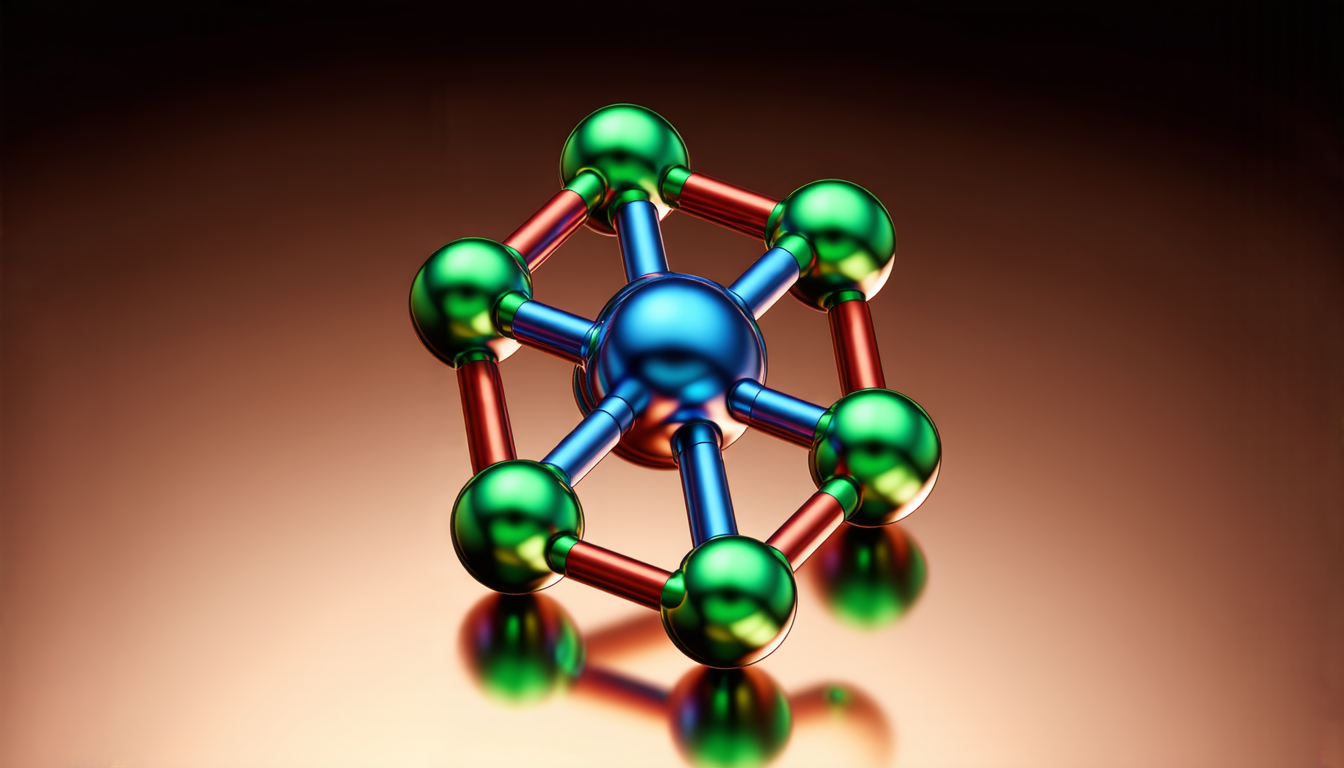
Metalloborophenes are a type of material that combines boron, a light element found in many minerals, with other metals to create unique properties. In this case, the researchers deposited boron onto a copper surface and observed the formation of nanoribbons with metal-centered boron wheels (M@B8). This structure is unlike any previously known material.
To understand how these nanoribbons form, scientists used scanning tunneling microscopy (STM) to study their surface. STM allows researchers to visualize individual atoms on a surface, providing valuable information about the structure and properties of materials.
The researchers also performed X-ray photoelectron spectroscopy (XPS), which measures the energy levels of electrons in a material. This technique helped them determine the chemical composition of the nanoribbons and how they interact with the copper surface.
In addition to experimental methods, the team used first-principles calculations to simulate the formation of these nanoribbons. These calculations, based on quantum mechanics, allowed researchers to model the behavior of atoms at the atomic scale.
The results showed that several factors contribute to the formation of metalloborophene nanoribbons on copper surfaces. For example, the boron must be deposited onto a clean and smooth copper surface, which is crucial for creating the desired structure. The researchers also found that the metal-centered boron wheels are responsible for the unique properties of these nanoribbons.
These findings have significant implications for the development of new materials with tailored properties. Metalloborophene nanoribbons could be used in various applications, such as catalysis and spintronics (the study of electronic spin).
The researchers believe that their discovery opens up new avenues for exploring the potential of metalloborophenes and other novel materials. Further studies will be necessary to fully understand the properties and applications of these nanoribbons, but this breakthrough marks an important step forward in the field of materials science.
The team’s research has shed light on the complex interactions between boron and copper atoms at the atomic scale, providing valuable insights into the formation mechanisms of metalloborophene nanoribbons.
Cite this article: “Synthesizing Metalloborophene Nanoribbons on Copper Surfaces”, The Science Archive, 2025.
Metalloborophene, Nanoribbons, Copper Surface, Scanning Tunneling Microscopy, X-Ray Photoelectron Spectroscopy, First-Principles Calculations, Quantum Mechanics, Boron, Catalysis, Spintronics





