

Sunday 02 February 2025
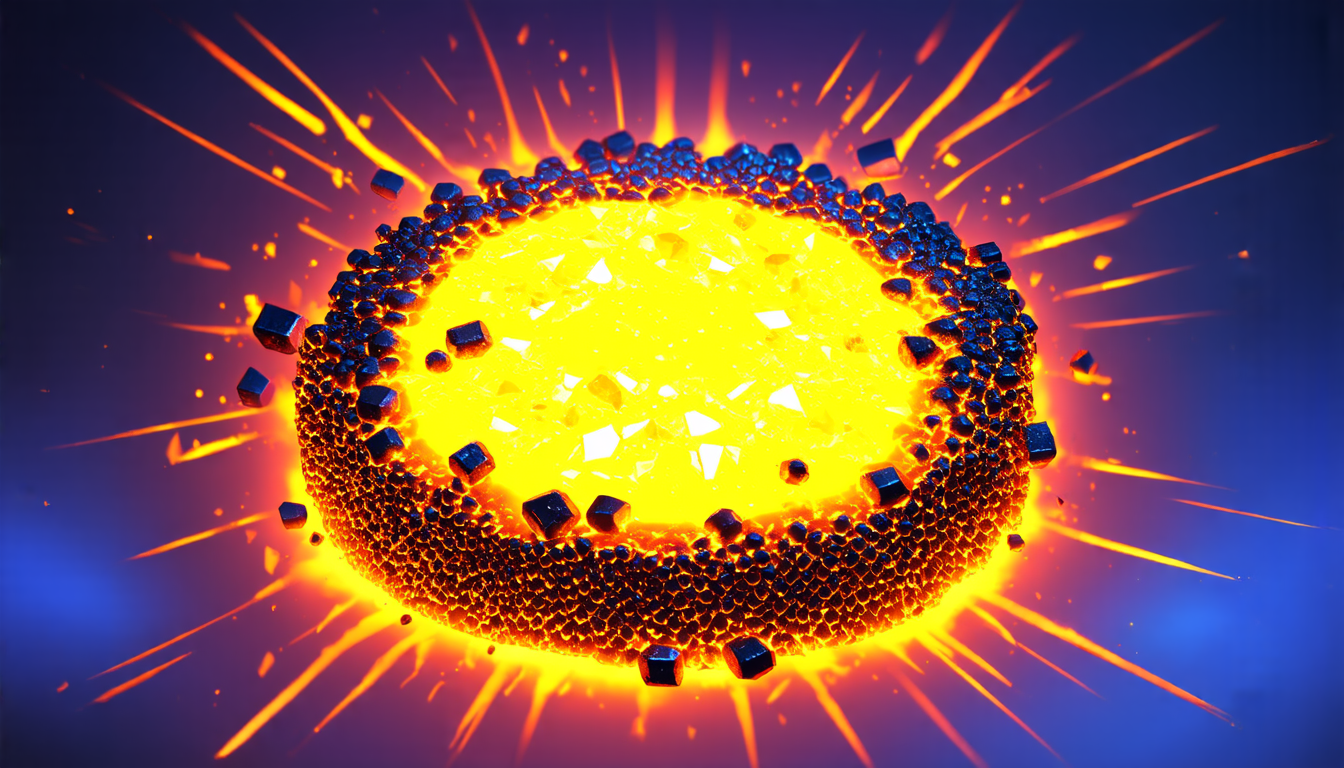
Scientists have made significant progress in understanding how to mitigate disruptions in fusion reactors, which could one day provide a nearly limitless source of clean energy. A team of researchers has developed a new simulation model that can accurately predict the behavior of shattered pellets injected into a plasma, a hot, ionized gas that fuels the reaction.
The model, called JOREK, uses complex algorithms to simulate the interactions between the pellets and the plasma. The pellets are designed to cool the plasma by radiating heat away from the reactor core, preventing a catastrophic loss of control. However, this process is highly dependent on the size, shape, and speed of the pellets.
The researchers used JOREK to simulate various scenarios involving different pellet sizes, shapes, and speeds. They found that smaller pellets are more effective at cooling the plasma, but also produce more radiation, which can be detrimental to the reactor. Larger pellets take longer to cool the plasma, but produce less radiation.
The team also discovered that the speed of the pellets plays a crucial role in their effectiveness. Faster pellets penetrate deeper into the plasma, allowing them to cool it more efficiently. However, this increased penetration also increases the risk of radiation damage to the reactor walls.
The simulations suggest that a combination of pellet size and speed may be the key to achieving optimal disruption mitigation. By using smaller, faster pellets, scientists may be able to reduce the amount of radiation produced while still effectively cooling the plasma.
These findings have important implications for the development of fusion reactors. By optimizing pellet design and injection strategies, researchers can improve the safety and efficiency of these devices. This could bring us closer to realizing the promise of fusion energy as a clean and virtually limitless source of power.
The next step is to test these simulations using experimental data from fusion reactors such as ASDEX Upgrade and JET. The results will provide valuable insights into how well the model can predict real-world behavior, allowing scientists to refine their understanding of pellet dynamics and improve disruption mitigation strategies.
In the long term, this research could pave the way for the development of commercial-scale fusion reactors that can provide a reliable source of clean energy for generations to come.
Cite this article: “Mitigating Disruptions in Fusion Reactors: Optimizing Pellet Design and Injection Strategies”, The Science Archive, 2025.
Fusion Reactors, Plasma, Pellets, Radiation, Cooling, Simulation, Jorek, Disruption Mitigation, Energy, Asdex Upgrade





