

Monday 03 February 2025
Scientists have been trying to understand the mysteries of quantum computing for decades, and a recent breakthrough has shed new light on the subject. Researchers have discovered that certain small-space machines, known as two-way finite automata (2FAs), can be used to prove the existence of quantum computers.
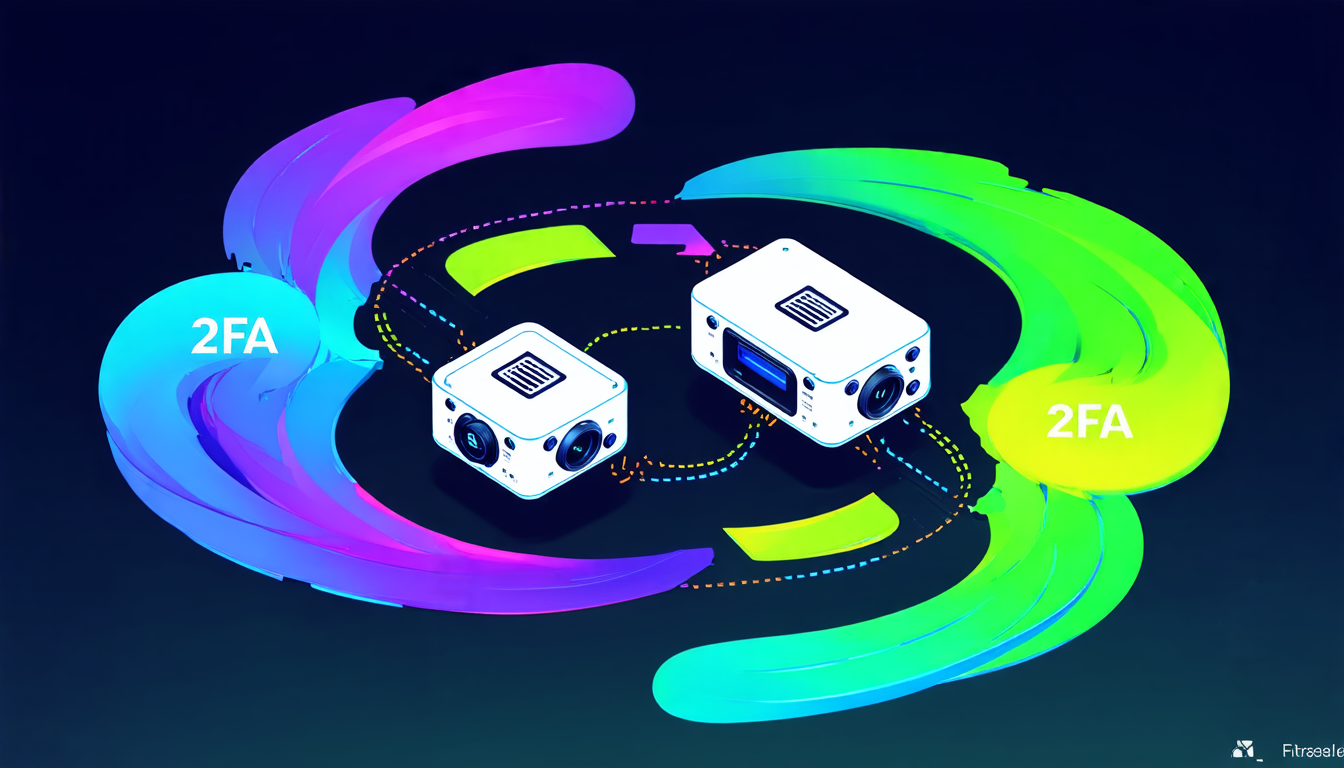
These 2FAs are essentially tiny machines that can process information in a way that’s different from traditional computers. They’re like tiny robots that can move around and perform tasks based on certain rules. But what makes them special is that they can also interact with each other in a way that’s similar to how quantum computers work.
In the past, scientists have been able to create small-space machines that can recognize certain patterns in data, but these new 2FAs take it a step further. They’re able to recognize patterns and make decisions based on those patterns, which is exactly what quantum computers do.
The researchers used these 2FAs to prove the existence of quantum computers by showing that they could solve certain problems more efficiently than traditional computers. This was done by creating a special kind of interaction between two 2FAs, which allowed them to work together in a way that’s similar to how quantum computers work.
This breakthrough has important implications for our understanding of quantum computing and its potential applications. It shows that small-space machines can be used to create more powerful computers that can solve complex problems more efficiently than traditional computers. This could lead to new advances in fields such as medicine, finance, and even artificial intelligence.
The researchers believe that their discovery could have a significant impact on the development of quantum computing and its potential applications. They hope that their work will inspire other scientists to explore the possibilities of 2FAs and small-space machines, and to see where they might lead in the future.
In summary, the recent breakthrough in the field of quantum computing has shed new light on the capabilities of small-space machines. These machines have been used to prove the existence of quantum computers by solving certain problems more efficiently than traditional computers. This could lead to new advances in fields such as medicine, finance, and even artificial intelligence.
Cite this article: “Quantum Computing Breakthrough: Small-Space Machines Prove Existence of Quantum Computers”, The Science Archive, 2025.
Quantum Computing, Two-Way Finite Automata, Small-Space Machines, Pattern Recognition, Decision-Making, Quantum Computers, Efficiency, Complex Problems, Artificial Intelligence, Medicine, Finance





