

Sunday 23 February 2025
Scientists have made a significant breakthrough in the field of control theory, developing a new approach to stabilize complex systems that are prone to chaos and uncertainty.
The researchers focused on a specific type of system known as nonlinear interconnected systems, which can be found in various fields such as engineering, biology, and economics. These systems are characterized by their non-linear behavior, meaning small changes can lead to large and unpredictable outcomes.
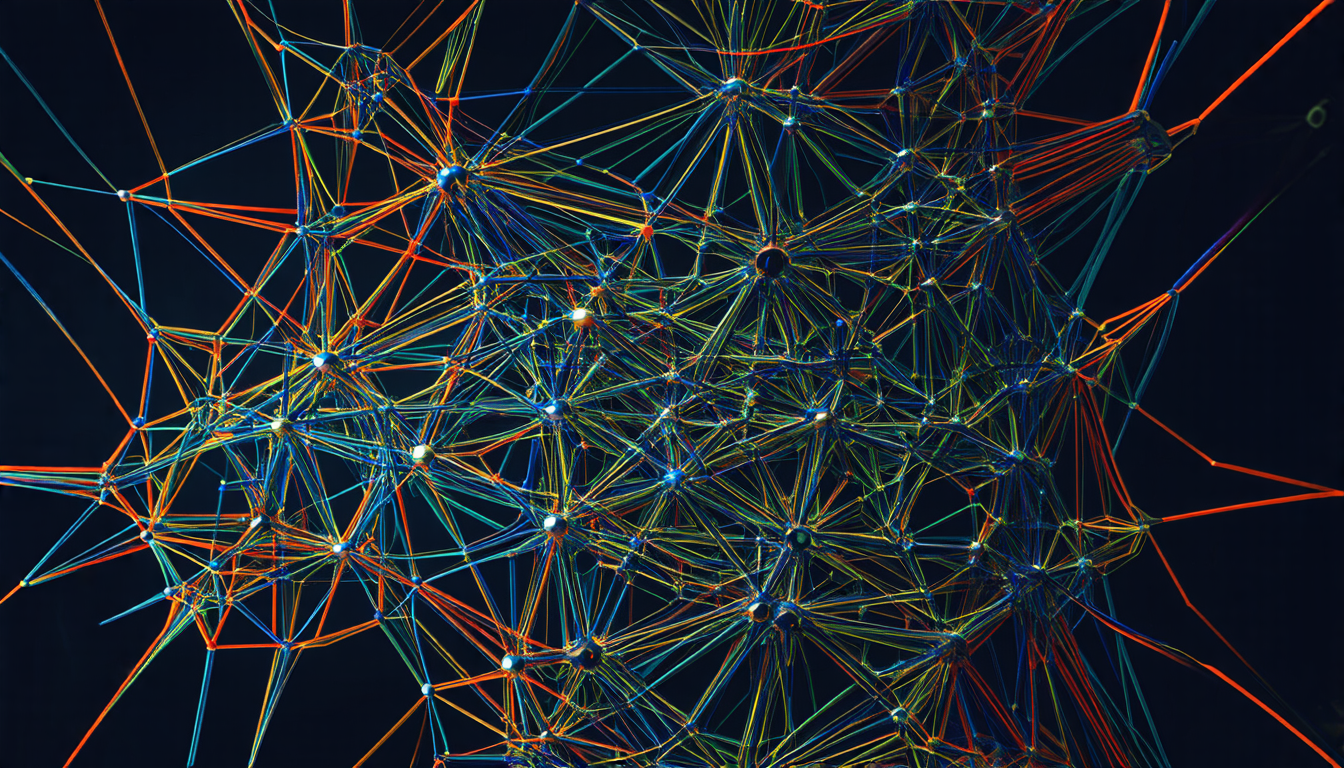
Traditionally, controlling these types of systems has been a challenging task due to the complexity of their dynamics. However, the new approach developed by the scientists uses a decentralized output-feedback control strategy, which involves breaking down the system into smaller components that communicate with each other through intermittent signals.
The key innovation lies in the use of event-triggered communication, where the frequency and timing of the signals are determined by the system’s own dynamics. This allows for more efficient and adaptive control, as the system can adjust its behavior in response to changing conditions.
The researchers demonstrated the effectiveness of their approach using a series of simulations and experiments on real-world systems. The results showed that the decentralized output-feedback controller was able to stabilize the system, even when faced with significant uncertainties and noise.
One of the most exciting aspects of this breakthrough is its potential applications in various fields. For example, it could be used to improve the stability of power grids, which are critical infrastructure for modern societies. It could also be applied to biological systems, such as the study of complex networks within cells or ecosystems.
The development of this new approach highlights the importance of interdisciplinary research, where scientists from different fields come together to tackle complex problems. The collaboration between control theorists, engineers, and biologists has led to a deeper understanding of nonlinear interconnected systems and the development of innovative solutions to stabilize them.
As our world becomes increasingly complex and interconnected, the ability to control and stabilize these systems will be crucial for achieving stability and resilience in various domains. This breakthrough provides a promising step towards achieving this goal, and it is likely to have far-reaching implications for many fields in the years to come.
Cite this article: “Stabilizing Complex Systems: A Breakthrough in Control Theory”, The Science Archive, 2025.
Control Theory, Nonlinear Systems, Decentralized Control, Event-Triggered Communication, Output-Feedback Control, Complex Systems, Stability, Uncertainty, Noise, Interdisciplinary Research.





