

Sunday 23 February 2025
Physics students are often taught that correlation does not imply causation, but it can be tricky to put this into practice when faced with real-world data. A new classroom activity aims to help young scientists develop their critical thinking skills by analyzing a fictional news report linking ice cream sales to drowning deaths.
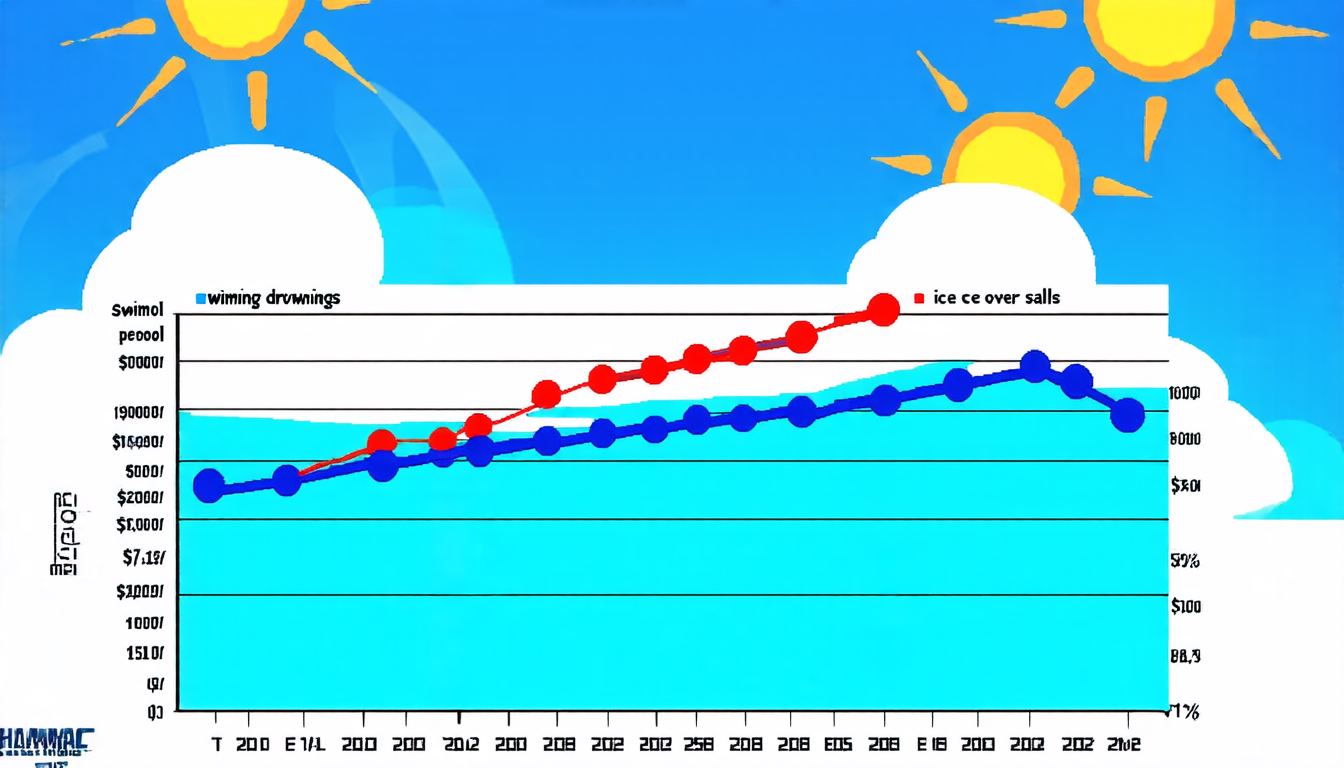
The exercise begins with a hypothetical news article claiming to have discovered a connection between the two variables, accompanied by monthly data on swimming pool drownings and ice cream sales in the US for 2022. Students are tasked with plotting the data and extracting relevant information, before attempting to draw conclusions about the relationship between the two variables.
The results are varied, but most students quickly spot a correlation between the number of drowning deaths and ice cream sales. However, some groups struggle to identify the underlying cause of this correlation, often mistakenly attributing it to a causal link between ice cream consumption and swimming pool accidents.
Meanwhile, other teams recognize that the real culprit is temperature – more people tend to buy ice cream in the summer months when temperatures are higher, and it’s also during this time that there are more drowning deaths. This exercise highlights the importance of considering multiple factors when interpreting data, and encourages students to think critically about the relationships they observe.
One of the benefits of this activity is its ability to engage students with real-world data, while also teaching them important scientific skills such as data analysis and critical thinking. By presenting the problem in a news report format, the exercise mimics the way scientists often encounter complex issues – with incomplete or misleading information that requires careful consideration.
The activity also provides an opportunity for educators to discuss the subjective nature of data interpretation, highlighting how different representations of the same data can lead to different conclusions. This is particularly relevant in today’s world, where students are constantly bombarded with information and must learn to evaluate the credibility of scientific claims.
By tackling complex issues like correlation versus causation, this activity helps young scientists develop a robust understanding of scientific principles and prepares them for the challenges they will face as they navigate the complexities of real-world data.
Cite this article: “Teaching Critical Thinking with Correlation vs. Causation”, The Science Archive, 2025.
Correlation, Causation, Critical Thinking, Data Analysis, Scientific Skills, News Report, Temperature, Drowning Deaths, Ice Cream Sales, Statistics





