

Sunday 23 February 2025
The quest for a more accurate way to detect the core-periphery structure in complex networks has been ongoing for some time now. Researchers have proposed various methods, but they often struggle to accurately identify these structures, which are crucial in understanding network behavior and dynamics.
A recent study published in the Proceedings of the Royal Society A sheds new light on this issue by proposing a novel nonlinear spectral method for core-periphery detection in multilayer networks. The method is designed to overcome some of the limitations of existing approaches, particularly when dealing with large-scale networks.
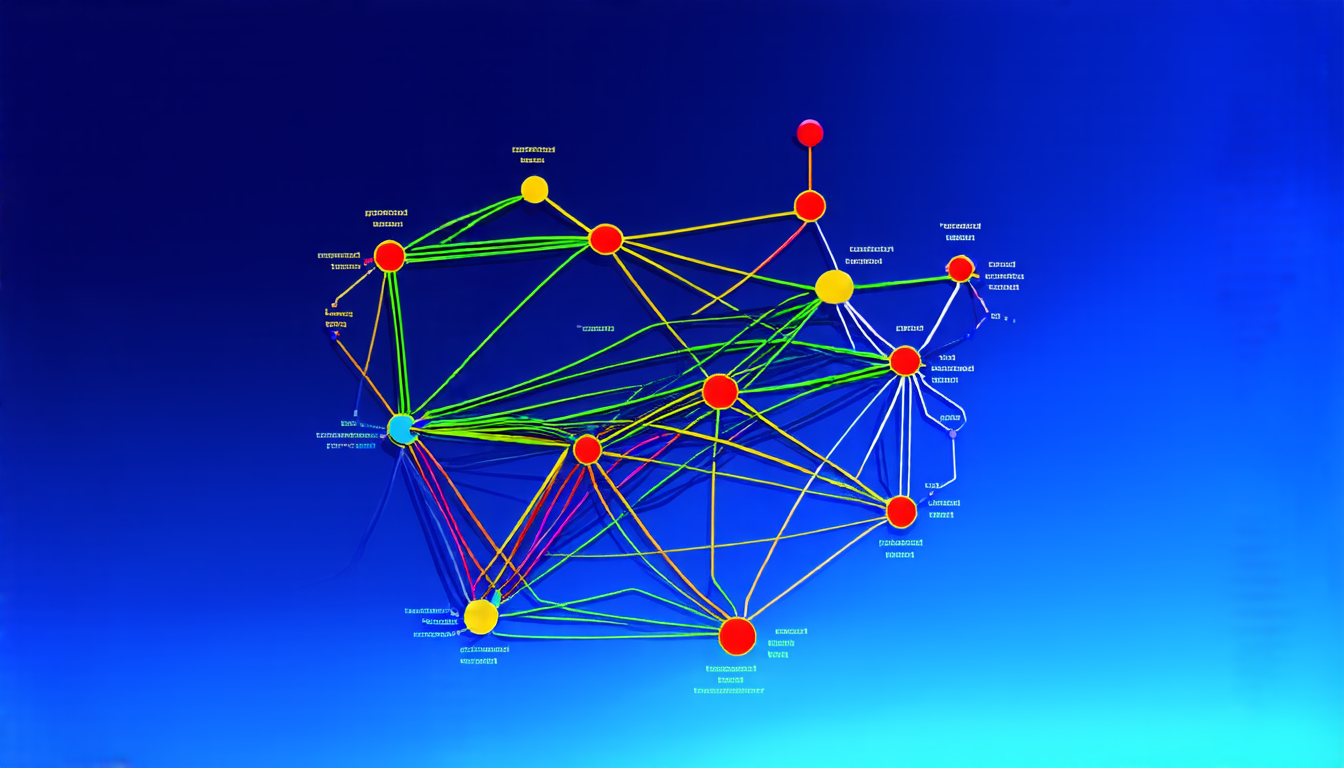
The researchers begin by introducing the concept of multilayer networks, which consist of multiple layers representing different types of interactions or relationships between nodes. In such networks, identifying the core-periphery structure can be challenging due to the complexity of these interactions.
To address this issue, the authors develop a nonlinear spectral method that leverages the properties of tensor algebra and Perron-Frobenius theory. The approach is based on a novel formulation of the problem as a non-convex optimization problem, which allows for more accurate identification of the core-periphery structure.
The researchers test their method on three empirical multilayer networks from different application areas: a citation network of complex network scientists, an European airlines transportation network, and a world trade network. The results show that their method outperforms existing approaches in terms of accuracy and computational efficiency.
One of the key advantages of this method is its ability to detect both node- and layer-level core-periphery structures simultaneously. This is particularly useful in multilayer networks where the relationships between nodes can vary significantly across different layers.
The study also highlights the importance of considering the nonlinearity of network interactions when detecting core-periphery structures. Traditional methods often rely on linear assumptions, which can lead to inaccurate results in complex networks.
The authors’ approach has far-reaching implications for various fields, including network science, social network analysis, and data mining. It provides a powerful tool for analyzing complex multilayer networks and identifying the underlying structure of these systems.
As researchers continue to develop more sophisticated methods for detecting core-periphery structures, this study serves as an important step forward in advancing our understanding of complex networks. By leveraging nonlinear spectral methods, scientists can gain valuable insights into the behavior and dynamics of these systems, ultimately leading to better models and predictions.
Cite this article: “Accurate Core-Periphery Detection in Multilayer Networks Using Nonlinear Spectral Methods”, The Science Archive, 2025.
Multilayer Networks, Core-Periphery Structure, Nonlinear Spectral Method, Tensor Algebra, Perron-Frobenius Theory, Optimization Problem, Network Science, Social Network Analysis, Data Mining, Complex Networks
Reference: Kai Bergermann, Francesco Tudisco, “Core-periphery detection in multilayer networks” (2024).





