

Sunday 23 February 2025
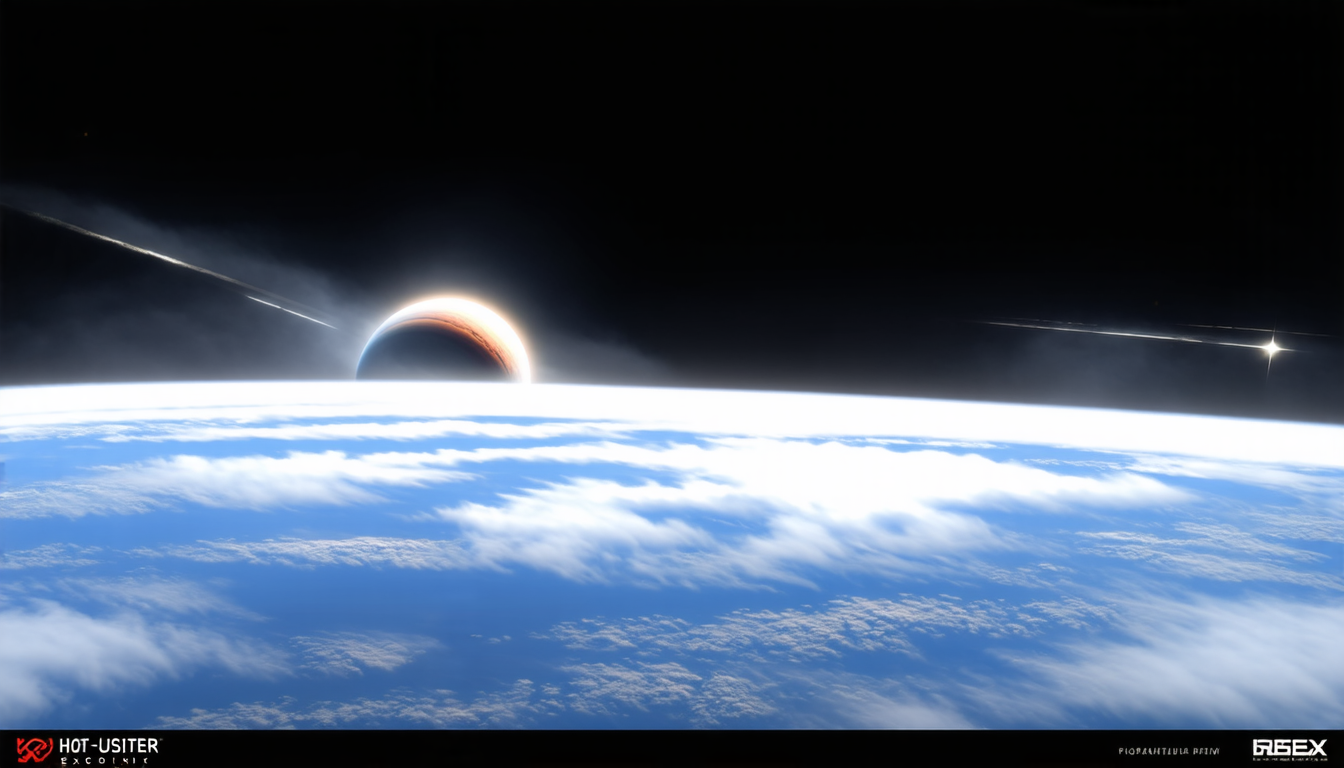
A peculiar exoplanet has caught scientists’ attention, and for good reason. HD 143105 b is a hot Jupiter that’s unlike any other we’ve seen before. While most hot Jupiters are gas giants that orbit their stars in just a few days, this one takes about 10 times longer to complete its orbit.
The unusual orbit of HD 143105 b is just the beginning. The planet itself is also quite peculiar. It’s a scorching hot world with surface temperatures reaching as high as 2,000°F (1,093°C). That’s hotter than most stars! This intense heat is likely due to the fact that the planet is losing mass at an alarming rate.
Scientists believe this mass loss is happening because HD 143105 b has a very slow rotation period. It takes about 10 times longer for the planet to rotate once on its axis than it does to orbit its star. This slow rotation leads to strong winds that strip away the planet’s atmosphere, causing it to lose mass.
The team of scientists behind this discovery used data from the Keck Observatory in Hawaii to study HD 143105 b. They analyzed the light reflected off the planet as it passed in front of its star, allowing them to determine its orbit and composition.
One of the most interesting aspects of HD 143105 b is its potential for hosting a unique atmosphere. The planet’s slow rotation and intense heat could create an atmosphere that’s rich in exotic chemicals like iron and magnesium. This could make it an exciting target for future studies into the chemistry of exoplanet atmospheres.
HD 143105 b may be a strange and inhospitable world, but its study has the potential to reveal new insights into the formation and evolution of planets outside our solar system. As scientists continue to explore this peculiar exoplanet, they may uncover secrets that could help us better understand how planets form and change over time.
Cite this article: “The Peculiar Case of HD 143105 b: A Scorching Hot Jupiter with a Unique Atmosphere”, The Science Archive, 2025.
Hot Jupiter, Exoplanet, Orbit, Gas Giant, Surface Temperature, Mass Loss, Slow Rotation, Wind, Atmosphere, Chemistry





