

Wednesday 26 February 2025
Scientists have long been fascinated by the way fluids flow through complex networks, such as porous media and microfluidic devices. Recently, researchers have made a significant breakthrough in understanding the behavior of viscoelastic polymer solutions, which are commonly used in industrial processes like oil recovery and chemical synthesis.
Viscoelastic polymers are unique because they exhibit both viscous and elastic properties. Viscosity is the measure of how thick or thin a fluid is, while elasticity refers to its ability to deform and then return to its original shape. This dual nature makes them useful for manipulating fluids in tight spaces, like between grains of sand or through narrow channels.
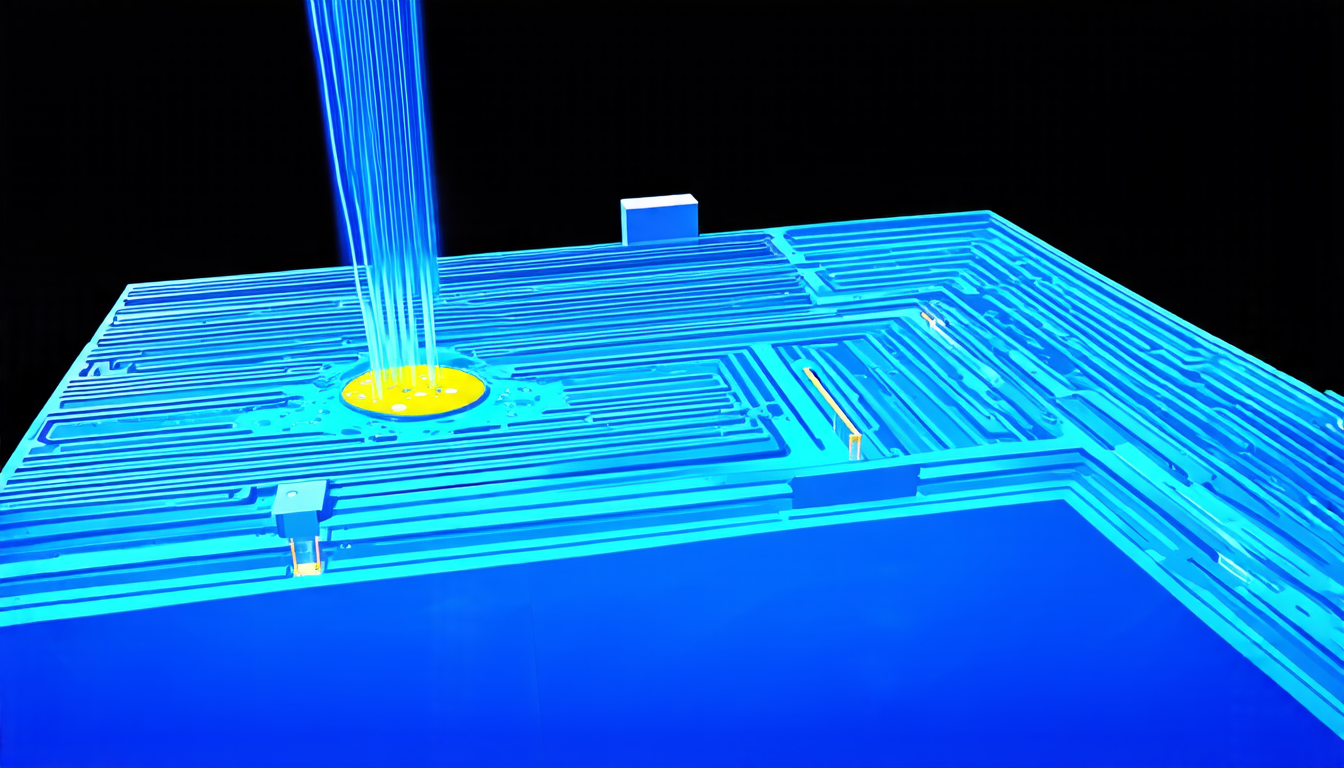
In their study, researchers used microfluidic devices to create intricate networks of tiny channels that mimic the structure of porous media. They then flowed viscoelastic polymer solutions through these channels and observed how they behaved under different conditions.
One of the most interesting findings was the discovery of a new type of flow instability that occurs when the fluid is forced to navigate around obstacles, such as grain contacts or cylinder arrays. This instability leads to the formation of chaotic fluctuations in the fluid’s velocity, which can greatly increase its resistance to flow.
The researchers also found that the behavior of the viscoelastic polymer solutions was highly dependent on the geometry and properties of the porous media. For example, they discovered that the presence of grain contacts or cylinder arrays could either enhance or suppress the flow instability, depending on the specific conditions.
These findings have significant implications for industrial processes that rely on fluid flow through complex networks. By better understanding how viscoelastic polymer solutions behave in these environments, researchers can develop more effective strategies for optimizing fluid flow and improving overall efficiency.
The study also highlights the importance of considering the interplay between fluid properties and porous media structure when designing experiments or models. By taking into account the intricate details of both the fluid and its environment, scientists can gain a deeper understanding of the complex phenomena that govern fluid flow in these systems.
In the future, researchers plan to build on this work by exploring other types of fluids and porous media structures. They hope to develop more accurate models of fluid behavior that can be used to optimize industrial processes and improve our understanding of complex physical phenomena.
Cite this article: “Unraveling Fluid Flow in Complex Networks: A Breakthrough in Understanding Viscoelastic Polymer Solutions”, The Science Archive, 2025.
Fluid Dynamics, Viscoelastic Polymers, Microfluidic Devices, Porous Media, Flow Instability, Chaotic Fluctuations, Fluid Resistance, Grain Contacts, Cylinder Arrays, Industrial Processes





