

Wednesday 26 February 2025
The intricate dance of fractals and measures has long fascinated mathematicians, but a recent study sheds new light on this complex relationship. By examining the interplay between self-similar sets and projections, researchers have made significant strides in understanding the fundamental properties of these fractal families.
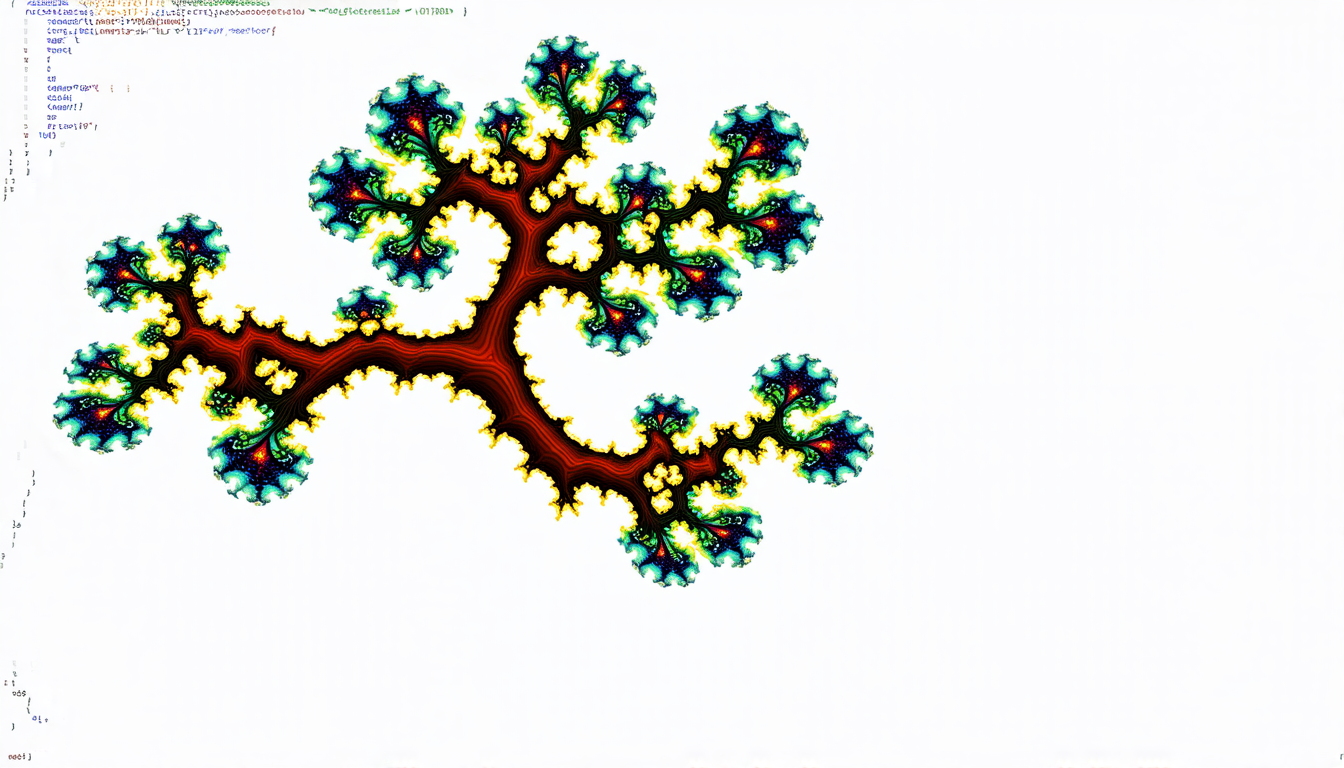
Fractals are mathematical objects that exhibit unique patterns and structures at different scales. They can be found in nature, from the intricate branching of trees to the swirling shapes of galaxies. Measures, on the other hand, are mathematical constructs used to describe the size and complexity of sets. By combining these two concepts, mathematicians have developed a framework for understanding the properties of fractals.
The study focuses on self-similar sets, which are fractals that resemble smaller versions of themselves. These sets can be created by iteratively applying a set of rules to a starting shape. Researchers have long been interested in the properties of these sets, including their dimension and measure. However, the relationship between self-similar sets and projections has remained elusive.
Projections refer to the process of mapping a fractal onto a lower-dimensional space, such as projecting a three-dimensional object onto a two-dimensional surface. This process can significantly alter the properties of the fractal, making it more difficult to understand.
The new study reveals that the dimension and measure of self-similar sets are closely tied to the properties of their projections. Specifically, researchers found that the dimension of the set is equal to the minimum of its own dimension and the dimension of the projection. This result has significant implications for our understanding of fractals and measures.
One of the most fascinating aspects of this study is its potential applications in fields such as physics and biology. Fractals can be used to model complex systems, from the behavior of particles at the atomic level to the growth patterns of organisms. By better understanding the properties of these fractals, researchers may be able to develop new models that more accurately predict their behavior.
The study also has implications for our understanding of the fundamental laws of mathematics. The relationship between self-similar sets and projections challenges our traditional notions of dimension and measure, forcing us to reexamine our assumptions about the nature of space and time.
Overall, this research represents a significant step forward in our understanding of fractals and measures. By exploring the intricate dance between these two concepts, mathematicians are gaining new insights into the fundamental properties of complex systems, with potential applications in fields ranging from physics to biology.
Cite this article: “Unraveling the Relationship Between Fractals and Measures”, The Science Archive, 2025.
Fractals, Measures, Self-Similar Sets, Projections, Dimension, Mathematical Objects, Complex Systems, Physics, Biology, Mathematics





