

Thursday 27 February 2025
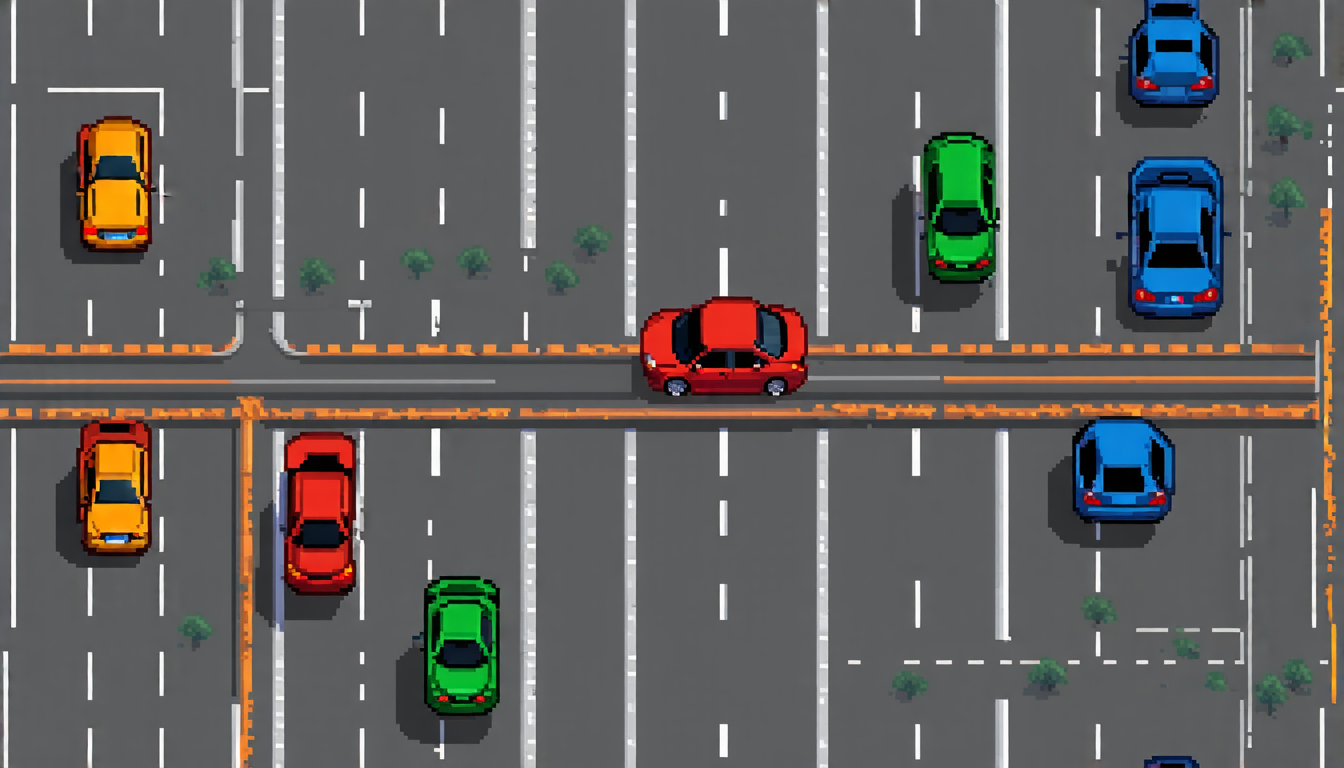
Researchers have made significant progress in developing a new method for predicting the movement of vehicles, which has far-reaching implications for improving traffic flow and reducing congestion on our roads.
The key to this innovation lies in the use of spatial-temporal attention-based methodology, which involves analyzing vast amounts of data on vehicle movements and extracting meaningful patterns. By doing so, it’s possible to anticipate where a vehicle is likely to go next, allowing for more efficient routing and reduced traffic jams.
To achieve this, researchers employed a range of advanced algorithms and machine learning techniques, including graph attention networks and transformer technology. These tools enabled them to process large amounts of data in real-time, identifying patterns and relationships that would be difficult or impossible for humans to detect on their own.
One of the most promising aspects of this research is its potential to improve safety on our roads. By predicting where vehicles are likely to move next, it may be possible to prevent accidents caused by sudden stops or changes in direction. Additionally, the technology could be used to optimize traffic flow, reducing congestion and minimizing delays.
The study’s findings were validated using two large datasets: T-Drive and Chengdu taxi-trajectory. The results showed that the new methodology outperformed existing methods in predicting vehicle movement, with an average match rate of 6.38% higher on the Beijing dataset and 10.55% higher on the Chengdu dataset.
While there’s still much work to be done before this technology can be implemented on a large scale, the potential benefits are significant. As our cities continue to grow and urbanization becomes increasingly complex, finding ways to manage traffic flow efficiently will become more critical than ever.
The development of this new methodology is an important step forward in this area, offering a promising solution to one of the most pressing challenges facing modern transportation systems.
Cite this article: “Predictive Vehicle Movement Methodology: A Breakthrough in Improving Traffic Flow and Safety”, The Science Archive, 2025.
Vehicle Movement Prediction, Traffic Flow, Congestion Reduction, Spatial-Temporal Attention, Machine Learning, Graph Attention Networks, Transformer Technology, Real-Time Data Processing, Road Safety, Urbanization.





