

Friday 28 February 2025
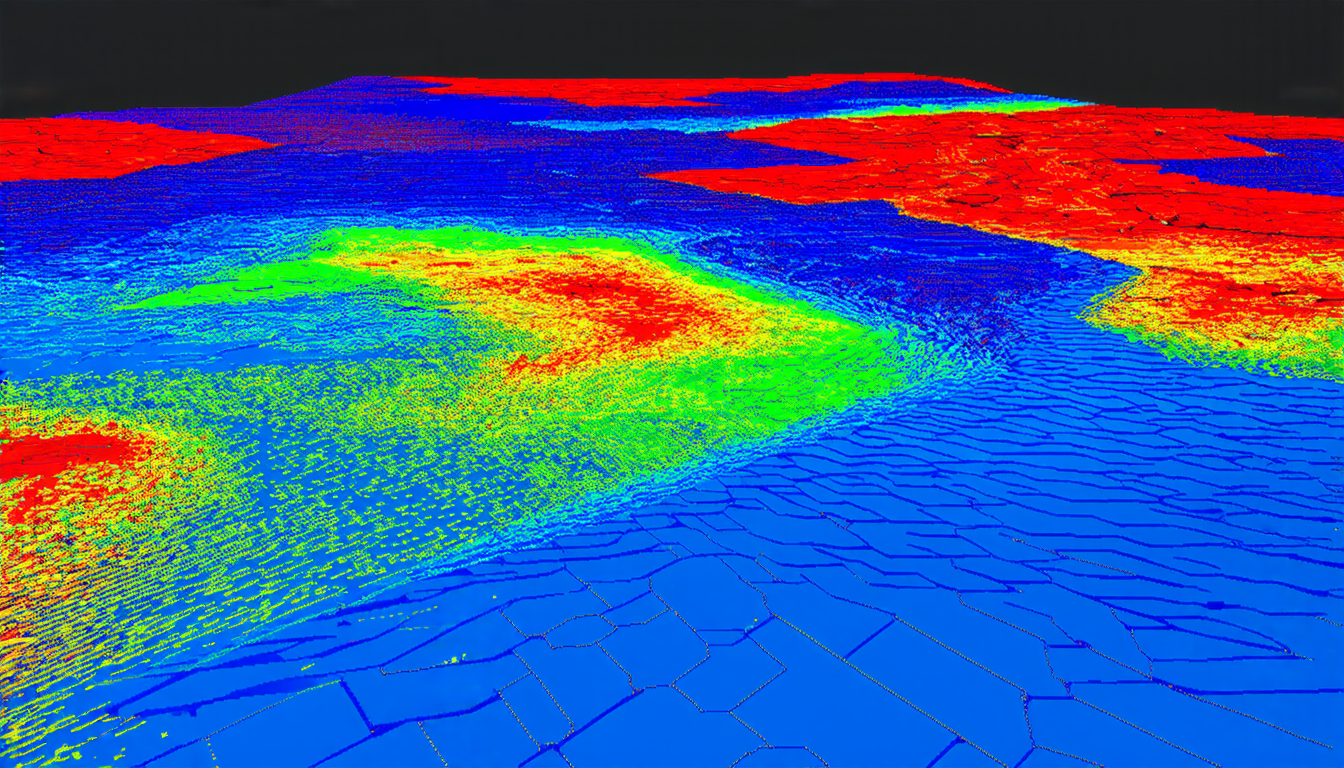
The tiny tremors that shape our planet’s surface are getting more attention than ever before, thanks to a new approach to understanding seismic activity. By incorporating minute earthquakes into the equation, researchers have managed to create a more accurate model of how tectonic plates interact and release energy.
For decades, seismologists have relied on traditional methods to study earthquakes, focusing on larger events that can cause widespread destruction. However, this approach has left a significant gap in our understanding of seismic activity – the tiny tremors that occur every day, often too small to be felt by humans.
These microquakes are more than just a nuisance; they play a crucial role in shaping the Earth’s surface and releasing built-up stress between tectonic plates. By studying these events, scientists can gain valuable insights into the underlying processes that drive earthquakes and volcanic eruptions.
The new approach uses a mathematical technique called Levy jump processes to model seismic activity at all scales. This involves treating microquakes as individual events rather than simply ignoring them or aggregating them with larger quakes. The result is a more comprehensive picture of how tectonic plates interact and release energy.
One of the key findings from this research is that the traditional approach to seismology has been oversimplifying the complexity of earthquake activity. By incorporating microquakes, scientists have discovered that seismicity operates at multiple scales, with smaller events influencing larger ones in complex ways.
This new understanding has significant implications for our ability to predict earthquakes and volcanic eruptions. By taking into account the tiny tremors that occur every day, scientists may be able to identify warning signs of impending disasters more effectively.
The research also opens up new avenues for studying other geological phenomena, such as landslides and floods. By applying the same mathematical techniques used in seismology, scientists can gain a better understanding of how these events are triggered and how they interact with each other.
As our understanding of seismic activity continues to evolve, it’s clear that the tiny tremors that shape our planet’s surface will play an increasingly important role in shaping our understanding of the Earth. By embracing this complexity, scientists can unlock new insights into the workings of our dynamic planet.
Cite this article: “Unlocking the Secrets of Seismic Activity: A New Approach to Understanding Tiny Tremors”, The Science Archive, 2025.
Seismology, Earthquakes, Tectonic Plates, Microquakes, Levy Jump Processes, Mathematical Techniques, Seismic Activity, Earthquake Prediction, Volcanic Eruptions, Geological Phenomena.





