
Friday 28 February 2025
The latest development in fluid antenna systems has taken a significant leap forward, enabling the simultaneous optimization of communication and sensing objectives. Researchers have designed a novel framework that integrates block coordinate descent (BCD) and deep reinforcement learning (DRL), allowing for real-time decision-making in complex scenarios.
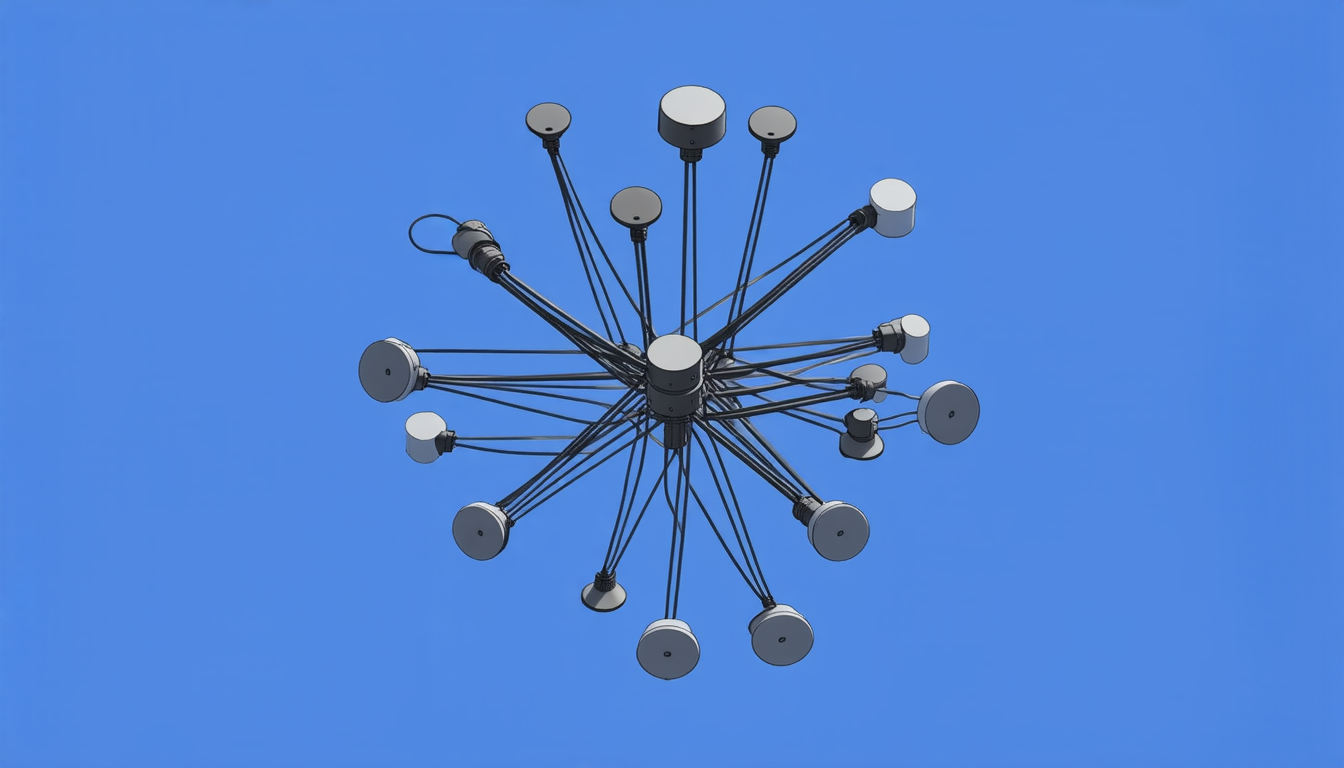
In traditional ISAC systems, fixed-position antennas are used to balance communication and sensing performance. However, this approach is limited by the inflexibility of antenna positions, making it challenging to adapt to changing environmental conditions or multiple targets. Fluid antenna systems, on the other hand, offer a transformative solution by enabling dynamic repositioning of antennas within defined regions.
The new framework leverages DRL to optimize antenna positions while ensuring effective beamforming and sensing performance. The algorithm uses a combination of convolutional neural networks (CNNs) and recurrent neural networks (RNNs) to learn policies that balance communication and sensing objectives. The CNN extracts spatial features from the antenna positions, while the RNN predicts future actions based on past experiences.
Simulation results demonstrate the scalability and efficiency of fluid antenna systems, showcasing improved performance in scenarios with multiple targets. The proposed framework outperforms traditional ISAC systems by up to 27% in terms of maximum achievable communication rates. Additionally, it is capable of adapting to changing environmental conditions, making it a promising solution for real-world applications.
The integration of BCD and DRL enables the framework to efficiently solve complex optimization problems with multiple constraints. The algorithm’s ability to learn from experience and adapt to new situations makes it an attractive solution for dynamic environments where antenna positions need to be optimized in real-time.
Overall, this development has significant implications for future wireless communication systems, enabling more efficient use of resources and improved performance in a wide range of applications.
Cite this article: “Real-Time Optimization of Fluid Antenna Systems with Deep Reinforcement Learning”, The Science Archive, 2025.
Fluid Antenna Systems, Integrated Sensing And Communication, Block Coordinate Descent, Deep Reinforcement Learning, Real-Time Decision-Making, Dynamic Repositioning, Beamforming, Sensing Performance, Wireless Communication Systems, Optimization Problems