

Friday 28 February 2025
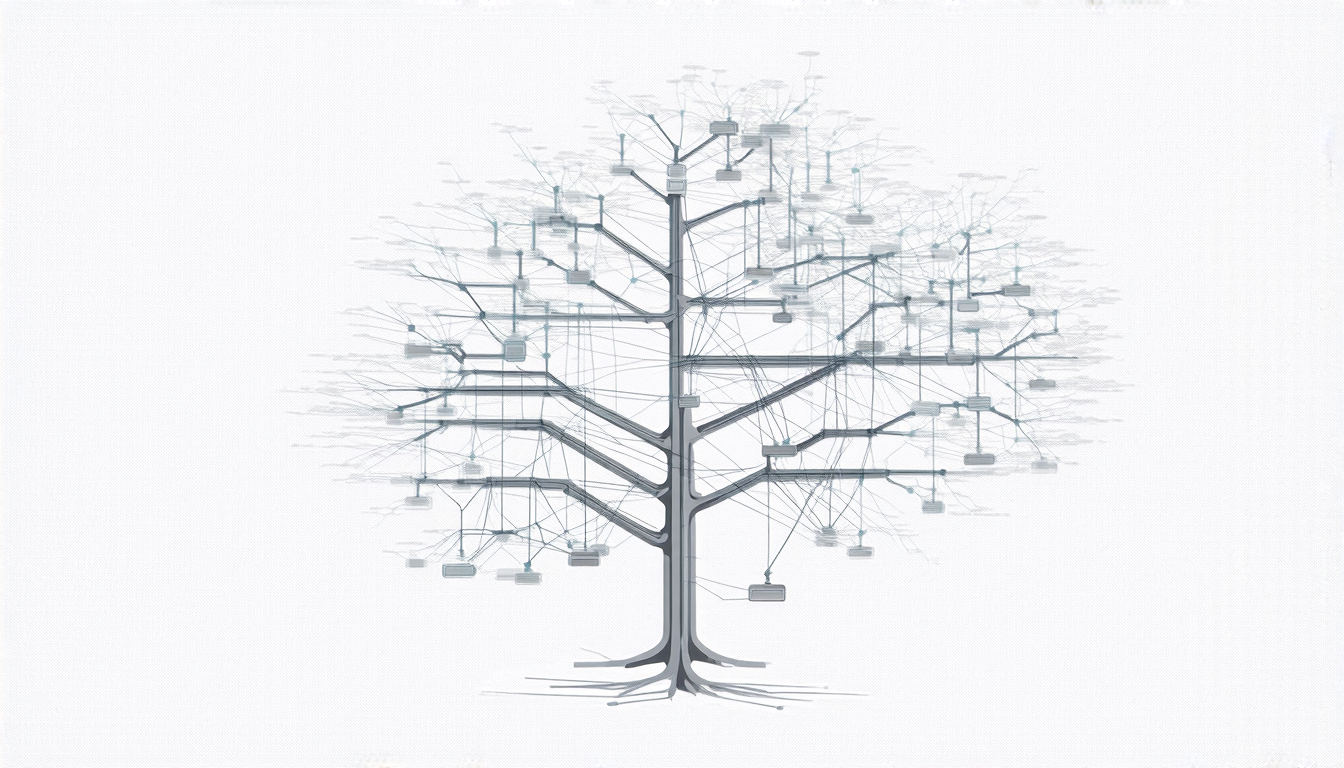
The pursuit of efficiency in computing has led researchers down a fascinating path, as they investigate the intricacies of computation trees. These towering structures, comprising nodes and branches, are used to solve problems by evaluating expressions and operations. In a recent study, scientists have delved into the optimization and decision-making processes surrounding these trees, yielding valuable insights for future computing endeavors.
At its core, the challenge lies in finding the most efficient way to solve problems using computation trees. This involves not only minimizing the number of nodes and branches but also ensuring that each step is executed with precision. To tackle this complexity, researchers have developed novel algorithms that can identify optimal paths through the tree, minimizing computational overhead.
One of the key findings is that certain types of complexity measures, known as e-complexity measures, can be used to optimize computation trees. These measures take into account not only the number of nodes and branches but also the relationships between them, allowing for more informed decision-making. This approach has been shown to significantly improve the efficiency of computation trees, making them more practical for real-world applications.
The study also explores the relationship between optimization and decision-making in computation trees. By analyzing the properties of these trees, researchers can identify patterns and trends that inform their design and implementation. This, in turn, enables developers to create more effective algorithms that adapt to changing conditions and environments.
Moreover, the investigation into computation trees has shed light on the connections between different areas of mathematics and computer science. The study’s findings have implications for fields such as logic, algebra, and theoretical computer science, highlighting the interconnectedness of these disciplines.
The potential applications of this research are vast and varied. Computation trees can be used in a wide range of domains, from artificial intelligence and machine learning to cryptography and data analysis. By optimizing these trees, developers can create more efficient algorithms that solve complex problems with greater speed and accuracy.
As researchers continue to explore the intricacies of computation trees, they will undoubtedly uncover new insights and breakthroughs. The pursuit of efficiency in computing is a never-ending journey, and this study represents a significant step forward in understanding the complexities of these towering structures.
Cite this article: “Unlocking Efficiency: A Study on Computation Trees”, The Science Archive, 2025.
Computation Trees, Optimization, Decision-Making, Efficiency, Algorithms, Complexity Measures, E-Complexity, Node, Branch, Computer Science, Mathematics
Reference: Mikhail Moshkov, “Algorithmic Problems for Computation Trees” (2025).





