

Friday 28 February 2025
The latest innovation in anti-counterfeiting technology has taken a significant leap forward, thanks to a team of researchers who have developed a novel solution that combines physical and optical properties to create a highly secure label.
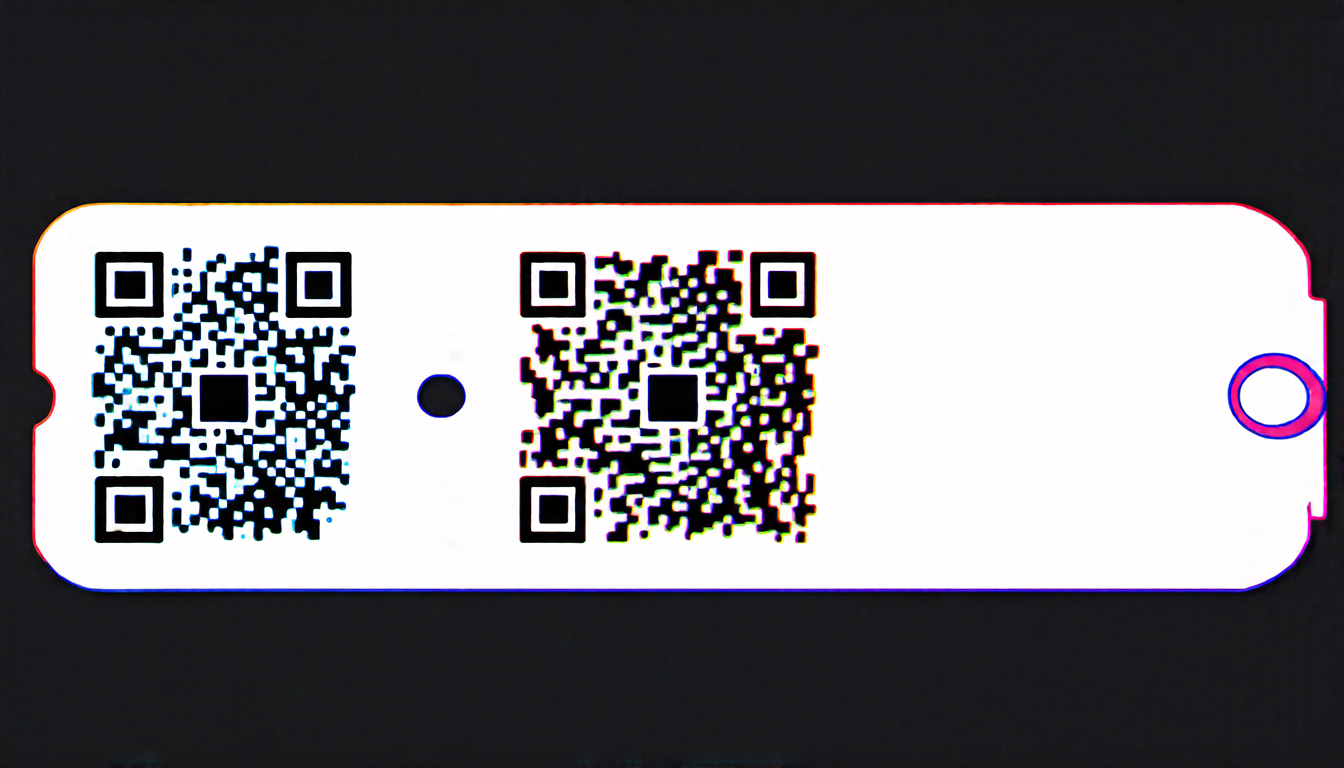
At its core, this new label is based on a polymer-dispersed liquid crystal (PDLC) material that can be camouflaged to conceal a QR code. The PDLC is created by mixing a polymer with a liquid crystal, which is then applied to a flexible substrate. When the label is exposed to heat or light, the liquid crystal changes its molecular structure, allowing the QR code to become visible.
But what makes this label truly unique is the addition of an optical nanocavity, made up of layers of silver and zinc oxide, which are deposited on top of the PDLC material. This nanocavity gives the label its distinctive color-changing properties, allowing it to reflect light in different ways depending on whether it’s viewed from above or below.
The result is a label that not only conceals a QR code but also offers multiple layers of security. The first layer is the camouflaged QR code, which can only be revealed by applying heat or light. The second layer is the optical properties of the nanocavity, which can be used to authenticate the label.
To test the effectiveness of this new label, researchers conducted a series of experiments, including exposure to water, bending, and repeated heating and cooling. In each case, the label remained intact and continued to function as intended.
The implications of this technology are significant. Imagine being able to verify the authenticity of products without needing expensive laboratory equipment or complex authentication processes. This new label could be used in a wide range of applications, from luxury goods to pharmaceuticals, providing an added layer of security for consumers.
But what’s most impressive about this innovation is its versatility. The researchers have demonstrated that it’s possible to create labels with different transition temperatures, allowing them to be used in a variety of environments. For example, one label might be designed for use in high-temperature applications, while another might be better suited for low-temperature environments.
As the world continues to grapple with issues of counterfeiting and product authentication, this new label offers a promising solution. Its combination of physical and optical properties makes it an attractive option for industries looking to add an extra layer of security to their products.
Cite this article: “Revolutionary Anti-Counterfeiting Label Offers Multi-Layered Security”, The Science Archive, 2025.
Anti-Counterfeiting, Label, Technology, Qr Code, Polymer-Dispersed Liquid Crystal, Nanocavity, Security, Authentication, Luxury Goods, Pharmaceuticals





