

Saturday 01 March 2025
Researchers have been working on developing a more accurate and efficient way to detect diabetic retinopathy, a common complication of diabetes that can lead to blindness if left untreated. A new study has made significant progress in this area by combining advanced data augmentation techniques with convolutional neural networks.
Diabetic retinopathy is a condition where high blood sugar levels damage the blood vessels in the retina, leading to vision loss or even blindness. Early detection and treatment are crucial to preventing severe vision loss, but traditional methods of detection rely on manual examination by trained ophthalmologists. This can be time-consuming and may not always result in accurate diagnoses.
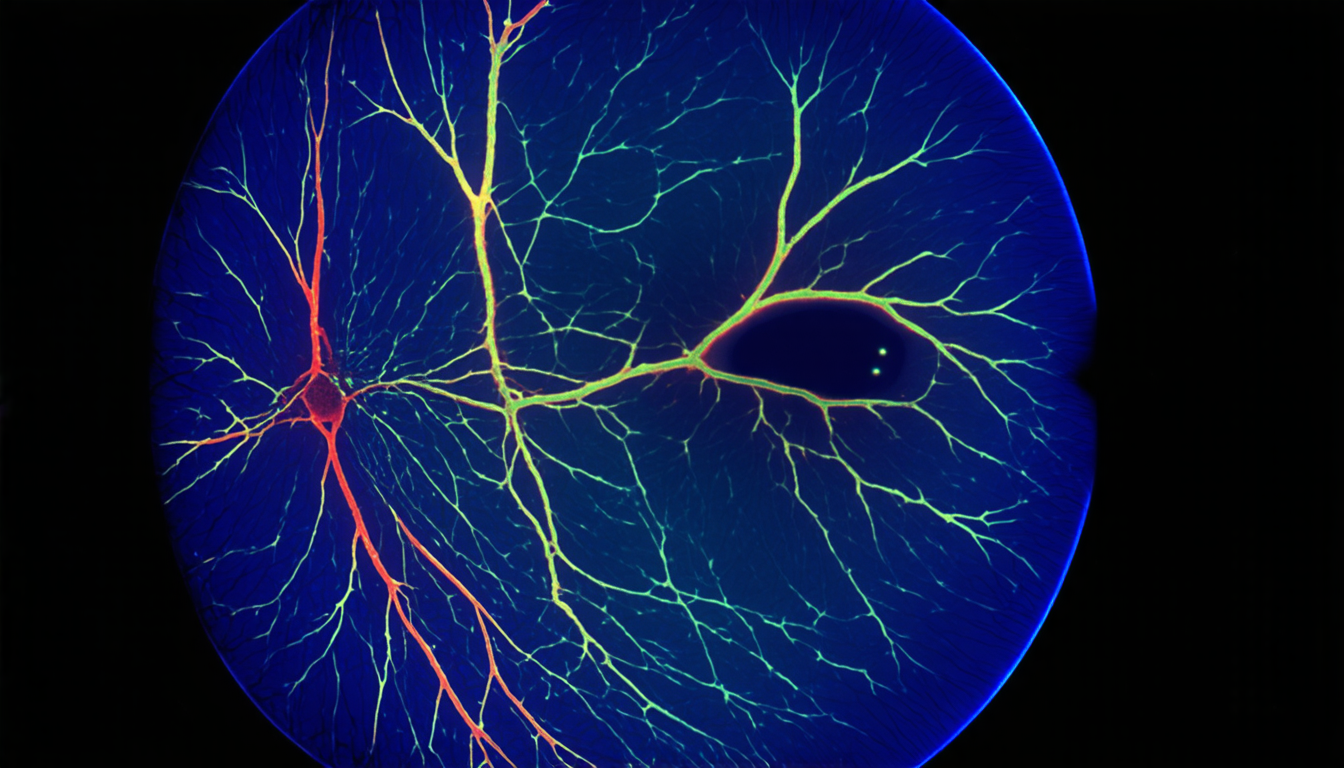
To address this issue, researchers have been exploring the use of artificial intelligence and machine learning algorithms to detect diabetic retinopathy from fundus images. These images are taken with a specialized camera and show the blood vessels at the back of the eye.
In their study, the researchers used a type of neural network called a convolutional neural network (CNN). These networks are particularly well-suited for image recognition tasks because they can learn to identify patterns in images through training on large datasets.
However, CNNs require large amounts of data to train effectively, and diabetic retinopathy is an imbalanced dataset problem. This means that the majority of images are normal fundus images with no signs of diabetic retinopathy, while only a small number of images show the condition. To address this issue, the researchers used a technique called data augmentation.
Data augmentation involves artificially generating new training examples from existing ones by applying transformations such as rotation, flipping, and zooming. This can help to increase the size of the dataset and make it more diverse, which can improve the performance of the CNN.
In addition to traditional data augmentation techniques, the researchers used a type of generative adversarial network (GAN) called a deep convolutional GAN (DC-GAN). GANs are particularly well-suited for generating new images that resemble those in the training dataset. In this case, the DC-GAN was used to generate synthetic fundus images that showed signs of diabetic retinopathy.
The researchers trained their CNN on a combination of real and synthetic images and evaluated its performance using standard metrics such as accuracy, precision, recall, and F1-score. They found that the CNN performed well on normal fundus images, but struggled with images showing signs of diabetic retinopathy.
To address this issue, the researchers used a technique called transfer learning.
Cite this article: “Artificial Intelligence Advances in Diabetic Retinopathy Detection”, The Science Archive, 2025.
Diabetic Retinopathy, Artificial Intelligence, Machine Learning, Convolutional Neural Network, Deep Learning, Data Augmentation, Generative Adversarial Network, Diabetic Complications, Vision Loss, Blindness.





