

Saturday 01 March 2025
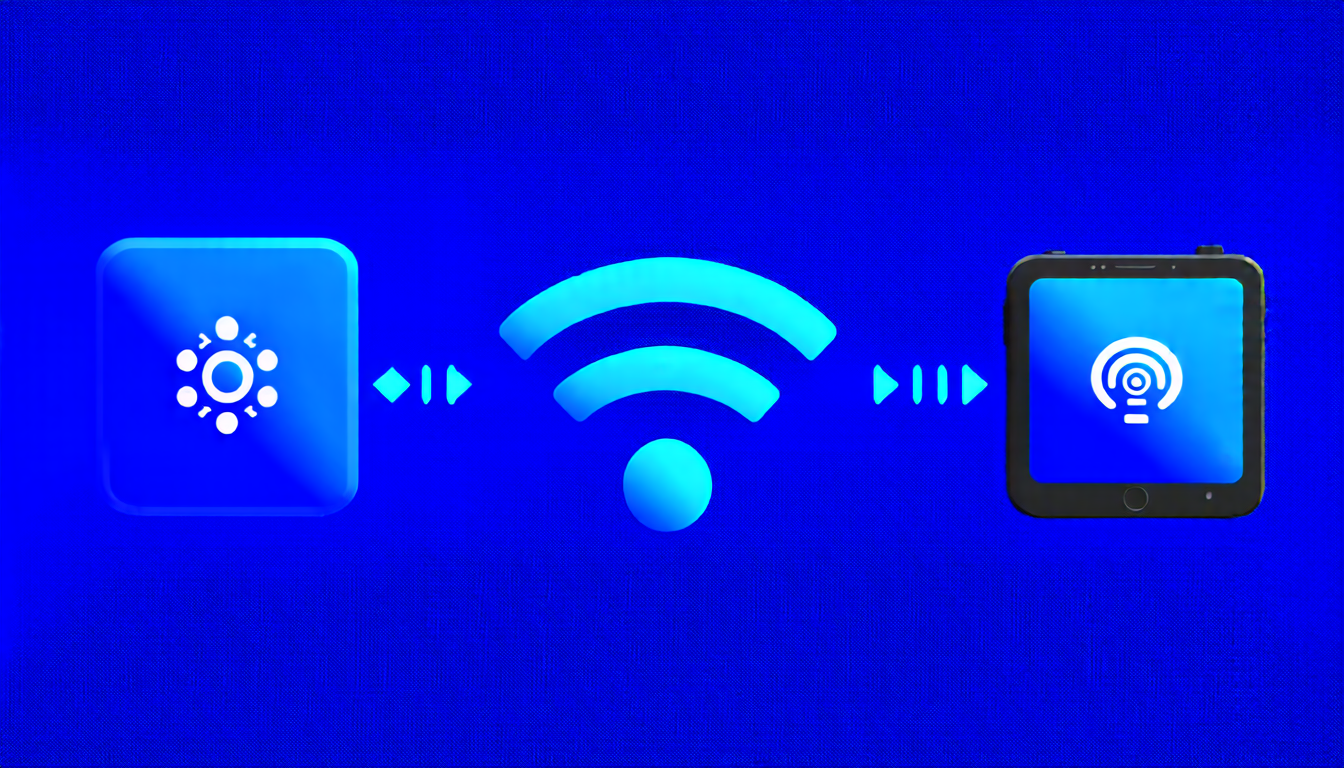
The paper introduces a novel approach to enhancing connectivity in Internet of Things (IoT) networks, particularly at the cell edge where communication is often weak and unreliable. The key innovation lies in the use of real-time feedback between devices and access points (APs), which allows for more efficient use of available bandwidth and power.
In traditional IoT networks, uplink transmission power is limited due to energy constraints, making it challenging to establish reliable connections at a distance. To address this issue, researchers have explored various techniques, such as increasing transmit power or employing advanced error correction codes. However, these methods often come with significant energy overheads or compromise on data rate.
The proposed feedback-aided approach takes a different tack by leveraging the asymmetry between downlink and uplink channels in IoT networks. By exploiting the abundant energy resources available at APs, researchers have developed a novel feedback coding scheme that dynamically adjusts transmission strategies based on real-time feedback from APs.
This clever trick enables devices to adapt their transmission power and coding rates more effectively, reducing the critical SNR required for successful communication. As a result, the number of connectable APs increases significantly, especially at larger distances where traditional approaches struggle.
The paper presents a detailed analysis of this approach, including mathematical derivations and numerical simulations. The results demonstrate impressive gains in coverage probability and the number of connectable APs compared to conventional methods.
While IoT devices are designed to operate with limited energy resources, this innovative feedback-aided approach offers a promising solution for enhancing connectivity without sacrificing energy efficiency. As IoT networks continue to evolve, the potential applications of real-time feedback coding schemes will likely expand beyond connectivity enhancements, opening up new possibilities for data transmission and processing in resource-constrained environments.
The implications of this research are far-reaching, with potential benefits extending from industrial automation to smart cities and healthcare systems. By harnessing the power of real-time feedback, researchers have created a powerful tool for improving IoT network performance, paving the way for more reliable and efficient communication in an increasingly connected world.
Cite this article: “Enhancing Connectivity in IoT Networks through Real-Time Feedback Coding”, The Science Archive, 2025.
Iot Networks, Connectivity, Feedback Coding Scheme, Real-Time Feedback, Power Efficiency, Energy Harvesting, Wireless Communication, Snr, Coverage Probability, Resource-Constrained Environments
Reference: Yimeng Li, Yulin Shao, “Connecting the Unconnectable through Feedback” (2025).





