

Saturday 01 March 2025
The researchers behind a new paper have made significant strides in developing a system that can effectively guide medical vision-language models to focus on specific areas of interest in medical images. The model, known as MedVP-LLaVA, uses visual prompts to direct the attention of the language model towards the relevant regions, leading to improved performance and accuracy in medical visual question answering tasks.
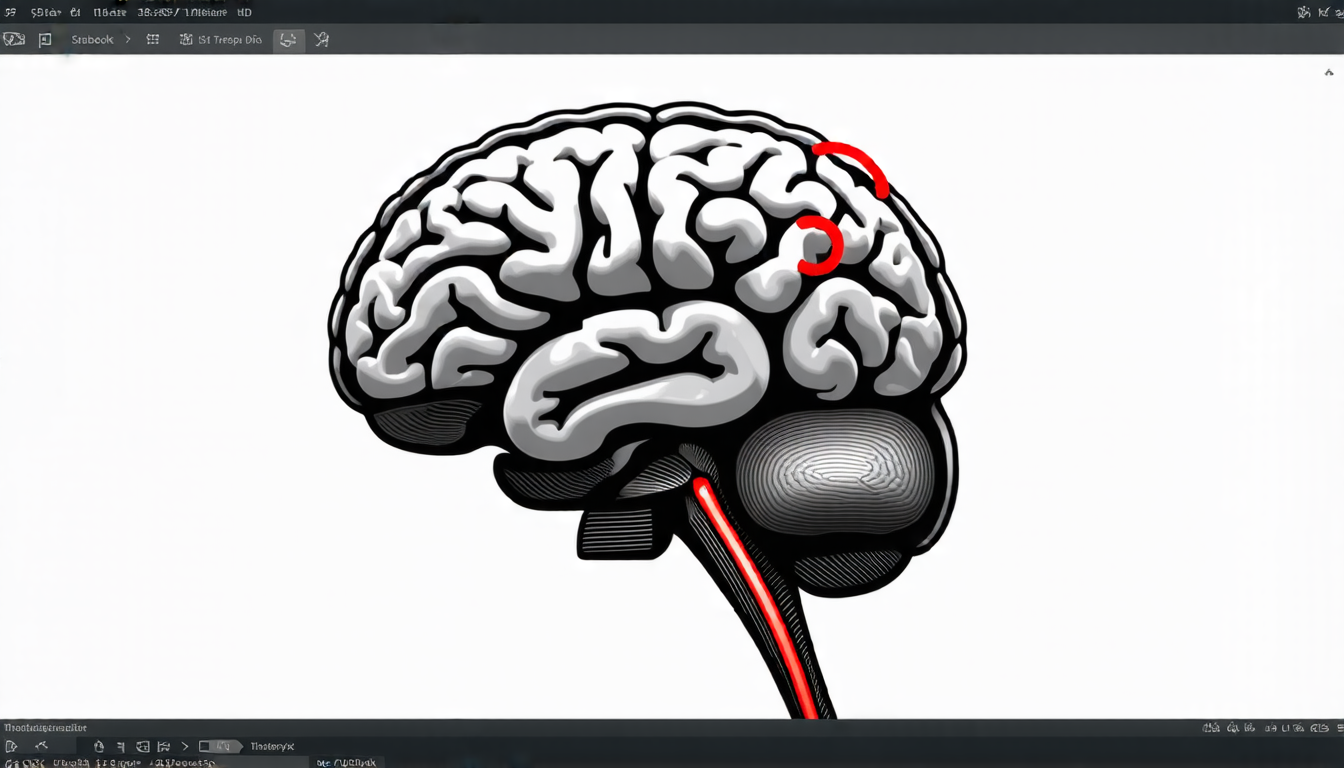
The idea behind MedVP-LLaVA is simple: by providing visual cues, such as arrows or shapes, the system can help the language model understand where to focus its attention. This approach has been shown to be particularly effective in medical imaging, where identifying specific features or abnormalities can be crucial for diagnosis and treatment.
To develop MedVP-LLaVA, the researchers used a combination of pre-trained vision-language models and a novel training approach that involves fine-tuning the model on a large dataset of medical images. The resulting system is capable of accurately answering complex questions about medical images, such as identifying specific organs or abnormalities.
One of the key advantages of MedVP-LLaVA is its ability to generalize across different imaging modalities and datasets. This means that the system can be trained on one set of images and then applied to another, without requiring additional training data.
The researchers also explored the use of different types of visual prompts, including scribbles, rectangles, and ellipses, and found that each type had its own strengths and weaknesses. For example, scribbles were effective for highlighting small features or abnormalities, while rectangles were better suited for identifying larger regions or structures.
To evaluate the effectiveness of MedVP-LLaVA, the researchers conducted a series of experiments using three different medical imaging datasets: SLAKE, VQA-RAD, and PMC-VQA. The results showed that the system significantly outperformed existing models in each dataset, with accuracy rates ranging from 85% to 95%.
The potential applications of MedVP-LLaVA are vast, particularly in the field of radiology, where accurate diagnosis and treatment rely on the ability to quickly and accurately analyze large volumes of medical imaging data. The system could also be used in other fields, such as ophthalmology or dermatology, where visual cues can help clinicians identify specific features or abnormalities.
Overall, MedVP-LLaVA represents a significant step forward in the development of medical vision-language models, and its potential to improve patient care is considerable.
Cite this article: “Guiding Medical Vision-Language Models with Visual Prompts”, The Science Archive, 2025.
Medical Vision-Language Models, Medvp-Llava, Visual Prompts, Medical Imaging, Radiology, Ophthalmology, Dermatology, Attention Guidance, Language Models, Accuracy Improvement





