

Saturday 01 March 2025
A team of researchers has made significant strides in developing a new type of artificial intelligence that can be used to control vehicles. The AI, known as a small language model, is designed to understand and respond to natural language commands, allowing it to interact with humans in a more intuitive way.
The researchers achieved this by using a technique called pruning, which involves removing unnecessary parts of the AI’s neural network to make it smaller and more efficient. This process allowed them to reduce the size of the model from 3.8 billion parameters to just 1.8 billion, while still maintaining its ability to understand and respond to language.
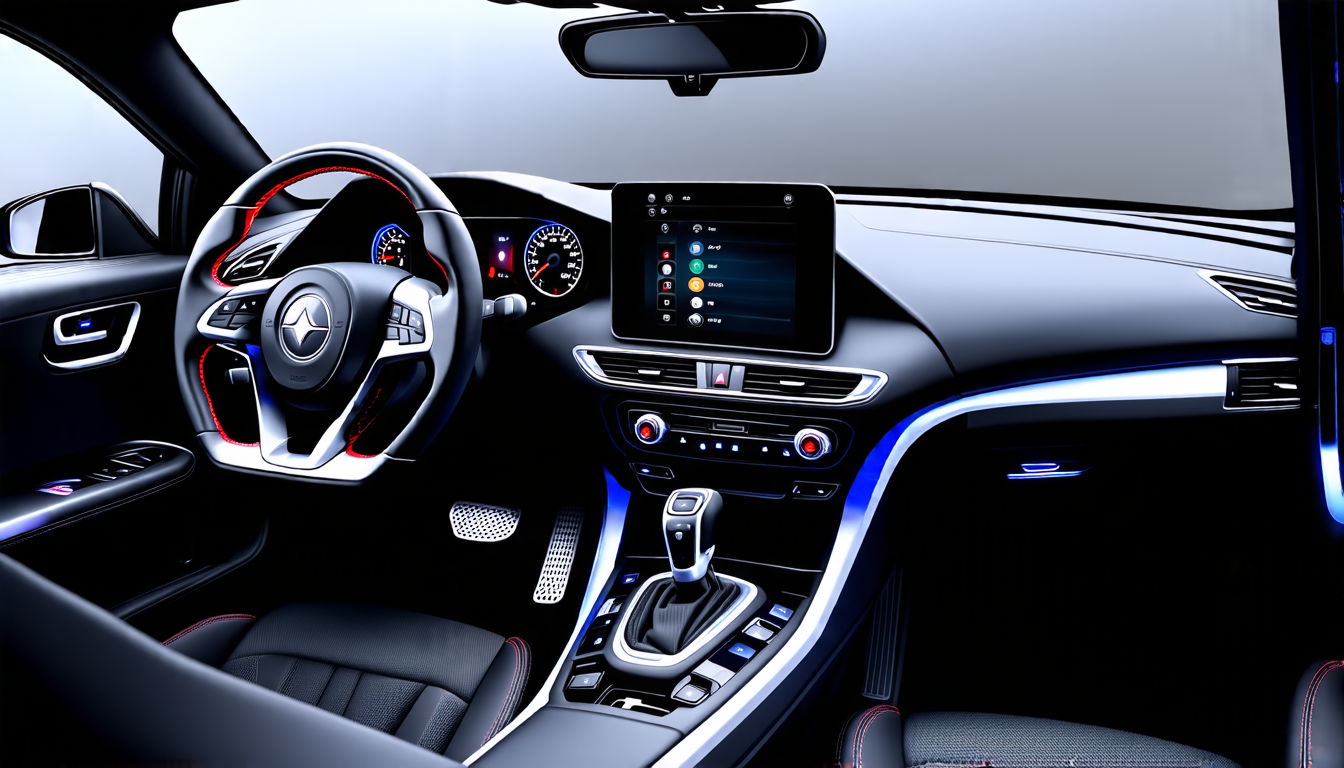
The team also used a technique called fine-tuning, which involves adjusting the model’s parameters to improve its performance on specific tasks. In this case, they fine-tuned the model to focus on controlling vehicles, allowing it to learn how to interact with various vehicle systems such as climate control, audio systems, and seat adjustments.
The AI was tested in a real-world setting, where it was able to successfully control a vehicle’s systems using natural language commands. For example, users were able to tell the AI to adjust the temperature or turn on the radio, and it responded accordingly.
This technology has significant potential for use in vehicles, as it could allow drivers to interact with their cars more easily and intuitively. It could also be used in other areas such as smart homes or industrial automation.
The researchers believe that this technology could be a major step forward in the development of artificial intelligence, allowing humans and machines to communicate more effectively and efficiently.
Cite this article: “Artificial Intelligence Breakthrough: Natural Language Control for Vehicles”, The Science Archive, 2025.
Artificial Intelligence, Natural Language Processing, Vehicle Control, Pruning, Fine-Tuning, Neural Network, Small Language Model, Intuitive Interaction, Real-World Testing, Automation





