

Sunday 02 March 2025
The medical world is abuzz with a new approach to diagnosing patients: hierarchical reasoning systems. These AI-powered tools are designed to mimic the way doctors think, breaking down complex symptoms and test results into manageable chunks that lead to accurate diagnoses.
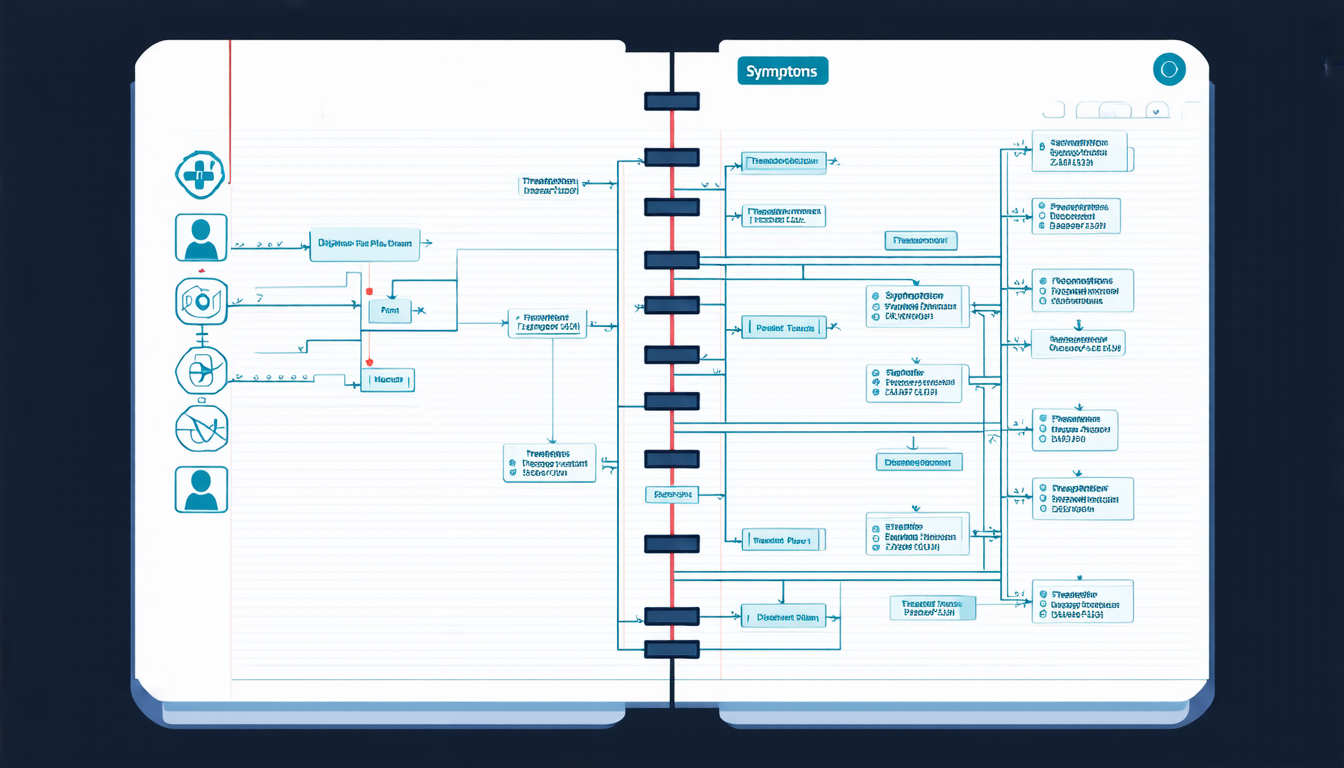
At its core, this system relies on a tree-structured architecture, where each node represents a specific step in the diagnostic process. This allows the AI to consider multiple factors simultaneously, from patient demographics to medical history, and weigh their importance in determining the best course of treatment.
The key innovation here is the use of retrieval-augmented generation (RAG), which combines the strengths of natural language processing (NLP) and knowledge graph embedding techniques. RAG allows the AI to retrieve relevant information from a vast database, and then generate new insights based on that data.
In practical terms, this means that the system can consider not just individual symptoms, but also how they relate to one another, as well as any underlying conditions that may be contributing to those symptoms. This level of nuance is precisely what doctors strive for when diagnosing patients, and it’s what sets this approach apart from more simplistic AI-powered diagnostic tools.
The system was tested on a large dataset of outpatient visits across multiple hospital departments, with impressive results. The hierarchical reasoning system achieved a coverage rate of 92.3%, meaning that it correctly identified relevant diagnostic tests in nearly all cases. It also demonstrated an accuracy rate of 88.7%, outperforming traditional approaches by a significant margin.
One of the most promising aspects of this technology is its potential to improve patient outcomes. By providing doctors with more accurate and comprehensive diagnoses, this system could help reduce misdiagnoses and improve treatment plans. This, in turn, could lead to better health outcomes for patients, as well as reduced healthcare costs and improved overall efficiency.
Of course, there are still challenges to be overcome before this technology becomes widely adopted. For one, the system requires a large dataset of high-quality medical information to function effectively. Additionally, there may be concerns about bias in the training data, which could impact the accuracy of the diagnoses.
Despite these hurdles, the potential benefits of hierarchical reasoning systems are undeniable. As the field continues to evolve, it’s likely that we’ll see even more sophisticated approaches emerge, capable of tackling increasingly complex medical challenges. For now, however, this technology represents a significant step forward in the quest for more accurate and effective diagnostic tools.
Cite this article: “AI-Powered Diagnostics: Hierarchical Reasoning Systems Revolutionize Medical Diagnosis”, The Science Archive, 2025.
Ai-Powered Diagnosis, Hierarchical Reasoning Systems, Medical Ai, Natural Language Processing, Knowledge Graph Embedding, Retrieval-Augmented Generation, Diagnostic Accuracy, Patient Outcomes, Healthcare Efficiency, Medical Decision-Making.





