

Sunday 02 March 2025
In recent years, cybersecurity researchers have been grappling with an increasingly complex problem: how to detect and prevent advanced persistent threats (APTs) in a timely and effective manner. APTs are sophisticated attacks that can evade traditional security measures by using social engineering, zero-day exploits, and other cunning tactics.
One of the key challenges in detecting APTs is dealing with the sheer volume of data generated by modern computing systems. As more devices connect to the internet and generate logs, alerts, and other security-related data, it becomes increasingly difficult for human analysts to sift through this information and identify potential threats.
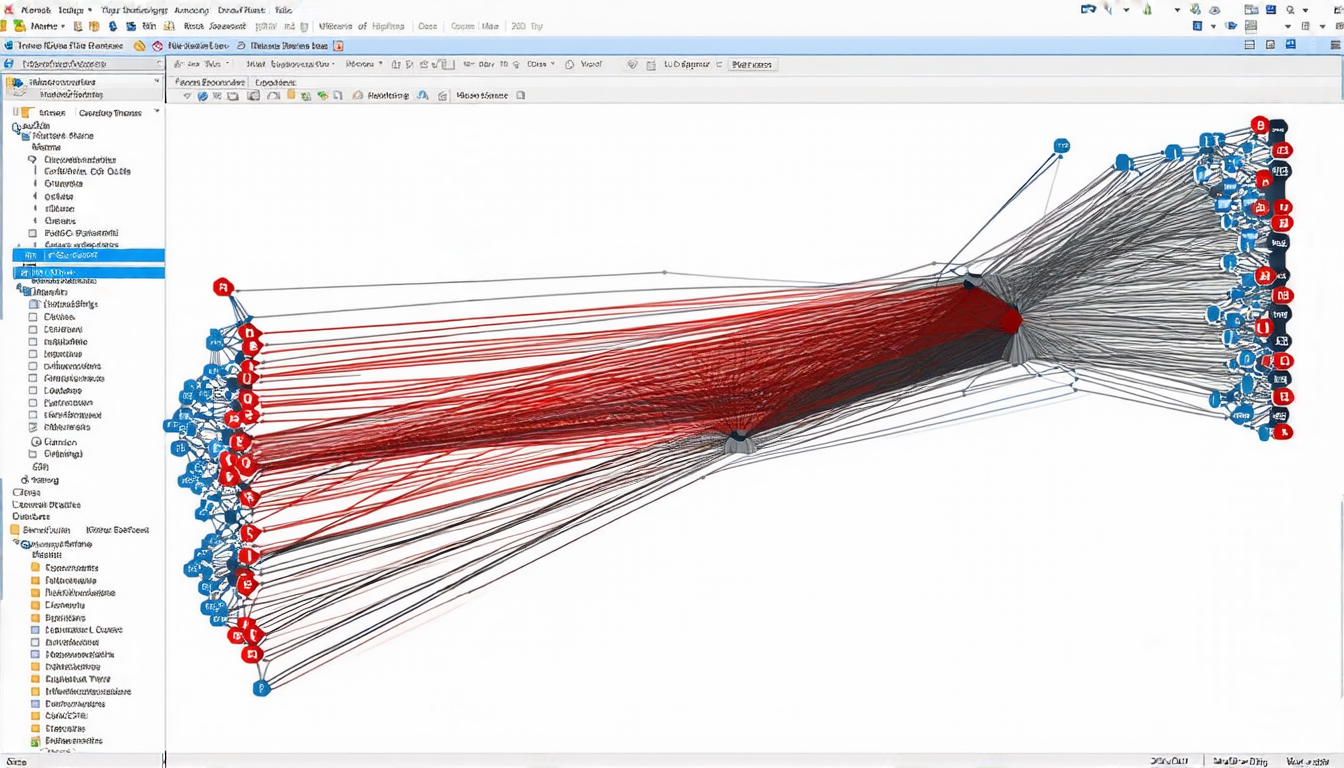
To address this challenge, researchers have been exploring ways to use machine learning and graph theory to analyze large datasets and identify patterns that may indicate an APT attack. One such approach is called GraphDART, a modular framework designed to distill provenance graphs into compact yet informative representations that can be used for anomaly detection.
Provenance graphs are a type of data structure that captures the history of events related to a particular system or network. By analyzing these graphs, researchers can identify patterns and anomalies that may indicate an APT attack. However, traditional methods for analyzing provenance graphs can be computationally intensive and difficult to scale.
GraphDART addresses this challenge by using a combination of graph distillation techniques to condense large provenance graphs into smaller, more manageable representations. These condensed graphs can then be analyzed using machine learning algorithms to identify potential threats.
The authors of GraphDART claim that their approach is more effective than traditional methods for several reasons. First, it allows analysts to focus on the most critical information in the graph, rather than being overwhelmed by the sheer volume of data. Second, it enables researchers to use smaller, more efficient machine learning models that can be trained and deployed quickly.
To evaluate GraphDART’s effectiveness, the authors conducted a series of experiments using real-world datasets and benchmarks. The results suggest that GraphDART is able to detect APT attacks with high accuracy and precision, even in cases where traditional methods failed to identify the threats.
One potential limitation of GraphDART is its reliance on machine learning algorithms, which can be vulnerable to bias and other forms of error. However, the authors argue that these limitations can be mitigated by using techniques such as data augmentation and ensemble methods to improve model robustness.
Overall, GraphDART represents an important step forward in the development of more effective APT detection systems.
Cite this article: “Detecting Advanced Persistent Threats with GraphDART: A Machine Learning Approach”, The Science Archive, 2025.
Cybersecurity, Advanced Persistent Threats, Machine Learning, Graph Theory, Provenance Graphs, Anomaly Detection, Data Analysis, Artificial Intelligence, Network Security, Threat Detection





