

Monday 03 March 2025
The intricate dance of foams and scraping has long fascinated scientists, who have struggled to understand the complex dynamics at play. Now, a new study sheds light on the mysterious transition from partial to slender scraping, offering insights into the behavior of these seemingly chaotic systems.
Foams are ubiquitous in nature, found in everything from whipped cream to ocean waves. But despite their ubiquity, our understanding of how they behave is still limited. One key phenomenon that has puzzled researchers is the way foams respond to external forces, such as scratching or scraping. This process can lead to a range of outcomes, from uniform spreading to partial scraping and even complete destruction.
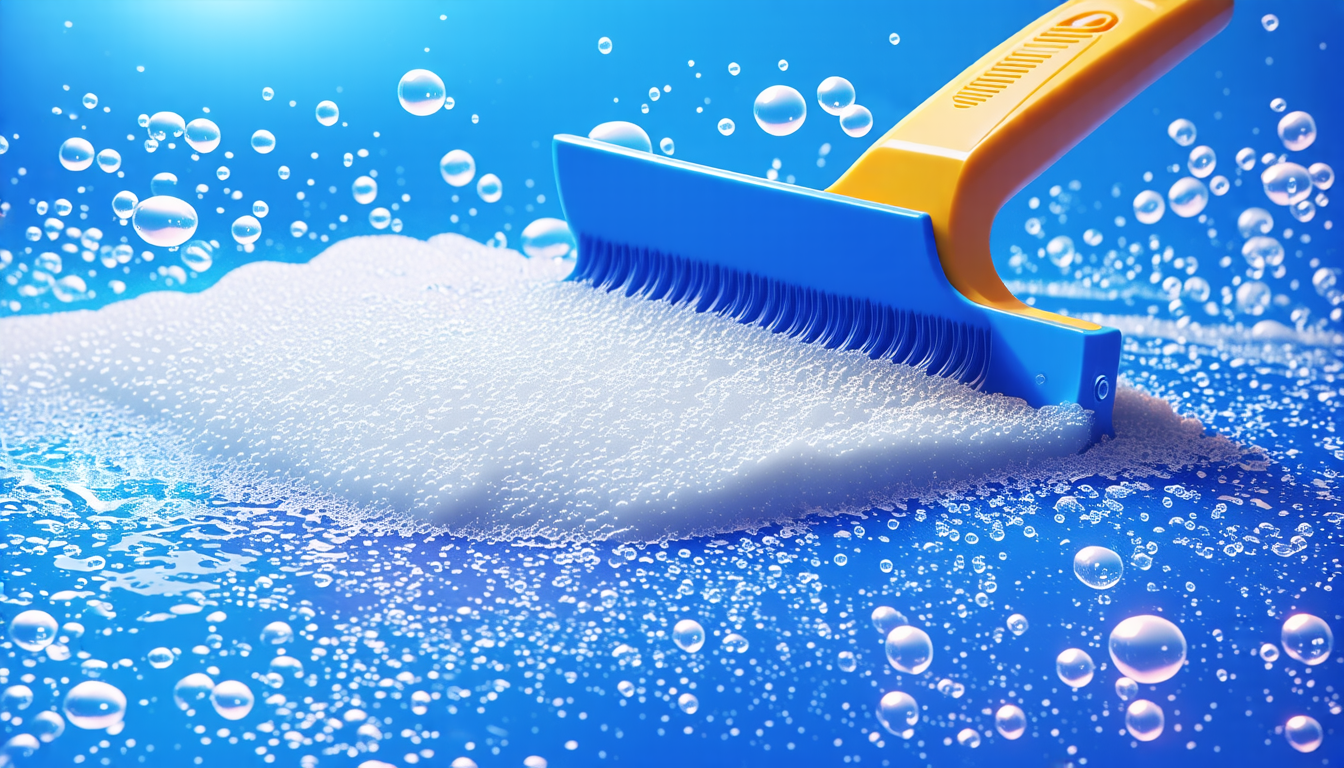
The latest study focuses on the transition between partial and slender scraping, two distinct modes of behavior characterized by different patterns of bubble rearrangement. In partial scraping, bubbles slide across the surface, while in slender scraping, they undergo a more dramatic reorganization. The researchers sought to uncover the underlying mechanisms driving this transition, which could have significant implications for our understanding of foam dynamics.
To investigate, the team created artificial foams using a combination of surfactants and glycerol, carefully controlling factors such as bubble size and liquid fraction. They then subjected these foams to controlled scraping motions, monitoring the resulting behavior using high-speed cameras and image analysis software.
The results were striking. As the researchers increased the scraping velocity, they observed a clear transition from partial to slender scraping, marked by a sudden change in the pattern of bubble rearrangement. This shift was accompanied by a significant increase in the distance over which the foam spread, as well as a corresponding decrease in its thickness.
But what drives this transition? The researchers found that it is not simply a matter of increased stress or shear force, but rather the result of a complex interplay between the foam’s internal structure and external forces. Specifically, they discovered that the sequential rearrangement of bubbles plays a key role, with individual events triggering a cascade of changes throughout the foam.
This insight has significant implications for our understanding of foam dynamics, potentially shedding light on a range of seemingly unrelated phenomena. For example, it may help explain the behavior of turbulent flows in fluids, where similar patterns of bubble formation and destruction are observed.
The study’s findings also highlight the importance of considering the intricate dance between internal structure and external forces in complex systems like foams.
Cite this article: “Unraveling the Mysteries of Foam Dynamics: A Study on Transition from Partial to Slender Scraping”, The Science Archive, 2025.
Foam Dynamics, Bubble Rearrangement, Scraping Motion, Surfactants, Glycerol, Artificial Foams, High-Speed Cameras, Image Analysis Software, Turbulent Flows, Fluid Dynamics
Reference: Masaya Endo, Rei Kurita, “Critical-like phenomenon in scraping of jamming systems” (2025).





