

Monday 03 March 2025
The quest for a more efficient way to simulate complex molecules has been a long-standing challenge in the field of quantum chemistry. Researchers have been working tirelessly to develop methods that can accurately predict the behavior of these molecules, which are crucial for understanding chemical reactions and developing new materials.
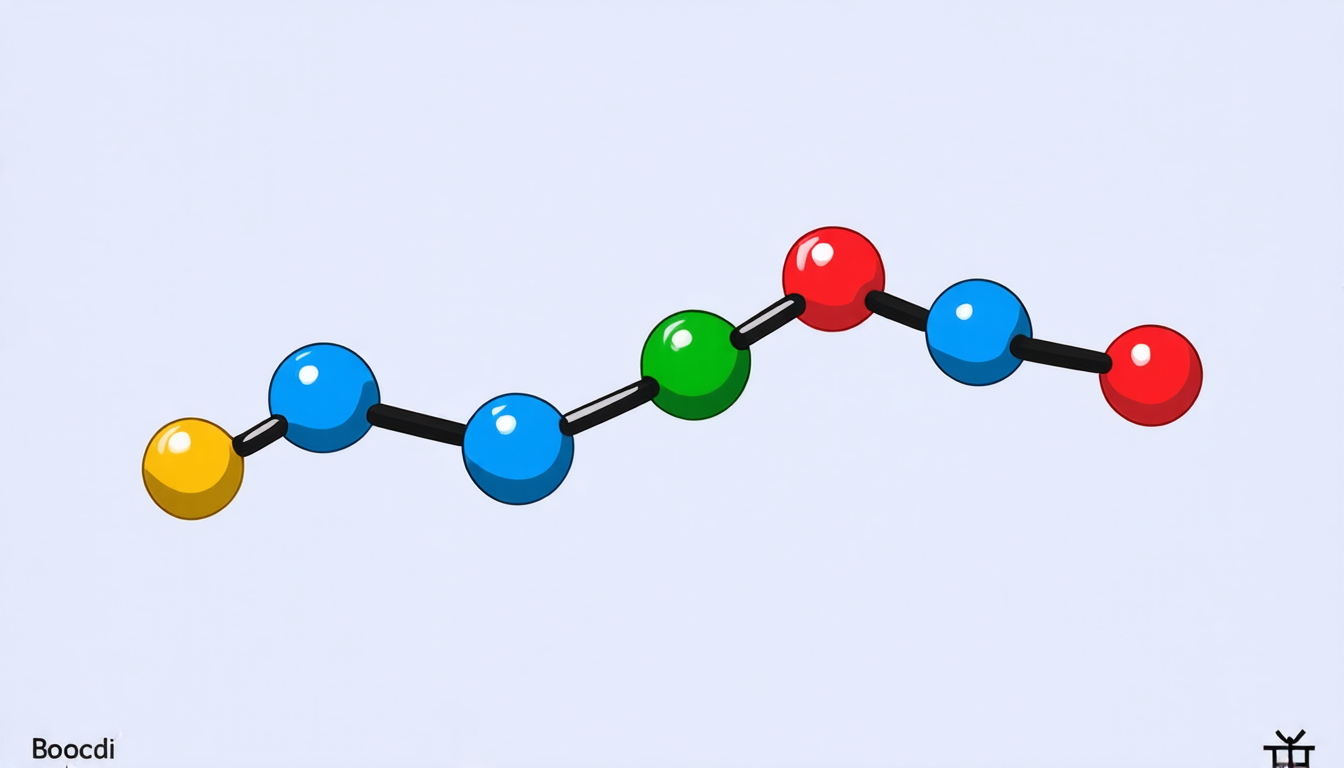
Recently, a team of scientists made a significant breakthrough by proposing a novel approach to fragmenting proteins into their constituent amino acids and then simulating each independently. This method allows for a more efficient computation of the energy of the protein as a whole, making it possible to study larger molecules that were previously inaccessible.
The traditional method of simulating complex molecules involves dividing them into smaller fragments and then reassembling them to calculate their total energy. However, this approach can be computationally intensive and prone to errors. The new method, on the other hand, takes a more intuitive approach by fragmenting the protein at the level of individual amino acids, which are the building blocks of proteins.
Each amino acid is simulated independently using a quantum algorithm known as Hartree-Fock, which provides an accurate estimate of its energy. The energies of each amino acid are then reassembled to calculate the total energy of the protein. This approach allows for a more accurate prediction of the protein’s behavior and requires significantly less computational power than traditional methods.
The team tested their method on a set of 20 small peptides, which are short chains of amino acids, and found that it produced highly accurate results. The mean relative error was just 0.00768%, indicating that the method is capable of producing precise predictions even for complex molecules.
This breakthrough has significant implications for our understanding of chemical reactions and the development of new materials. It could also lead to the discovery of new medicines and agricultural products, as well as the creation of more efficient catalysts.
The team’s approach also has potential applications in the field of quantum computing, where it could be used to develop more accurate algorithms for simulating complex molecules. This could lead to breakthroughs in fields such as materials science and chemistry, where the ability to accurately predict the behavior of molecules is crucial.
In summary, this new method offers a powerful tool for simulating complex molecules and has significant implications for our understanding of chemical reactions and the development of new materials. It is an important step forward in the quest to understand the intricacies of molecular behavior and could lead to major breakthroughs in a range of fields.
Cite this article: “Simulating Complex Molecules with Enhanced Accuracy”, The Science Archive, 2025.
Quantum Chemistry, Protein Simulation, Amino Acids, Hartree-Fock Algorithm, Quantum Computing, Molecular Behavior, Chemical Reactions, Materials Science, Peptide Simulation, Complex Molecules





