

Monday 03 March 2025
Mathematicians have been studying algebras, abstract structures that can be used to describe various mathematical concepts and phenomena, for centuries. Recently, researchers have made significant progress in understanding a specific type of algebra called generalized path algebras.
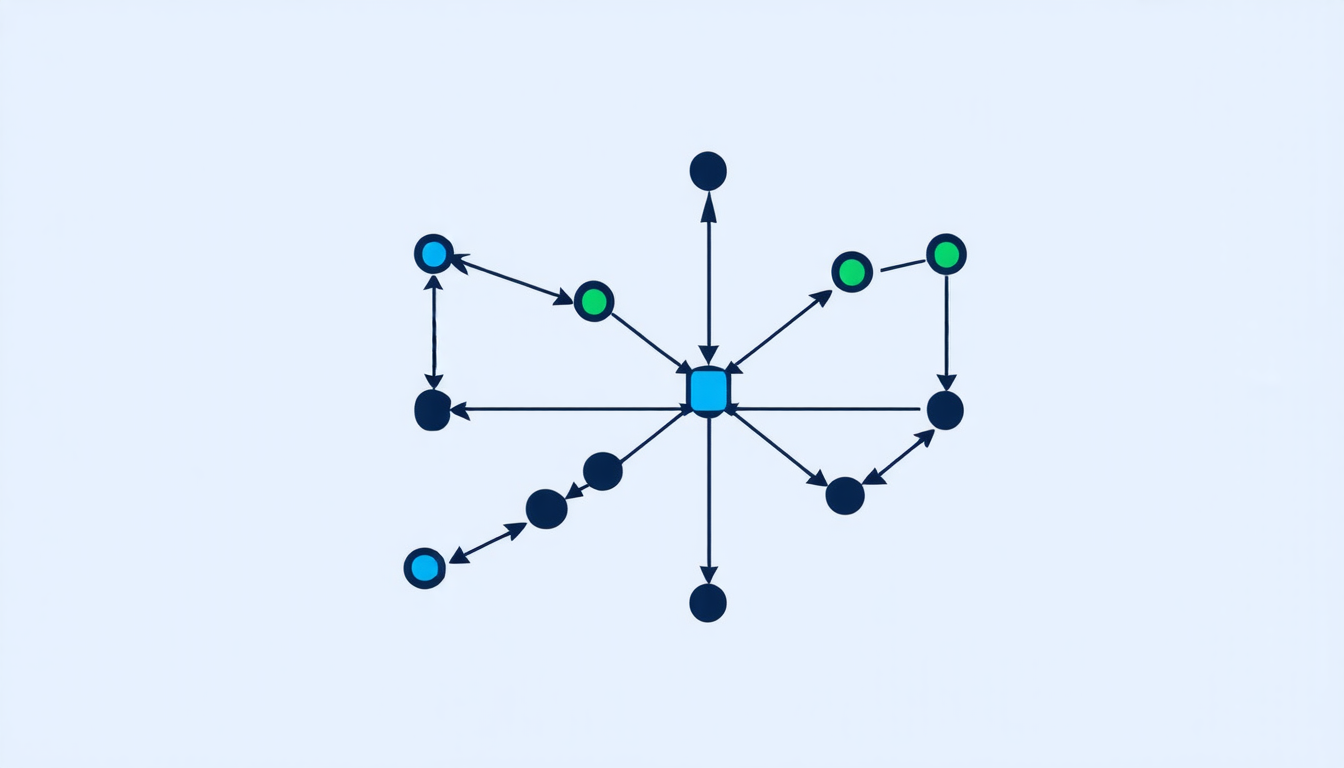
These algebras are formed by combining simple building blocks called paths, which are sequences of arrows connecting vertices in a diagram. The resulting structure is incredibly complex, with intricate relationships between the individual components. Despite their complexity, generalized path algebras have many practical applications, including modeling real-world systems and understanding the behavior of complex networks.
The research paper at the center of this breakthrough describes a new way to categorize these algebras based on their representation type. In essence, an algebra’s representation type determines how its components interact with each other, influencing its overall structure and properties.
To better understand this concept, consider a simple analogy: think of the vertices in the diagram as people, and the arrows as relationships between them. The paths formed by these relationships can represent various social networks or communication channels. In this context, an algebra’s representation type would describe how individuals interact with each other within the network.
The mathematicians have identified seven distinct categories of generalized path algebras based on their representation types. These categories are characterized by specific patterns in the interactions between components, which can be used to predict and analyze the behavior of complex systems.
One of the most significant implications of this research is its potential application to real-world systems. By understanding the representation type of a generalized path algebra, scientists may be able to identify the underlying structures that govern complex phenomena, such as the spread of diseases or the flow of information through social networks.
The researchers’ discovery also sheds light on the fundamental nature of algebras and their role in mathematics. Generalized path algebras are a relatively new area of study, and this breakthrough provides valuable insights into their properties and behavior.
As mathematicians continue to explore these structures, they may uncover even more surprising connections between seemingly disparate concepts and phenomena. The study of generalized path algebras is an exciting area of research that holds great promise for advancing our understanding of the world around us.
Cite this article: “Unraveling the Complexity of Generalized Path Algebras”, The Science Archive, 2025.
Algebras, Generalized Path Algebras, Representation Type, Complex Systems, Network Analysis, Social Networks, Information Flow, Disease Spread, Mathematics, Abstract Structures





