

Monday 03 March 2025
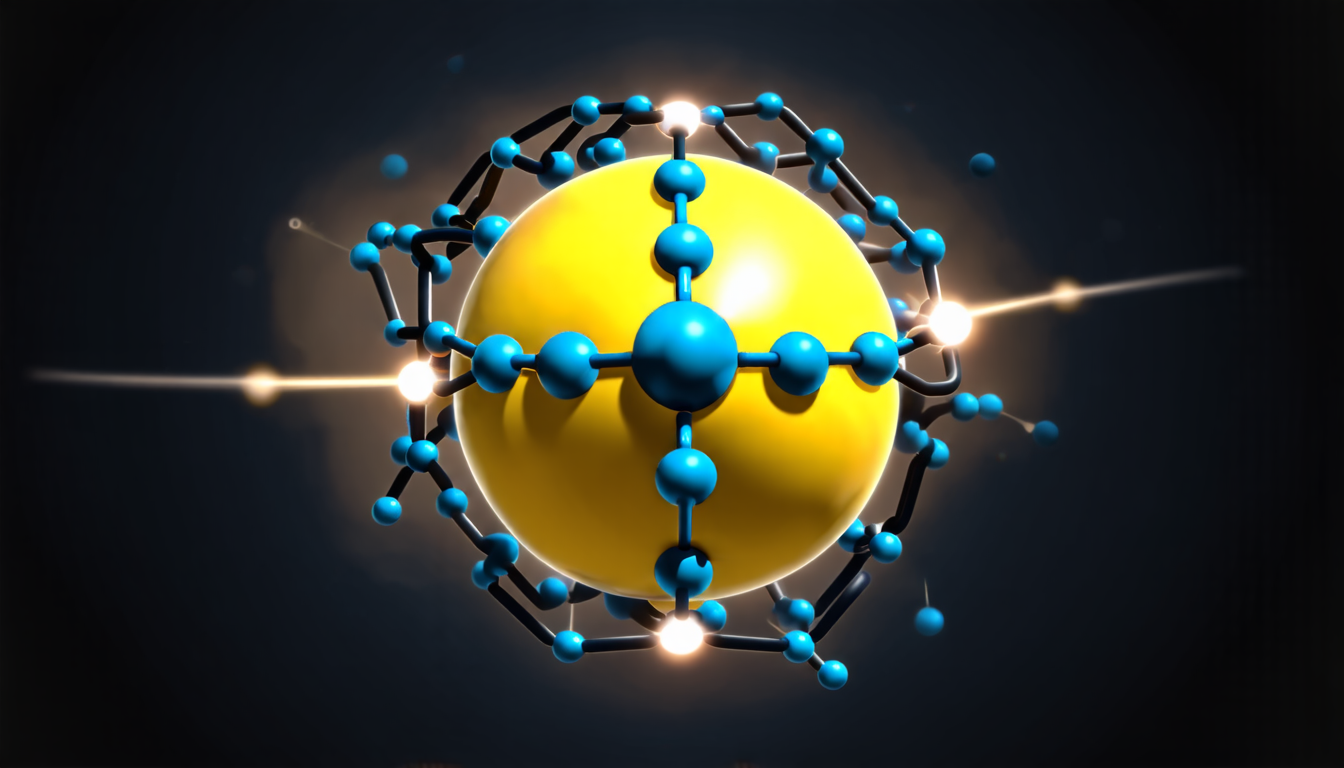
A peculiar phenomenon has been observed in the behavior of atomic nuclei, which challenges our understanding of how these tiny particles interact. The discovery suggests that certain configurations of protons and neutrons within a nucleus can lead to the formation of unusual structures, including linear chains of alpha particles and clusters of protons.
Researchers have long studied the properties of atomic nuclei, which are composed of protons and neutrons bound together by strong nuclear forces. However, the behavior of these particles becomes increasingly complex as the number of protons and neutrons increases. This complexity is due in part to the way that the strong nuclear force acts on the particles, causing them to interact with one another in intricate ways.
Recent studies have revealed that certain nuclei exhibit unusual structures when they are deformed or rotated rapidly. These deformations can cause the protons and neutrons within the nucleus to arrange themselves in specific patterns, leading to the formation of clusters or chains. The researchers found that these patterns are not random, but rather follow a predictable sequence based on the number of protons and neutrons involved.
The discovery has significant implications for our understanding of nuclear physics. It suggests that certain nuclei may have properties that are not immediately apparent from their composition alone. For example, a nucleus with 16 protons and 8 neutrons (known as oxygen-16) exhibits unusual behavior when it is deformed or rotated rapidly. This behavior is due to the formation of clusters of protons and neutrons within the nucleus, which interact with one another in complex ways.
The researchers used computer simulations to study the properties of these nuclei and their unusual behaviors. These simulations allowed them to model the interactions between the protons and neutrons, as well as the effects of deformation and rotation on the nucleus. The results were compared with experimental data from particle accelerators and other sources, confirming the predictions made by the simulations.
The discovery has far-reaching implications for our understanding of nuclear physics, including the development of new theories to describe the behavior of atomic nuclei. It also highlights the importance of computer simulations in studying complex systems like these, which are difficult or impossible to analyze using traditional experimental methods.
As researchers continue to study the properties of atomic nuclei, they may uncover even more unusual behaviors and structures. The discovery of these phenomena is a testament to the complexity and beauty of the natural world, and highlights the importance of continued research in this field.
Cite this article: “Unveiling the Hidden Structure of Atomic Nuclei”, The Science Archive, 2025.
Nuclear Physics, Atomic Nuclei, Protons, Neutrons, Strong Nuclear Force, Deformation, Rotation, Clusters, Chains, Computer Simulations





