

Monday 03 March 2025
For a long time, scientists have been fascinated by the concept of heat transfer in quantum systems. These tiny particles, like atoms and molecules, behave differently than their macroscopic counterparts, obeying strange rules that defy classical physics. One of the most intriguing aspects of quantum heat transfer is the way it can be manipulated to achieve remarkable effects.
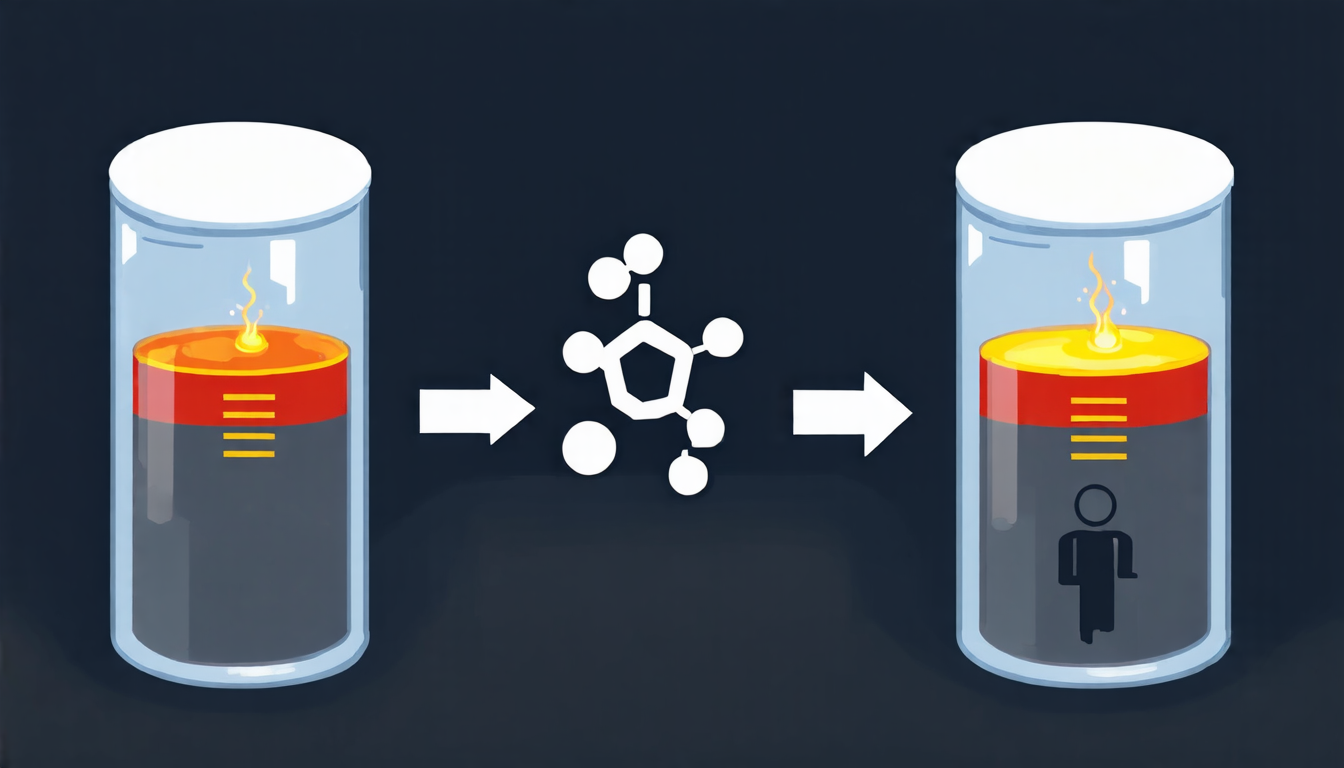
Recently, a team of researchers published a study on the optimal conditions for heat transfer between two thermal reservoirs, which are essentially containers holding different temperatures. The scientists used a central spin degree of freedom as a mediator, allowing them to control the flow of energy between the reservoirs.
The key finding was that the optimal heat transfer depends strongly on whether the system is weakly or strongly coupled to the baths. In other words, the strength of the interaction between the mediator and the reservoirs plays a crucial role in determining how efficiently heat is transferred.
In the weak-coupling regime, the researchers found that identical coupling operators are necessary for maximum sequential transport. This means that the mediator must interact with each reservoir in exactly the same way to maximize energy transfer. On the other hand, when the system is strongly coupled to the baths, non-commuting system-bath coupling operators become essential for achieving optimal heat transfer.
These results have significant implications for the development of quantum thermal machines, which aim to harness the unique properties of quantum systems to manipulate energy transfer. By understanding how to optimize heat transfer in these systems, scientists can potentially create more efficient engines and refrigerators that operate at the nanoscale.
The study also highlights the importance of considering the effects of strong coupling on quantum heat transfer. In many previous studies, researchers have focused solely on weak-coupling regimes, neglecting the potential for non-trivial behavior in strongly coupled systems. This oversight has led to a limited understanding of the full range of possibilities for quantum heat transfer.
The findings of this research are not only significant for advancing our knowledge of quantum thermodynamics but also have practical applications in fields such as nanotechnology and quantum computing. As scientists continue to push the boundaries of what is possible with quantum systems, understanding the intricacies of heat transfer will be crucial for achieving breakthroughs in these areas.
In addition to its theoretical implications, this study demonstrates the potential for experimental verification. The researchers’ numerical simulations provide a clear roadmap for future experiments that can test their predictions and further refine our understanding of quantum heat transfer.
Cite this article: “Optimizing Quantum Heat Transfer: A Crucial Step Towards Next-Generation Thermal Machines”, The Science Archive, 2025.
Quantum Systems, Heat Transfer, Quantum Thermodynamics, Nanoscale, Quantum Thermal Machines, Weak-Coupling Regime, Strongly Coupled Systems, Non-Commuting Operators, Optimal Heat Transfer, Numerical Simulations





