
Monday 03 March 2025
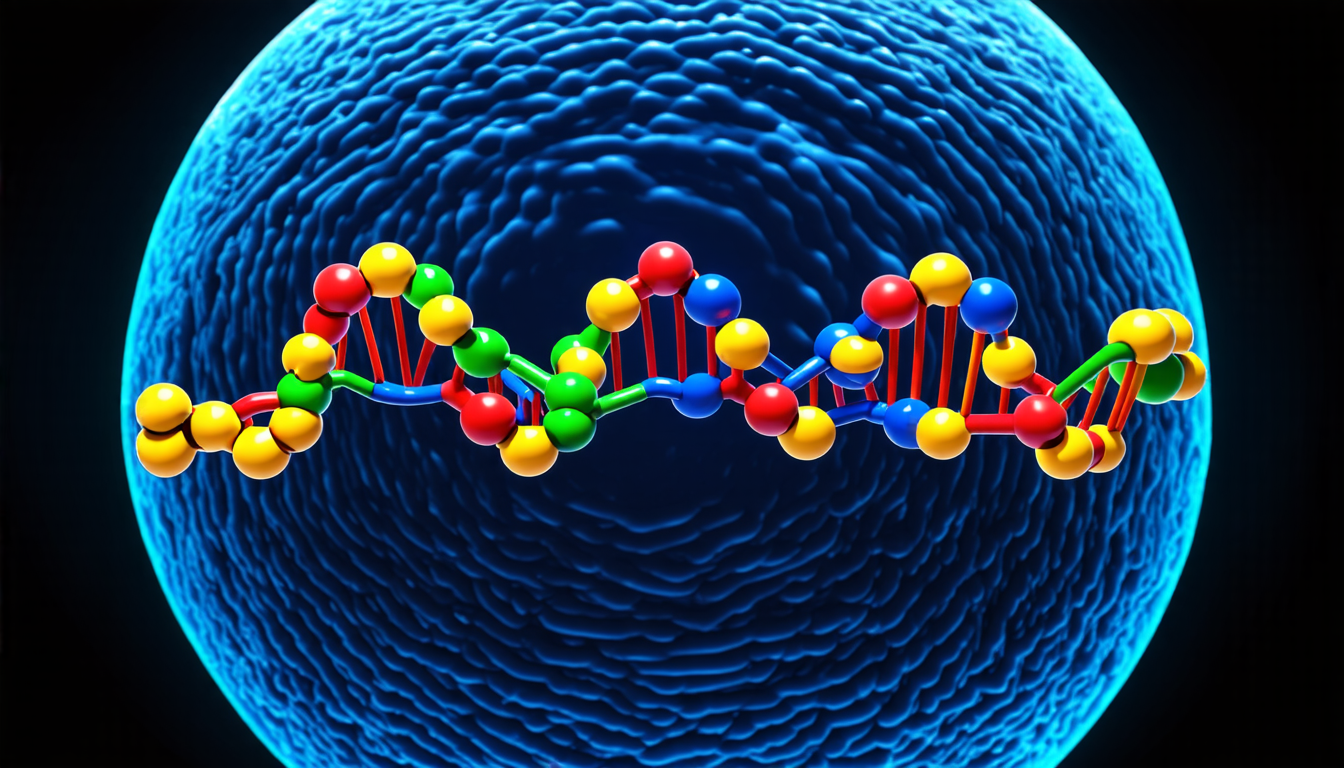
The quest for a better understanding of RNA, one of the most mysterious and vital molecules in our cells, has led scientists to a fascinating breakthrough. By analyzing the topological properties of RNA structures, researchers have developed a new method that can predict which sequences are likely to form functional RNAs.
RNA is responsible for carrying out countless tasks within our cells, from transmitting genetic information to regulating gene expression. Its unique ability to fold into complex shapes allows it to interact with other molecules and perform these vital functions. However, this complexity also makes it challenging to understand and manipulate RNA’s behavior.
To tackle this problem, scientists have turned to computational modeling. By simulating the folding of RNA sequences, they can predict which ones are likely to form stable structures and which ones will remain unfolded. This knowledge is crucial for designing new RNAs with specific functions, such as therapeutic molecules or biosensors.
The key innovation in this research lies in the development of a novel topological descriptor called Persistent Spectral Graphs (PSG). PSG analyzes the structural properties of RNA by representing its folding patterns as graphs, which are then subjected to mathematical transformations. This approach allows researchers to identify specific features that distinguish functional RNAs from non-functional ones.
The team used this method to analyze a large library of RNA sequences and predict which ones were likely to form stable structures. By clustering the sequences based on their topological properties, they identified a subset of RNAs that exhibited characteristics similar to those found in natural RNAs. These predicted RNAs showed a remarkable ability to fold into complex shapes, similar to those observed in nature.
The implications of this research are significant. It provides a powerful tool for designing new RNAs with specific functions and could lead to the development of novel therapeutic strategies. Moreover, it highlights the importance of topological properties in understanding RNA behavior, opening up new avenues for research in this field.
This breakthrough also underscores the value of interdisciplinary approaches in biology. By combining insights from mathematics, computer science, and biochemistry, researchers can tackle complex problems that would be difficult to solve using a single discipline alone.
As scientists continue to unravel the mysteries of RNA, this innovative method will undoubtedly play a key role in their journey. With its potential to revolutionize our understanding of RNA structure and function, it’s an exciting time for RNA research and its applications in medicine and biotechnology.
Cite this article: “Deciphering the Secrets of RNA Structure with Topological Analysis”, The Science Archive, 2025.
Rna, Structural Biology, Computational Modeling, Topological Properties, Rna Sequences, Graph Theory, Mathematical Transformations, Biosensors, Therapeutic Molecules, Gene Expression