

Tuesday 04 March 2025
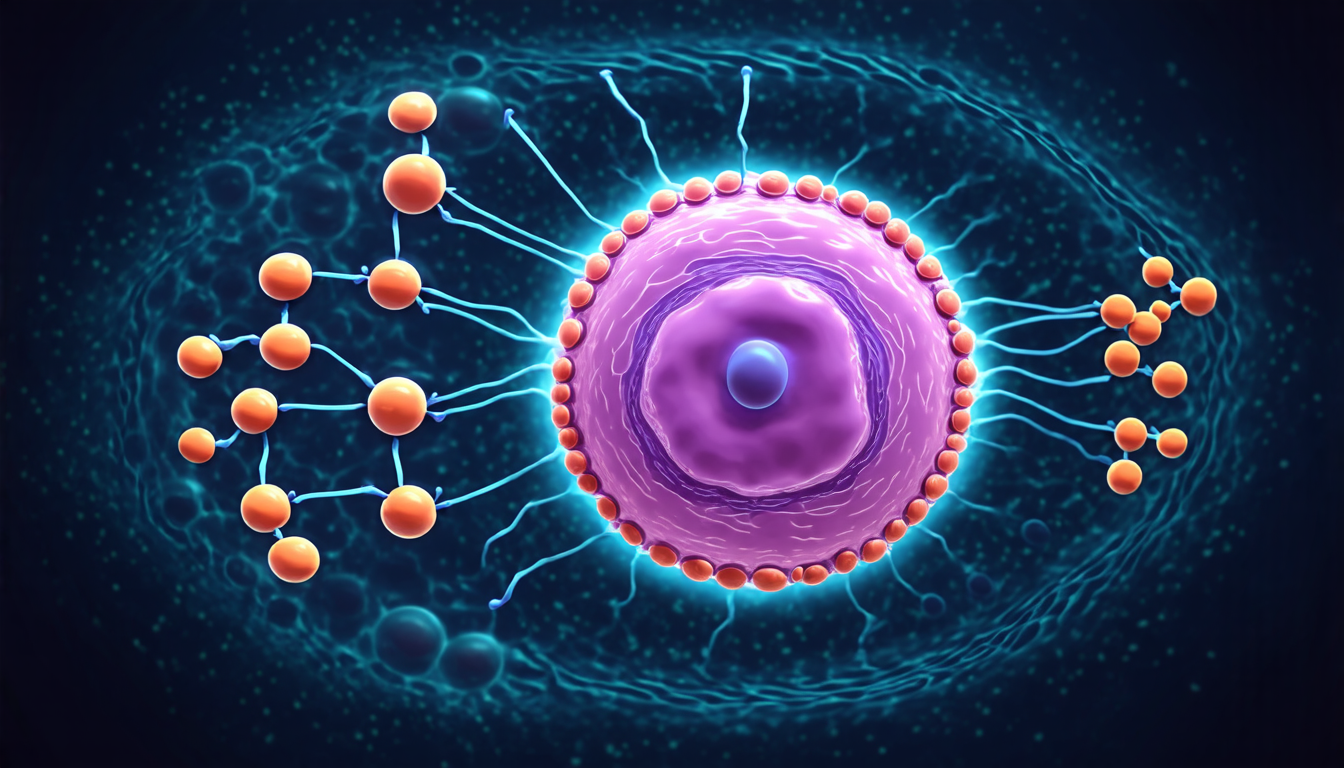
A new mathematical model of cell signaling and mechanics has been developed, offering a more comprehensive understanding of how cells respond to their environment. The model combines chemical signals and mechanical forces to create a nuanced picture of cellular behavior.
The researchers began by examining the role of Rho GTPase proteins in mechanotransduction, the process by which cells convert mechanical stimuli into biochemical signals. They discovered that these proteins play a crucial role in transmitting mechanical cues to the cell interior, where they can influence gene expression and other cellular processes.
To develop their model, the researchers used a combination of mathematical techniques and computer simulations. They started with a simplified system that included only a few key players in the signaling pathway, and then gradually added more complexity by incorporating additional proteins and mechanical forces.
One of the most important aspects of the new model is its ability to capture the non-linear behavior of cells in response to mechanical stimuli. In other words, the model can accurately simulate how cells change their shape and behavior in response to different types of mechanical stress.
The researchers also developed a novel method for approximating the dynamics of cell signaling pathways using finite element methods. This approach allowed them to discretize the spatial domain and solve the equations numerically, resulting in more accurate simulations than traditional numerical methods.
To test the model, the researchers simulated various scenarios, including cells exposed to different types of mechanical stress and cells with altered Rho GTPase activity. They found that the model was able to accurately predict the behavior of cells in these scenarios, providing valuable insights into the underlying mechanisms of mechanotransduction.
The new model has significant implications for our understanding of cellular biology and disease. For example, it could help researchers better understand how cancer cells develop resistance to chemotherapy by analyzing their mechanical properties. It could also aid in the development of novel therapies that target specific cell signaling pathways or mechanical forces.
Overall, this study represents a major advance in our understanding of cell signaling and mechanics. By combining mathematical models with computer simulations, researchers can now gain a more detailed understanding of how cells respond to their environment and how they contribute to disease processes. This knowledge could ultimately lead to the development of new treatments and therapies for a range of diseases.
Cite this article: “Modeling Cell Signaling and Mechanics: A New Framework for Understanding Cellular Behavior”, The Science Archive, 2025.
Cell Signaling, Mechanics, Rho Gtpase Proteins, Mechanotransduction, Mathematical Model, Cell Biology, Disease, Chemotherapy, Therapy, Finite Element Methods.





