

Tuesday 04 March 2025
Scientists have developed a new tool that allows them to peer deeper into the heart of a tokamak, a type of nuclear fusion reactor. The device, known as the High-Speed Reciprocating Drive System (HRDS), enables researchers to study the behavior of plasma – a hot, ionized gas – in greater detail than ever before.
Tokamaks are designed to replicate the conditions at the core of the sun, where hydrogen atoms fuse together to release massive amounts of energy. To achieve this, scientists create a toroidal magnetic field that confines and heats the plasma to incredibly high temperatures. However, this process is still in its early stages, and researchers need better tools to understand what’s happening inside the reactor.
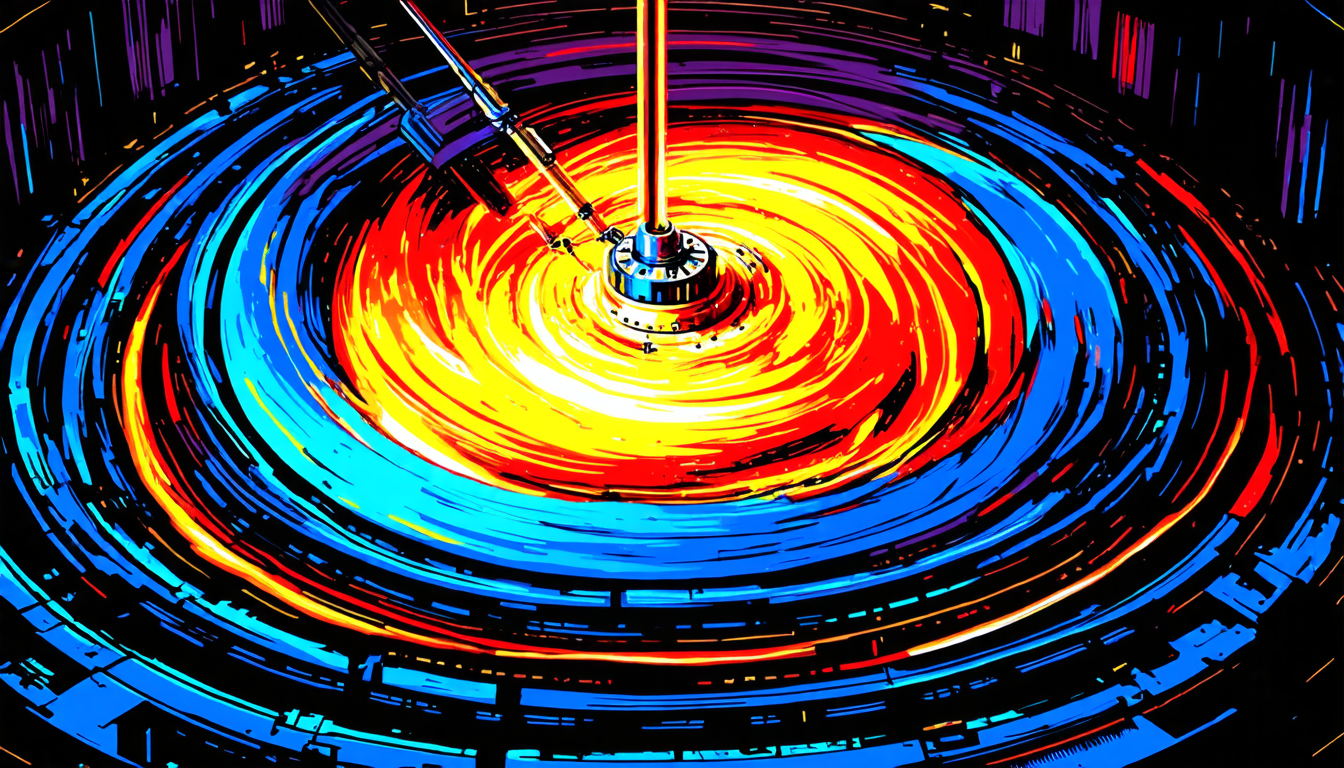
The HRDS is essentially a probe on steroids. It can move rapidly along the circumference of the tokamak, gathering data on the properties of the plasma as it goes. The system consists of a motorized probe head that can be programmed to follow a specific path, allowing researchers to collect detailed measurements of the plasma’s density, temperature, and electric potential.
One of the key advantages of the HRDS is its ability to study the edge region of the plasma, where it interacts with the reactor’s walls. This area is critical for understanding how the plasma behaves and how it can be controlled. By moving the probe head rapidly along the edge of the plasma, scientists can gather data on the fluctuations and instabilities that occur in this region.
The HRDS has already been tested on the ADITYA-U tokamak at the Institute for Plasma Research in India. The results are promising, with the device able to collect high-resolution data on the plasma’s properties as it moves along the reactor’s circumference.
In addition to its applications in nuclear fusion research, the HRDS could also be used to study other types of plasmas, such as those found in astrophysical contexts like stars and black holes. The system’s ability to move rapidly and collect data on the plasma’s properties makes it an attractive tool for researchers studying a wide range of phenomena.
The development of the HRDS is a significant step forward in the quest to create practical fusion power. By providing scientists with a new tool for studying the behavior of plasma, researchers can gain a deeper understanding of how to control and manipulate this hot, ionized gas – a crucial step towards achieving sustainable fusion energy.
Cite this article: “Unlocking the Secrets of Plasma Behavior in Tokamaks with HRDS”, The Science Archive, 2025.
Nuclear Fusion, Tokamak, Plasma, Hrds, Reciprocating Drive System, High-Speed Probe, Fusion Reactor, Magnetic Field, Institute For Plasma Research, Aditya-U





