

Tuesday 04 March 2025
The quest for accurate predictions in survival analysis has long been a thorny issue, with researchers struggling to balance efficiency and coverage guarantees. A new approach promises to alleviate this dilemma by introducing a doubly robust method that outperforms existing techniques.
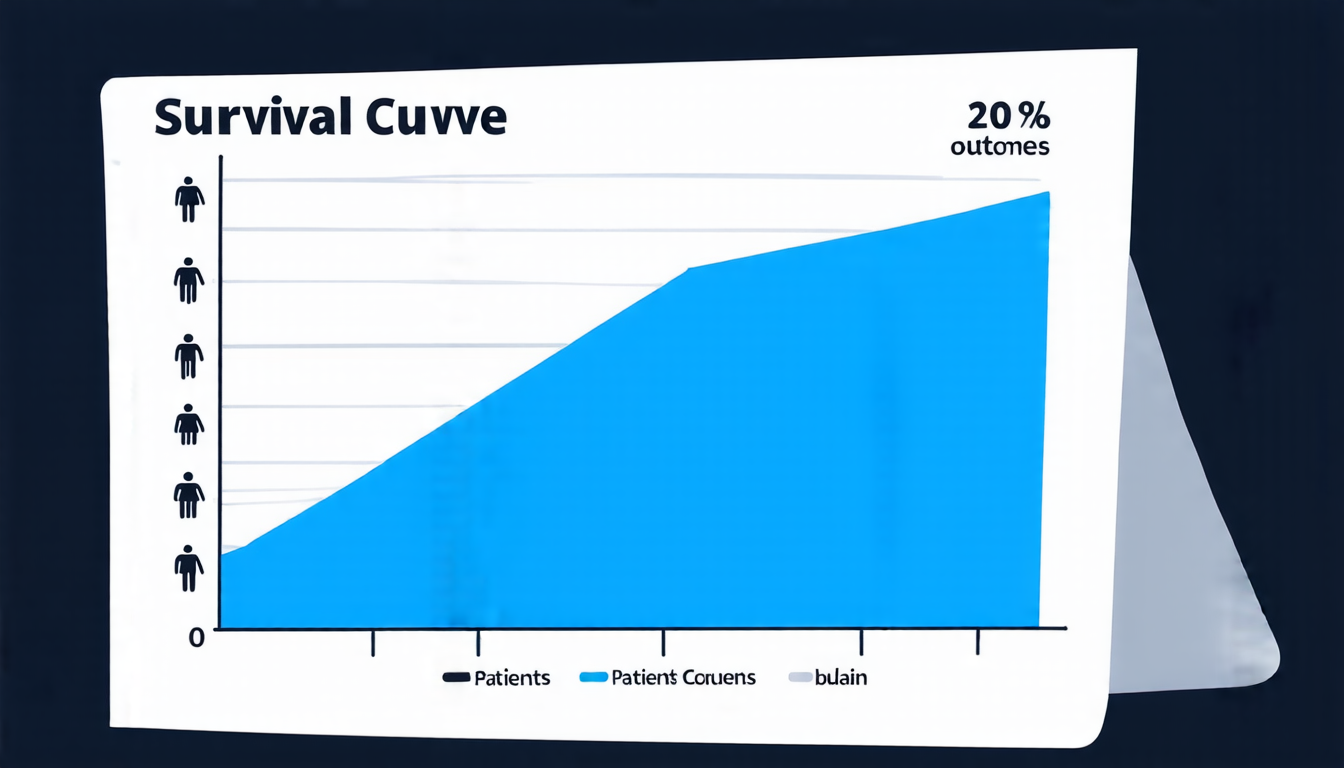
Survival analysis is crucial in fields such as medicine, where predicting patient outcomes is vital for informed decision-making. However, the presence of censoring – when an event occurs but the exact time is unknown – can significantly complicate the task. Conventional methods often rely on strong assumptions about the underlying data distribution, which may not always hold true.
The proposed method, dubbed doubly robust and efficient calibration of prediction sets (DRECP), tackles this challenge by incorporating inverse-probability-of-censoring weighting (IPCW) and augmented-IPCW (AIPCW). These techniques account for the complex relationships between censoring times and survival curves, allowing for more accurate predictions.
The DRECP method first estimates a non-conformity score that measures how well each observation conforms to the predicted survival curve. This score is then used to compute a lower predictive bound (LPB) that captures the uncertainty associated with the prediction. By iteratively updating the LPB using IPCW and AIPCW, the algorithm ensures that the coverage probability – the proportion of observations that fall within the predicted interval – is guaranteed to be above a specified level.
Empirical evaluations on simulated datasets demonstrate the efficacy of DRECP in various settings. In scenarios where censoring rates are high, the method outperforms existing approaches by maintaining accurate coverage probabilities despite increased uncertainty. This is particularly noteworthy, as many conventional methods falter when faced with complex censoring patterns.
The authors’ results also highlight the importance of adaptive cutoffs, which adjust the predicted interval based on the observed data. By incorporating these cutoffs into DRECP, the method achieves even better performance across a range of scenarios.
The implications of this research are far-reaching, as accurate predictions in survival analysis have significant consequences for fields such as medicine and economics. The authors’ innovative approach not only provides a more robust framework but also offers practical solutions to long-standing challenges in the field.
In essence, DRECP represents a significant step forward in the quest for reliable predictions in survival analysis. By combining IPCW and AIPCW with adaptive cutoffs, this method has shown remarkable promise in tackling the complexities of censoring.
Cite this article: “A Doubly Robust Approach to Survival Analysis”, The Science Archive, 2025.
Survival Analysis, Doubly Robust, Calibration, Prediction Sets, Inverse-Probability-Of-Censoring Weighting, Augmented-Inverse-Probability-Of-Censoring Weighting, Censoring, Coverage Probability, Non-Conformity Score, Adaptive Cutoffs





