

Tuesday 04 March 2025
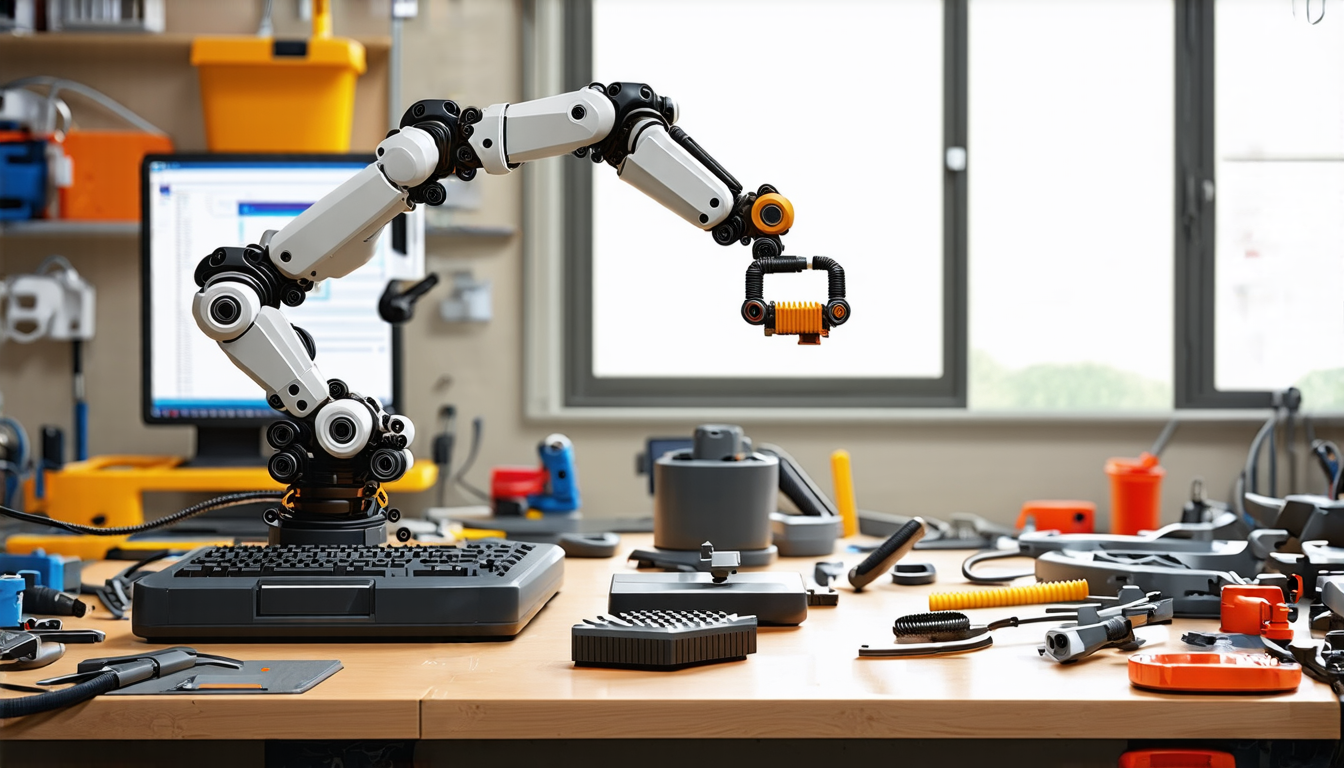
Robot arms that can grasp and manipulate objects using a combination of vision, touch, and language are becoming increasingly sophisticated. Researchers have been working on developing these intelligent robotic systems, which could revolutionize manufacturing, healthcare, and other industries.
One of the key challenges in creating these robots is teaching them to understand human-like language and use it to interact with their environment. This requires a deep understanding of how humans communicate through speech and gestures, as well as how they perceive and manipulate objects. To overcome this hurdle, scientists have been exploring the use of multimodal learning systems that can process visual, auditory, and tactile information simultaneously.
In recent years, significant progress has been made in developing these multimodal models, which are capable of learning from large datasets of images, audio files, and text descriptions. These models can be trained on a wide range of tasks, such as object recognition, language translation, and speech recognition. However, until now, they have not been able to integrate all three modalities seamlessly.
Researchers have developed a new approach called FuSe, which enables the finetuning of large image-based pre-trained generalist policies on heterogeneous robot sensor modalities, including touch or audio. This means that robots can learn to interact with their environment using a combination of visual and tactile information, as well as linguistic cues.
The FuSe system uses a multimodal contrastive loss, which ensures that the model learns to differentiate between different types of sensory input. At the same time, it also employs a language generation loss, which encourages the model to generate descriptive text about the objects it encounters. This dual approach enables the robot to develop a more nuanced understanding of its environment and to communicate effectively with humans.
To test the capabilities of FuSe, researchers conducted a series of experiments involving robotic arms that were tasked with grasping and manipulating objects using only visual and tactile information. The results showed that the robots were able to successfully complete the tasks, even in complex environments where multiple objects were present.
The implications of this technology are far-reaching. For example, it could enable robots to assist humans in search and rescue operations, where they would need to navigate through rubble-filled areas or collapsed buildings using only their sensors and language processing abilities. It could also be used in manufacturing settings, where robots could learn to assemble complex products using a combination of visual and tactile information.
In the future, researchers plan to build upon this technology by exploring new applications and refining the models further.
Cite this article: “Robot Arms Get Smarter: Integrating Vision, Touch, and Language for Enhanced Capabilities”, The Science Archive, 2025.
Robotics, Ai, Multimodal Learning, Language Processing, Vision, Touch, Tactile Information, Audio, Sensor Modalities, Contrastive Loss





