

Tuesday 04 March 2025
The quest for better wireless communication has led researchers down a fascinating path – one that combines machine learning and geometry to create more efficient receivers. A recent paper delves into the world of deep learning, exploring how it can be used to improve the performance of wireless communication systems.
Wireless communication relies on complex algorithms to decode signals transmitted through the air. These algorithms are designed to correct errors caused by interference, noise, and other factors that can distort the signal. However, as data rates increase and networks become more congested, traditional methods are struggling to keep up.
Enter deep learning, a subfield of machine learning that uses neural networks to analyze complex patterns in data. Researchers have been experimenting with applying these techniques to wireless communication systems, hoping to create more efficient and effective receivers.
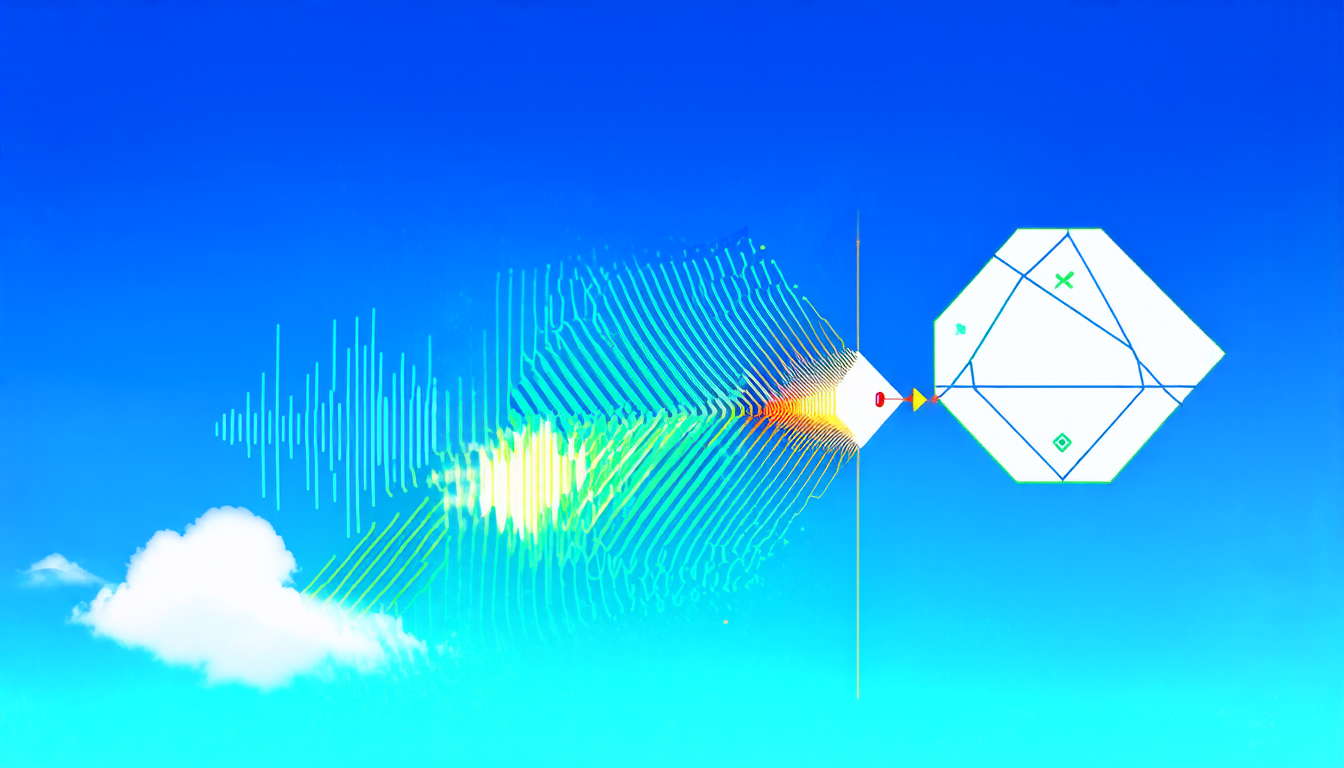
The paper in question focuses on a specific approach called group equivariant neural networks (GENNs). These networks are designed to take advantage of the geometric properties of wireless signals, such as their spatial distribution and temporal correlations. By incorporating this information into the learning process, GENNs can improve the accuracy and efficiency of signal detection and decoding.
The researchers tested their approach using a variety of wireless communication scenarios, including OFDM (orthogonal frequency division multiplexing) systems, which are commonly used in 4G and 5G networks. They found that GENNs outperformed traditional methods in terms of signal-to-noise ratio, bit error rate, and computational complexity.
One of the key innovations behind GENNs is their ability to learn from data that has been corrupted by various forms of interference. Traditional methods often struggle with this type of noise, but GENNs can adapt to it by incorporating the geometric properties of the signals into their learning process.
The implications of this research are significant. As wireless communication systems become increasingly complex and congested, the need for more efficient and effective receivers will only continue to grow. GENNs offer a promising approach to addressing these challenges, and could potentially be used in a wide range of applications, from cellular networks to satellite communications.
While there is still much work to be done before GENNs can be deployed in real-world systems, this research provides an exciting glimpse into the future of wireless communication. By combining machine learning and geometry, researchers are opening up new possibilities for improving the performance and efficiency of wireless networks – and paving the way for even faster, more reliable connectivity.
Cite this article: “Unlocking Efficient Wireless Communication with Deep Learning and Geometry”, The Science Archive, 2025.
Machine Learning, Geometry, Wireless Communication, Deep Learning, Neural Networks, Signal Detection, Decoding, Ofdm, Interference, Noise.





