
Tuesday 04 March 2025
Scientists have made a significant breakthrough in detecting transient signals, which are short-lived and often hidden among noise and interference. These signals can be crucial in various fields such as radar detection, medical imaging, and financial analysis.
The challenge lies in distinguishing these signals from the background noise and identifying them quickly. Traditional methods rely on assumptions about the signal’s properties, but real-world scenarios often defy these assumptions. A new approach has been developed that addresses this issue by using a model called the infinite factorial linear dynamical system (IFLDS).
The IFLDS is a mathematical representation of complex systems, where multiple sources can contribute to the observed data. By incorporating sticky control into the model, it becomes more flexible and adaptable to real-world scenarios. This allows the algorithm to learn from the data and adjust its parameters accordingly.
One of the key features of the IFLDS is its ability to represent an unknown number of background sources. In traditional methods, the number of sources is assumed to be fixed or known in advance. However, in many cases, this assumption is not valid, leading to inaccurate results.
The researchers used a combination of two algorithms, particle Gibbs with ancestor sampling and slice sampling, to estimate the model parameters. These algorithms allow for efficient computation and are well-suited for complex systems.
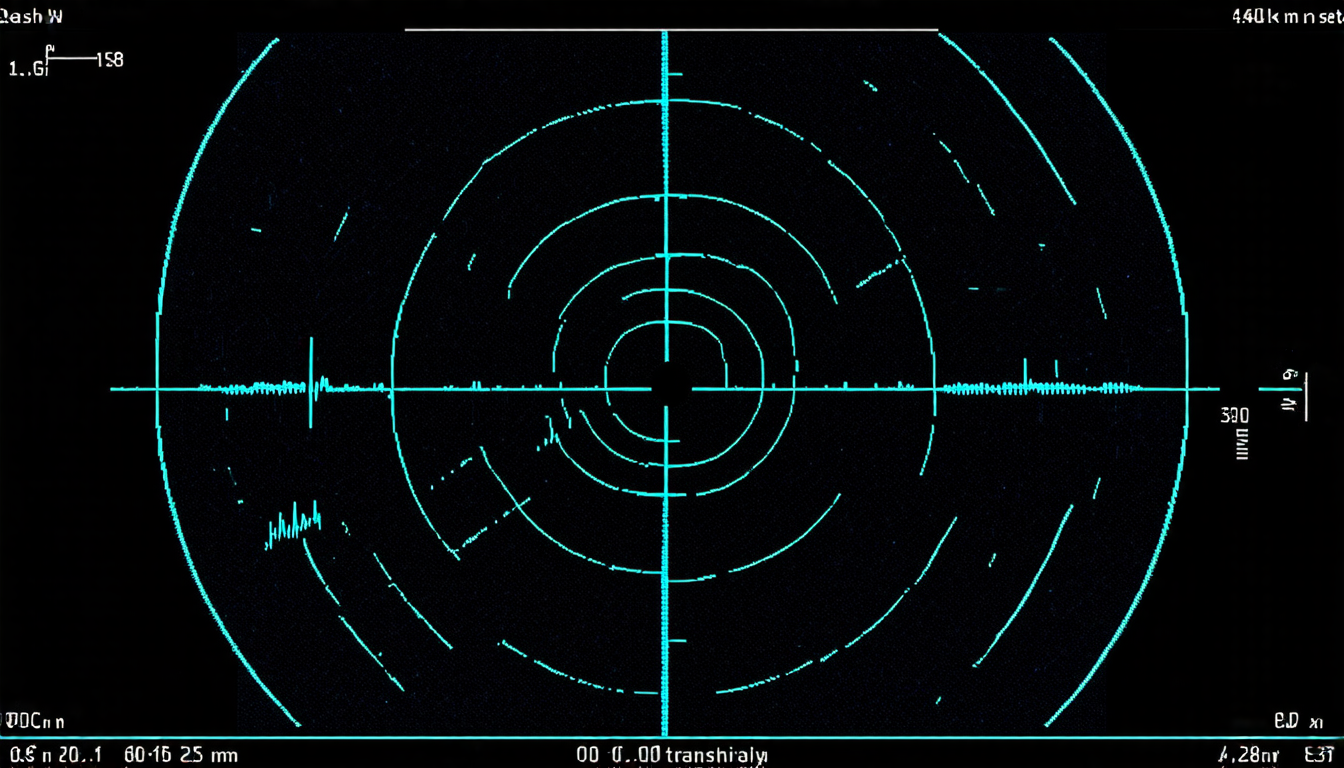
To evaluate the performance of the IFLDS, the scientists conducted simulations and experiments using real-world data from radar detection. The results showed that the proposed method outperformed traditional methods in detecting transient signals.
One of the most significant advantages of the IFLDS is its ability to adapt to changing conditions. In real-world scenarios, the signal properties can change over time, making it essential for the detection algorithm to be able to adjust accordingly.
The researchers also demonstrated the effectiveness of their method in detecting signals with unknown duration and shape. This is particularly important in applications where the signal characteristics are not well-defined or may vary over time.
In addition to its potential applications in radar detection, the IFLDS can also be used in other fields such as medical imaging and financial analysis. For example, it could be used to detect anomalies in financial transactions or diagnose diseases from medical images.
Overall, the development of the IFLDS represents a significant step forward in detecting transient signals. Its adaptability, flexibility, and ability to represent complex systems make it an attractive solution for various applications. With its potential to revolutionize signal detection, this breakthrough has far-reaching implications for many fields.
Cite this article: “Detecting Transient Signals: A Breakthrough in Signal Processing”, The Science Archive, 2025.
Transient Signals, Infinite Factorial Linear Dynamical System, Signal Detection, Radar Detection, Medical Imaging, Financial Analysis, Anomaly Detection, Adaptive Algorithms, Complex Systems, Particle Gibbs With Ancestor Sampling, Slice Sampling