

Wednesday 05 March 2025
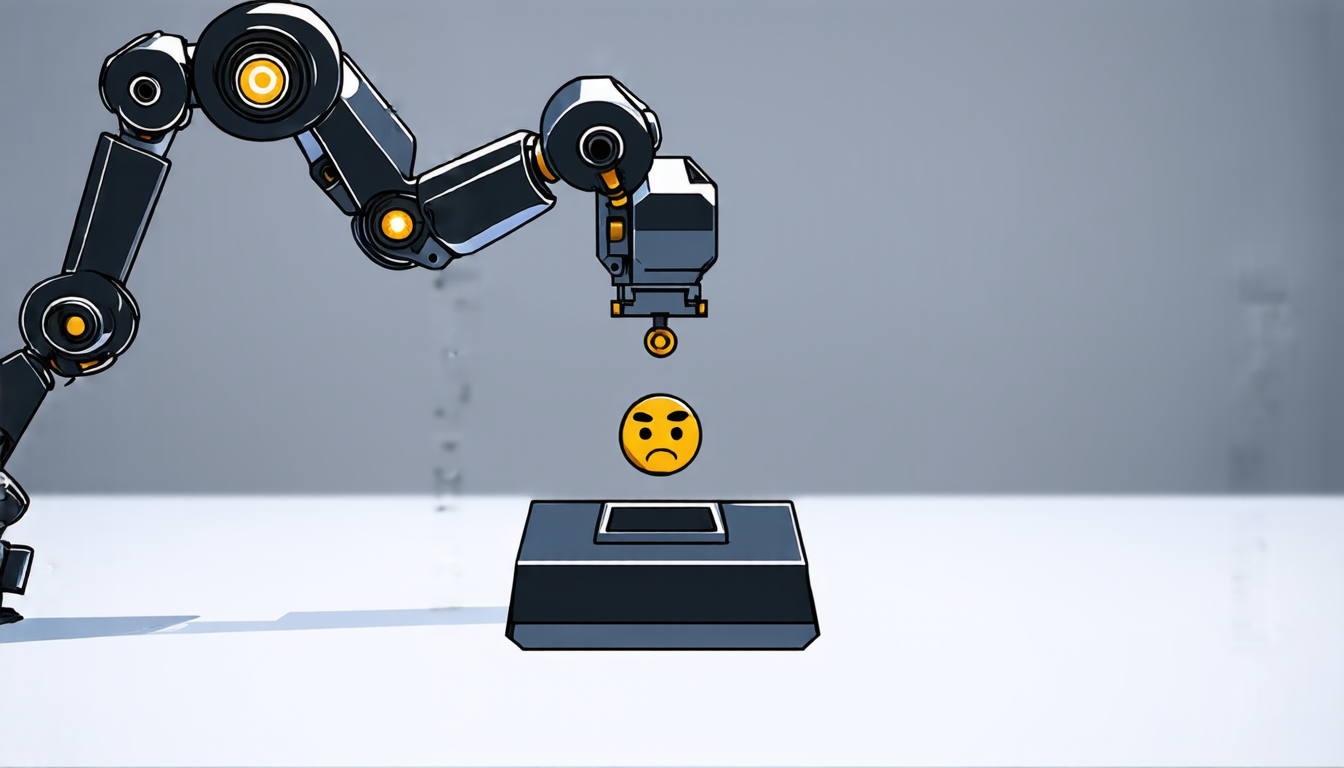
A new approach to detecting and managing errors in human-robot interaction has been proposed by researchers, aiming to improve collaboration between humans and machines. The system uses social signals, such as facial expressions and speech patterns, to detect when a robot makes an error and then takes steps to correct it.
The current state of human-robot interaction relies heavily on manual reporting of errors, which can be time-consuming and prone to human error. In contrast, the proposed system uses machine learning algorithms to analyze social signals in real-time, allowing for faster and more accurate detection of errors.
One key component of the system is its use of implicit and explicit error detection methods. Implicit detection involves analyzing facial expressions and body language to detect when a person is experiencing frustration or confusion, while explicit detection involves asking the user directly if they have experienced an error.
The system also includes a query response mechanism, which allows the robot to ask the user for clarification on any errors it detects. This helps to reduce false positives and improve the overall accuracy of the error detection process.
The proposed system has been tested in several human-robot interaction scenarios, including assembly tasks and packing tasks. In each scenario, the system was able to detect errors with high accuracy and take steps to correct them. Participants in the study reported feeling more comfortable and confident when working with a robot that was able to detect and correct its own errors.
The implications of this research are significant, as it could lead to improved collaboration between humans and robots in a variety of settings, from manufacturing to healthcare. By allowing robots to detect and correct their own errors, the system could reduce the risk of accidents and improve overall productivity.
Overall, the proposed system represents an important step towards more effective human-robot interaction. Its ability to detect errors quickly and accurately, and take steps to correct them, has the potential to revolutionize the way humans and robots work together in a variety of settings.
Cite this article: “Error Detection and Correction System for Human-Robot Interaction”, The Science Archive, 2025.
Human-Robot Interaction, Error Detection, Machine Learning, Social Signals, Facial Expressions, Speech Patterns, Implicit Detection, Explicit Detection, Query Response Mechanism, Accuracy





