

Wednesday 05 March 2025
Computer algorithms are getting a boost from an unexpected source: graph theory. For decades, researchers have been studying how to efficiently color graphs, which are collections of nodes and edges that can represent everything from social networks to transportation systems.
The problem is this: given a set of vertices (or points) connected by edges, how do you assign colors to each vertex such that no two adjacent vertices share the same color? It’s not as simple as just assigning colors randomly – the algorithm needs to take into account the structure of the graph and make decisions based on that.
In recent years, researchers have been working on developing more efficient algorithms for coloring graphs. One approach is called online recoloring, which involves assigning colors to vertices one by one as they appear in a stream of data. This can be useful for applications like traffic routing or recommendation systems, where the data is constantly changing and the algorithm needs to adapt quickly.
But there’s a catch: these algorithms often rely on having access to unlimited resources, such as extra colors or processing power. In reality, most computer systems have limited resources, making it important to develop algorithms that can work efficiently with what they’re given.
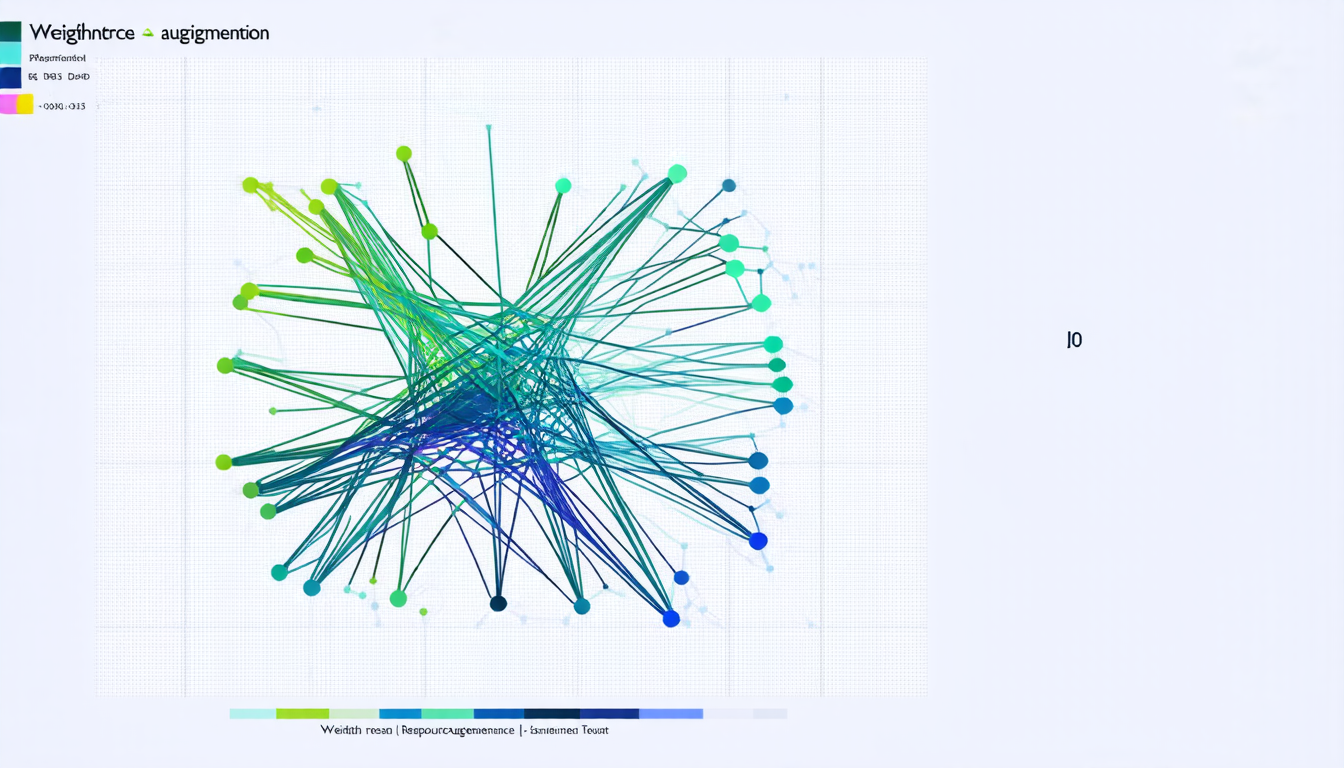
A recent study has made significant progress in this area by introducing the concept of weighted resource augmentation. This approach allows the algorithm to use additional resources – like extra colors – but at a cost. The researchers showed that by allowing the algorithm to use these extra resources, it can significantly improve its performance and efficiency.
The study focused on bipartite graphs, which are a special type of graph where all vertices can be divided into two distinct groups. These graphs are particularly important in computer science because they can represent many real-world systems, such as social networks or transportation systems.
The researchers developed an algorithm that uses weighted resource augmentation to color bipartite graphs efficiently. They showed that their algorithm is capable of achieving a competitive ratio – which measures how well the algorithm performs compared to the optimal solution – of around 1.5, which is much better than previous algorithms.
This breakthrough has significant implications for computer science and engineering. It could be used to improve traffic routing systems, recommendation algorithms, or even social network analysis. And by developing more efficient algorithms, researchers can make computers work smarter, not harder.
The study’s findings also highlight the importance of considering resource constraints when designing algorithms.
Cite this article: “Graph Theory Boosts Algorithm Efficiency with Weighted Resource Augmentation”, The Science Archive, 2025.
Graph Theory, Computer Algorithms, Graph Coloring, Online Recoloring, Weighted Resource Augmentation, Bipartite Graphs, Competitive Ratio, Social Networks, Recommendation Systems, Traffic Routing





