

Wednesday 05 March 2025
A new approach to modeling complex electrochemical systems has been developed, offering insights into the intricate dance of ions and electric fields at play in devices like batteries and fuel cells.
Electrochemical systems are the backbone of many modern technologies, from powering our smartphones to propelling electric vehicles. However, understanding the behavior of these systems is a daunting task, as they involve complex interactions between ions, electrons, and electric fields.
Researchers have long relied on simplified models to study electrochemical systems, but these models often lack accuracy and fail to capture the subtleties of real-world systems. Now, scientists have developed a more sophisticated approach that combines advanced mathematical techniques with powerful computational tools.
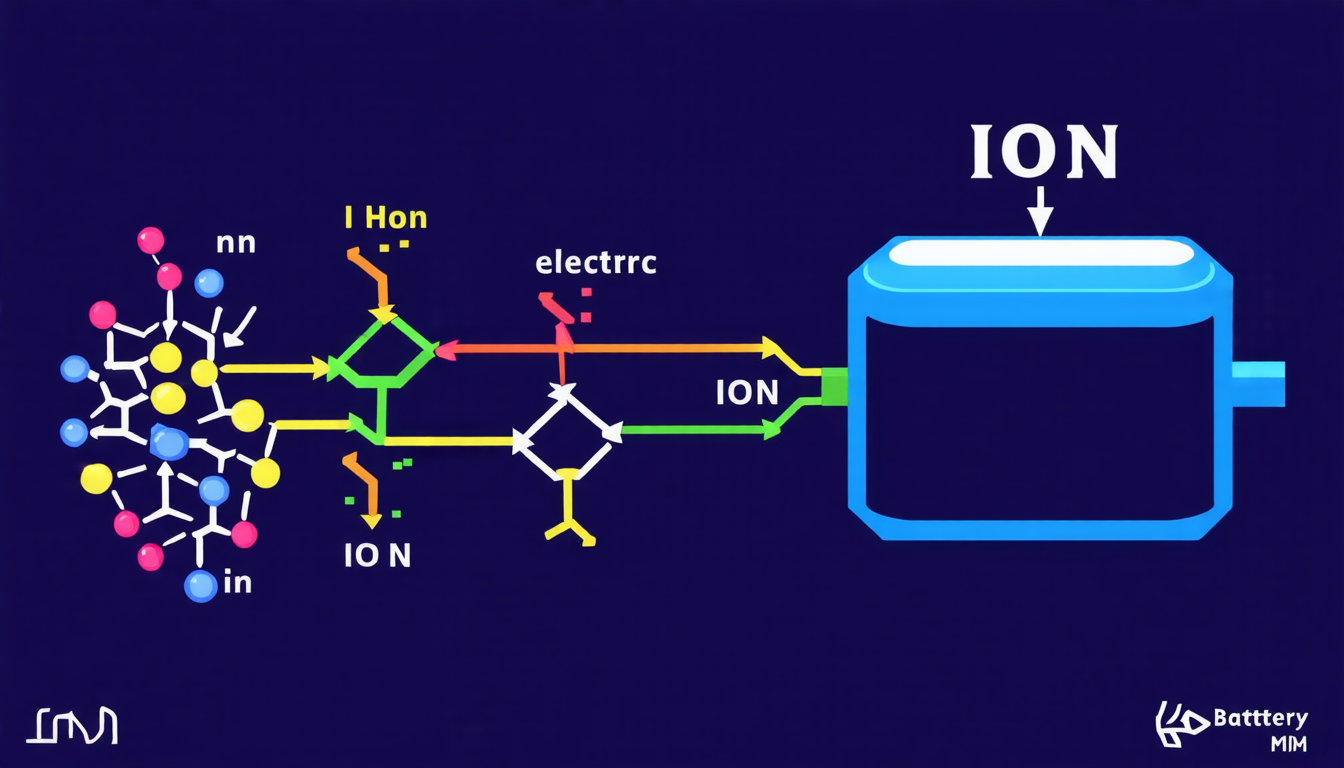
The new model is based on the Poisson-Nernst-Planck (PNP) equations, which describe the behavior of ions in an electric field. By solving these equations using a finite difference method, researchers can simulate the movement of ions and electrons within complex systems like batteries and fuel cells.
One of the key advantages of this new approach is its ability to capture the intricate details of ion dynamics. In traditional models, ions are often treated as simple particles that move in response to electric fields. However, in reality, ions are influenced by a range of factors, including their concentration, size, and charge.
The PNP equations take these factors into account, allowing researchers to simulate the complex interactions between ions and electric fields. This is particularly important for systems like batteries, where ion movement plays a critical role in determining performance and longevity.
Another significant advantage of this new approach is its ability to handle complex boundary conditions. In traditional models, boundary conditions are often simplified or ignored, which can lead to inaccurate results. The PNP equations allow researchers to account for the intricate details of boundary conditions, such as the interactions between ions and electrodes.
The results of this new approach have been striking, with simulations revealing complex patterns of ion movement and electric field distribution within electrochemical systems. These patterns are crucial for understanding how these systems function, and they offer valuable insights into how they can be improved.
For example, the model has been used to study the behavior of ions in a 3D electrolyte system, where it revealed complex concentration gradients and electric field distributions. This information is critical for designing more efficient battery systems and improving their performance.
The development of this new approach marks an important step forward in understanding electrochemical systems.
Cite this article: “Advancing Electrochemical Modeling: A Sophisticated Approach to Understanding Ion Dynamics and Electric Fields”, The Science Archive, 2025.
Electrochemistry, Poisson-Nernst-Planck Equations, Finite Difference Method, Ion Dynamics, Electric Fields, Boundary Conditions, Electrolytes, Batteries, Fuel Cells, Simulation Models





