

Wednesday 05 March 2025
For years, researchers have been working on developing more efficient and effective ways to analyze visual data using artificial intelligence (AI) algorithms. One of the most promising approaches has been the use of transformers, which are a type of neural network that excel at processing sequential data like text. However, when it comes to images, traditional transformers can be slow and computationally expensive.
Recently, scientists have been experimenting with adapting transformers for image analysis by incorporating convolutional neural networks (CNNs), which are better suited for image recognition tasks. This hybrid approach has shown great promise in improving the performance of vision transformers.
The latest development in this field is a new architecture called MSCViT, short for Multi-Scale Self-Attention Mechanism for Tiny Datasets. As its name suggests, MSCViT is designed to work efficiently on small datasets, which are common in many real-world applications where data collection can be challenging.
MSCViT combines the strengths of both transformers and CNNs by incorporating a lightweight multi-scale self-attention mechanism into a convolutional fusion framework. This allows the model to capture both local and global information from images, making it more effective at recognizing patterns and objects.
The researchers behind MSCViT have tested their architecture on several popular image recognition benchmarks, including CIFAR-100, Tiny ImageNet, and others. The results are impressive: MSCViT outperforms traditional transformers and hybrid models in many cases, while using fewer parameters and computations.
One of the key innovations of MSCViT is its use of a local feature extraction block to replace positional encoding, which is a common technique used in transformer-based models. This allows MSCViT to focus more on learning meaningful features from images rather than relying on arbitrary position information.
Another important aspect of MSCViT is its ability to adapt to different image sizes and resolutions. The model can easily handle small images with low resolution, making it suitable for applications where data quality may be limited.
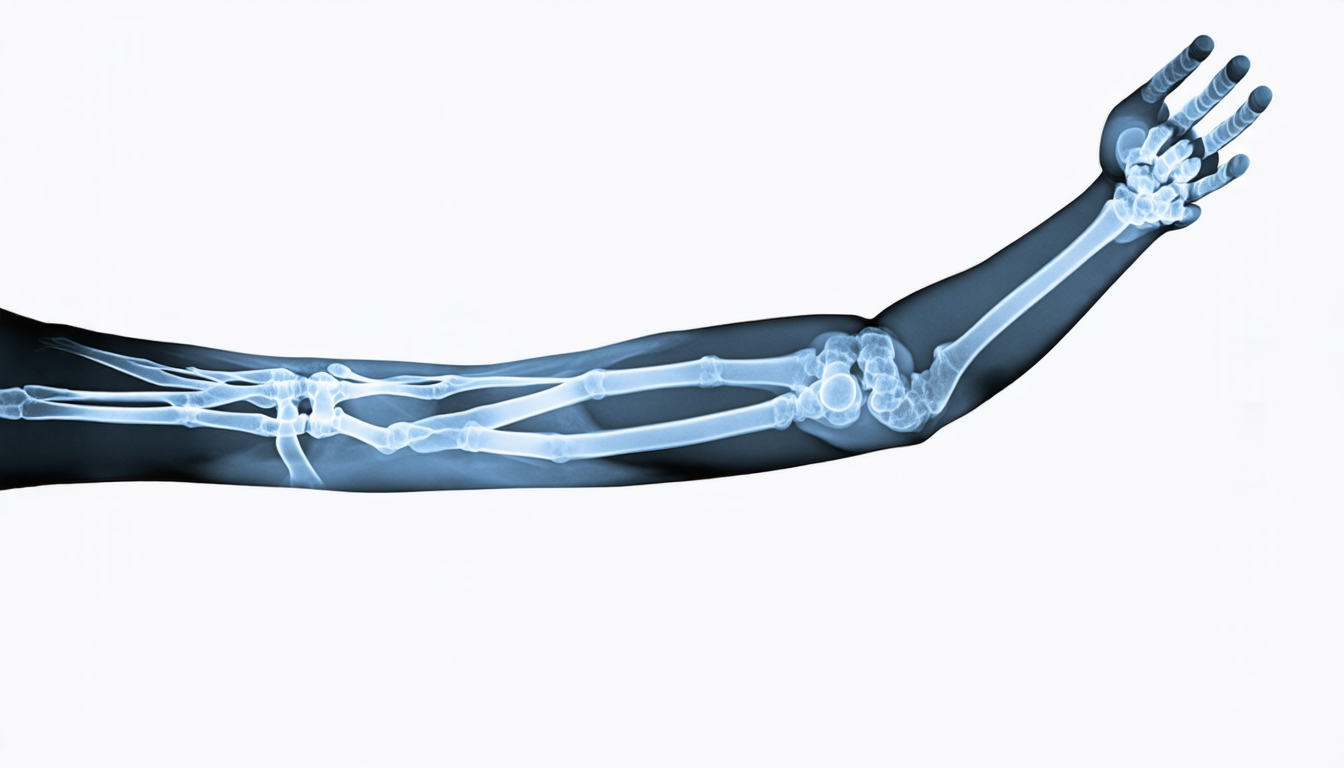
The implications of MSCViT are significant. For example, in healthcare, the model could be used to quickly diagnose diseases from medical images, such as X-rays or MRIs. In autonomous vehicles, MSCViT could help improve object detection and recognition accuracy, enabling safer navigation.
As researchers continue to refine and improve MSCViT, it’s likely that we’ll see even more innovative applications of this technology in the future. For now, MSCViT represents a major step forward in the development of efficient and effective AI models for image analysis.
Cite this article: “MSCViT: A New Architecture for Efficient Image Analysis Using Transformers and CNNs”, The Science Archive, 2025.
Artificial Intelligence, Visual Data, Transformers, Neural Networks, Convolutional Neural Networks, Image Recognition, Mscvit, Self-Attention Mechanism, Local Feature Extraction, Medical Images.





