

Wednesday 05 March 2025
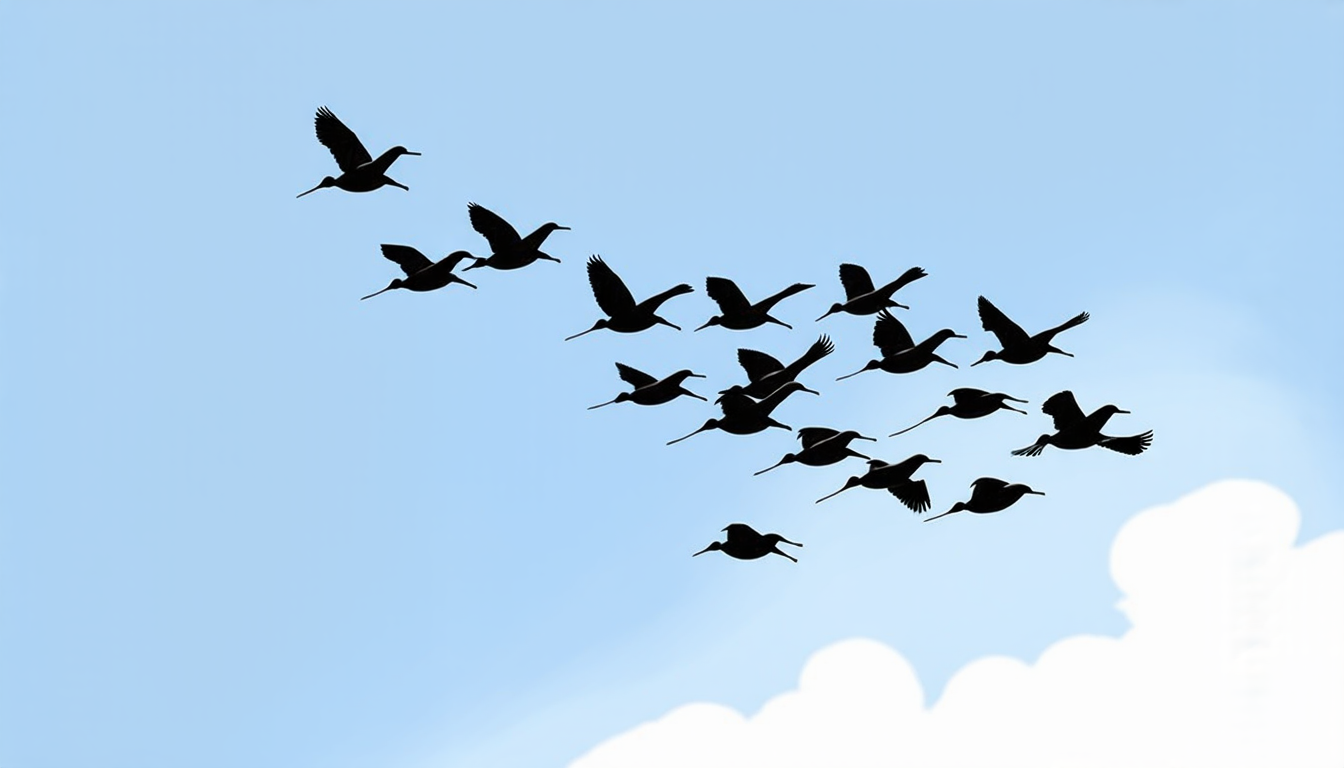
Scientists have made a significant breakthrough in understanding the complex dynamics of swarmalators, systems that combine the principles of swarming and oscillations. By studying these systems, researchers hope to gain insights into how living organisms, such as flocks of birds or schools of fish, coordinate their movements.
In this latest study, researchers examined two distinct formulations of swarmalators: one where individual speeds are influenced by the average speed of the group at a previous time point, and another where speeds depend on the average speed at the present moment. The team found that both scenarios exhibited complex behavior, characterized by a delicate balance between attractive and repulsive interactions.
In the first scenario, researchers observed a transition to synchronization, where the swarmalators’ movements became coordinated. This transition was marked by an increase in interaction energy, as the individuals adjusted their speeds to match those of their neighbors. The synchronized state was stable and persistent, with the swarmalators maintaining a consistent distance from one another.
In contrast, the second scenario revealed a novel behavior known as rotational phase synchronization (RPS). Here, the swarmalators’ movements became coordinated in a rotating pattern, with each individual moving at a different speed to create a harmonious dance. This RPS state was preceded by a transition that highlighted the attractive-repulsive challenge, where individuals navigated between repulsion from their neighbors and attraction towards the group.
The researchers also explored how initial conditions affected the type of synchronization achieved. They found that perturbations in the internal phases of the swarmalators could influence the presence or absence of RPS. This sensitivity to initial conditions is reminiscent of the complex behaviors observed in living systems, where small changes can have significant effects on collective behavior.
The findings of this study offer new insights into the dynamics of swarmalators and their potential applications in bio-inspired computing. By better understanding how these systems coordinate their movements, researchers may be able to develop more sophisticated algorithms for tasks such as search and rescue operations or traffic management.
Moreover, the study’s results have implications for our understanding of living systems, where collective behavior is a hallmark of many biological processes. By exploring the complex dynamics of swarmalators, scientists can gain a deeper appreciation for the intricate interactions that govern the movements of organisms in their natural habitats.
The research highlights the importance of considering non-zero individual speeds in models of swarmalator behavior. This attention to detail may lead to more accurate predictions and better understanding of the complex behaviors exhibited by living systems.
Cite this article: “Swarmalators: Unlocking the Secrets of Collective Behavior”, The Science Archive, 2025.
Swarmalators, Swarming, Oscillations, Synchronization, Rotational Phase Synchronization, Collective Behavior, Bio-Inspired Computing, Search And Rescue Operations, Traffic Management, Non-Zero Individual Speeds.





