

Wednesday 05 March 2025
The latest breakthrough in 3D printing technology has opened up new possibilities for creating complex shapes and structures that were previously thought to be impossible. By using a robotic arm to print layers of material in non-planar directions, researchers have been able to fabricate objects with curves and bends that would be difficult or impossible to achieve with traditional additive manufacturing methods.
One of the key advantages of this new technique is its ability to create complex shapes without the need for intricate supports or scaffolding. This is because the robotic arm can print layers of material in a way that allows them to self-support, eliminating the need for additional structures to hold the object in place during printing.
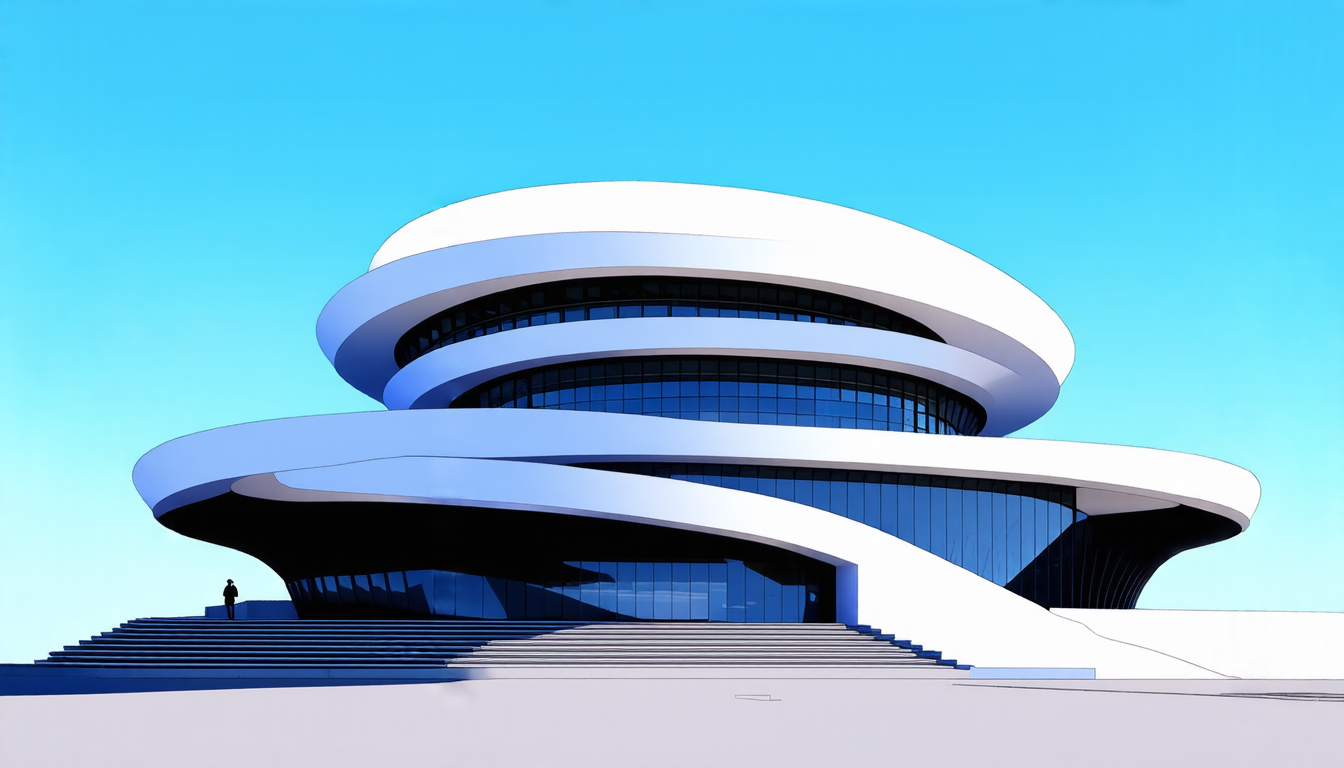
The technology has been tested with a range of materials, including plastics and metals, and has shown promising results. It’s not just limited to small objects either – the robotic arm can print large-scale structures, such as building facades or even entire buildings.
This technique also allows for greater control over the final shape and properties of the printed object. By adjusting the direction and angle of the printing layers, researchers can create objects with specific textures, stiffness, or other characteristics that would be difficult to achieve with traditional 3D printing methods.
The potential applications of this technology are vast. For example, it could be used to create complex architectural structures, such as curved skyscrapers or bridges, without the need for costly and time-consuming construction techniques. It could also be used in the medical field to create custom implants or prosthetics with precise control over their shape and properties.
One of the most exciting aspects of this technology is its ability to enable new forms of artistic expression. With the ability to print complex shapes and structures, artists and designers will have a whole new range of possibilities for creating innovative and imaginative works.
Of course, like any new technology, there are still challenges to be overcome before it can be widely adopted. For example, the robotic arm needs to be able to precisely control its movements and adjust its printing speed and angle in real-time to achieve the desired shape and properties. Additionally, the material used for printing will need to be developed further to ensure that it’s strong, durable, and suitable for a wide range of applications.
Despite these challenges, this new technique has the potential to revolutionize the field of 3D printing and open up new possibilities for creating complex shapes and structures.
Cite this article: “New Technique in 3D Printing Enables Complex Shapes and Structures”, The Science Archive, 2025.
Here Are The Keywords: Robotic Arm, 3D Printing, Additive Manufacturing, Complex Shapes, Structures, Materials, Plastics, Metals, Architecture, Artistic Expression





