

Thursday 06 March 2025
The hunt for patterns in numbers has led mathematicians to a remarkable breakthrough, one that sheds new light on the mysterious connections between seemingly unrelated mathematical structures.
For centuries, mathematicians have been fascinated by the properties of numbers and their relationships to each other. The search for patterns and symmetries within these relationships has driven some of the most significant advances in mathematics. Now, researchers have made a major discovery that reveals a surprising link between two fundamental areas of mathematics: additive combinatorics and graph theory.
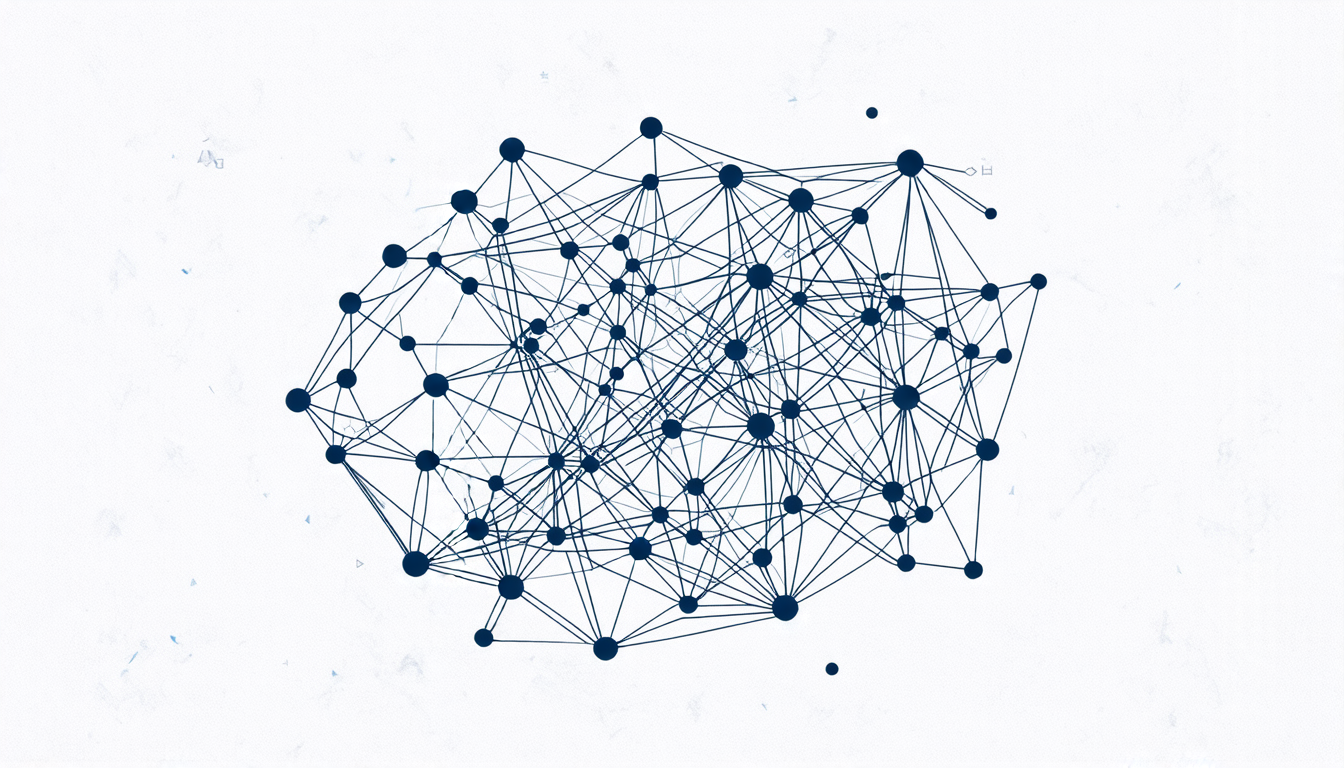
Additive combinatorics is the study of how numbers can be combined to create new patterns and structures. It’s an area that has seen significant progress in recent years, with mathematicians uncovering new ways to combine numbers to create unexpected properties. Graph theory, on the other hand, is concerned with the relationships between objects that are connected by lines or edges.
The breakthrough came when researchers discovered a way to use additive combinatorics to analyze patterns in graph theory. By combining these two areas of mathematics, they were able to uncover new insights into the behavior of numbers and their relationships.
One of the key findings is that certain patterns can be found in both additive combinatorics and graph theory. This has significant implications for our understanding of how numbers behave and how they interact with each other. It also opens up new avenues for research, as mathematicians seek to explore these connections further.
The discovery has also shed light on the properties of certain types of graphs, known as hypergraphs. These are complex structures that consist of multiple layers of connections between objects. By analyzing patterns in additive combinatorics, researchers have been able to uncover new properties of hypergraphs and how they behave under different conditions.
This breakthrough is significant not only for mathematicians but also for scientists and engineers who rely on mathematical models to understand the world around us. It has the potential to lead to new insights into complex systems and how they interact with each other.
In a recent paper, researchers outlined their findings and explored the implications of this discovery. They demonstrated that by combining additive combinatorics and graph theory, they were able to uncover new patterns and properties in both areas.
The discovery is a testament to the power of human ingenuity and the importance of interdisciplinary collaboration. By bringing together mathematicians from different fields, researchers have been able to make significant advances in our understanding of the world around us.
Cite this article: “Mathematical Breakthrough Reveals Hidden Patterns and Connections”, The Science Archive, 2025.
Mathematics, Patterns, Numbers, Combinatorics, Graph Theory, Breakthrough, Discovery, Research, Mathematics, Connections
Reference: Hyunwoo Lee, “A quantitative improvement on the hypergraph Balog-Szemerédi-Gowers theorem” (2025).





