

Thursday 06 March 2025
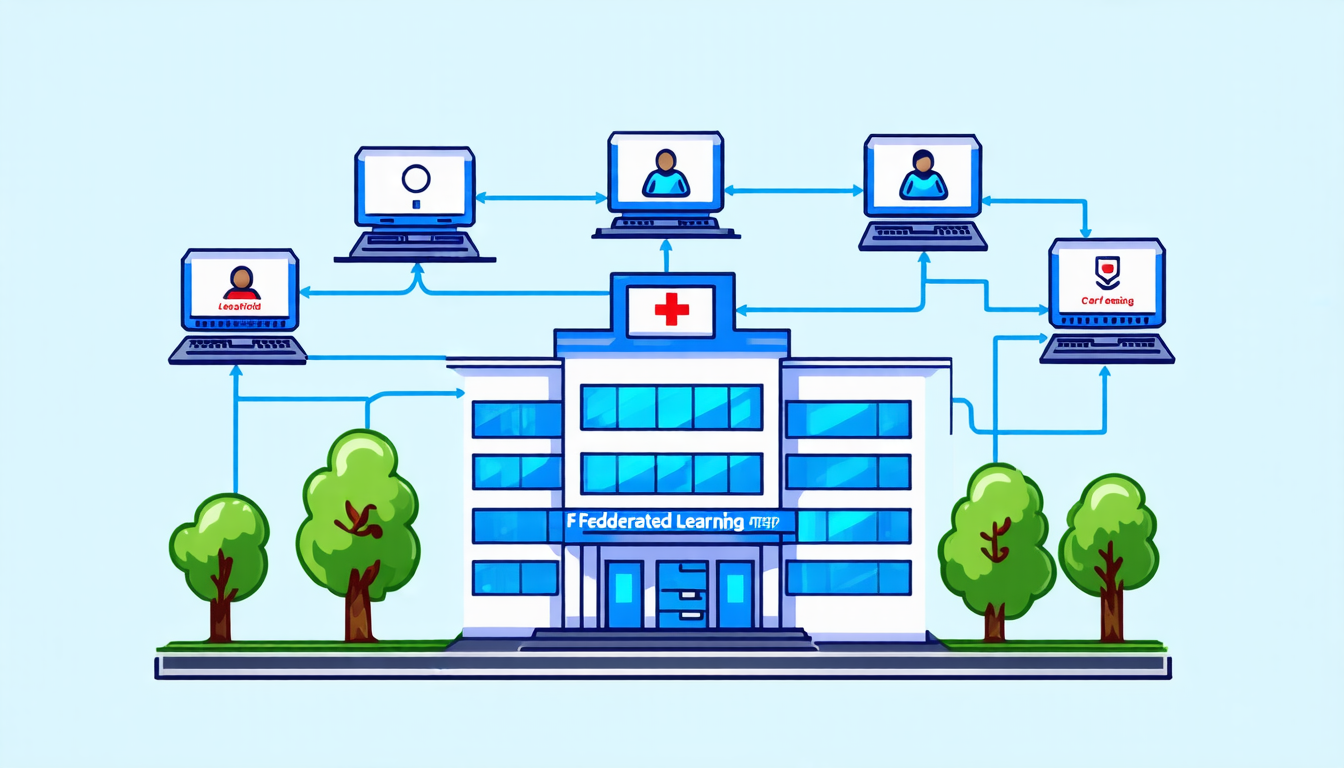
Federated learning, a technique that allows multiple devices or servers to jointly train a machine learning model without sharing their individual data, has been gaining traction in recent years. The approach is particularly useful when dealing with sensitive information, as it enables organizations to collaborate on complex tasks while keeping their data private.
Now, researchers have made significant progress in this area by developing a new method called Full Rank Aggregation LoRA (FRA-LoRA). This technique combines the benefits of two existing methods: Federated Averaging and Low-Rank Adaptation (LoRA).
Federated Averaging is a common approach to federated learning, where each device or server updates its model parameters by averaging those from other devices. However, this method can be prone to errors, especially when dealing with large models.
LoRA, on the other hand, is a technique that reduces the number of parameters in a model by approximating the weight increments using low-rank matrices. This approach has been shown to improve the accuracy and efficiency of federated learning.
FRA-LoRA combines the strengths of both methods by aggregating the model parameters using Full Rank Aggregation, which preserves the information from each device or server. The technique also incorporates LoRA to reduce the number of parameters and improve the accuracy of the model.
The researchers tested FRA-LoRA on two benchmark datasets: Multi-Genre Natural Language Inference (MNLI) and Stanford Sentiment Treebank (SST2). They found that FRA-LoRA outperformed Federated Averaging in terms of accuracy, especially when dealing with imbalanced data.
One of the key advantages of FRA-LoRA is its ability to handle sensitive information. By using LoRA, the technique ensures that only a subset of parameters needs to be updated and shared between devices or servers. This reduces the risk of data leakage and makes it more suitable for applications where privacy is a concern.
Another benefit of FRA-LoRA is its flexibility. The technique can be used with different types of models and datasets, making it a versatile tool for a wide range of applications.
In addition to its technical advantages, FRA-LoRA also has the potential to revolutionize various industries. For example, in healthcare, FRA-LoRA could enable hospitals or research institutions to collaborate on complex medical tasks without sharing sensitive patient data.
Cite this article: “Advances in Federated Learning: Introducing Full Rank Aggregation LoRA (FRA-LoRA)”, The Science Archive, 2025.
Federated Learning, Machine Learning, Data Privacy, Lora, Full Rank Aggregation, Federated Averaging, Low-Rank Adaptation, Natural Language Processing, Sentiment Analysis, Healthcare.





