

Thursday 06 March 2025
Scientists have long been fascinated by the behavior of particles at the quantum level, where the rules of classical physics no longer apply. In recent years, researchers have made significant progress in understanding the properties of these tiny particles and how they interact with each other.
One area of particular interest is the study of non-Hermitian systems, which are characterized by a lack of symmetry between the particle’s position and momentum. This asymmetry can lead to some fascinating effects, such as the emergence of skin modes – regions where the particle’s density is greatly increased due to interactions with its environment.
In a recent paper, researchers have demonstrated the existence of a new type of skin mode in non-Hermitian systems. These skin modes are different from those seen in traditional Hermitian systems, and they exhibit unique properties that could be useful for applications such as quantum computing and cryptography.
The study was conducted using a combination of theoretical modeling and experimental verification. Researchers created a synthetic lattice structure using ultracold atoms, which were then cooled to near absolute zero. They used laser light to manipulate the atoms’ behavior, effectively creating a non-Hermitian system.
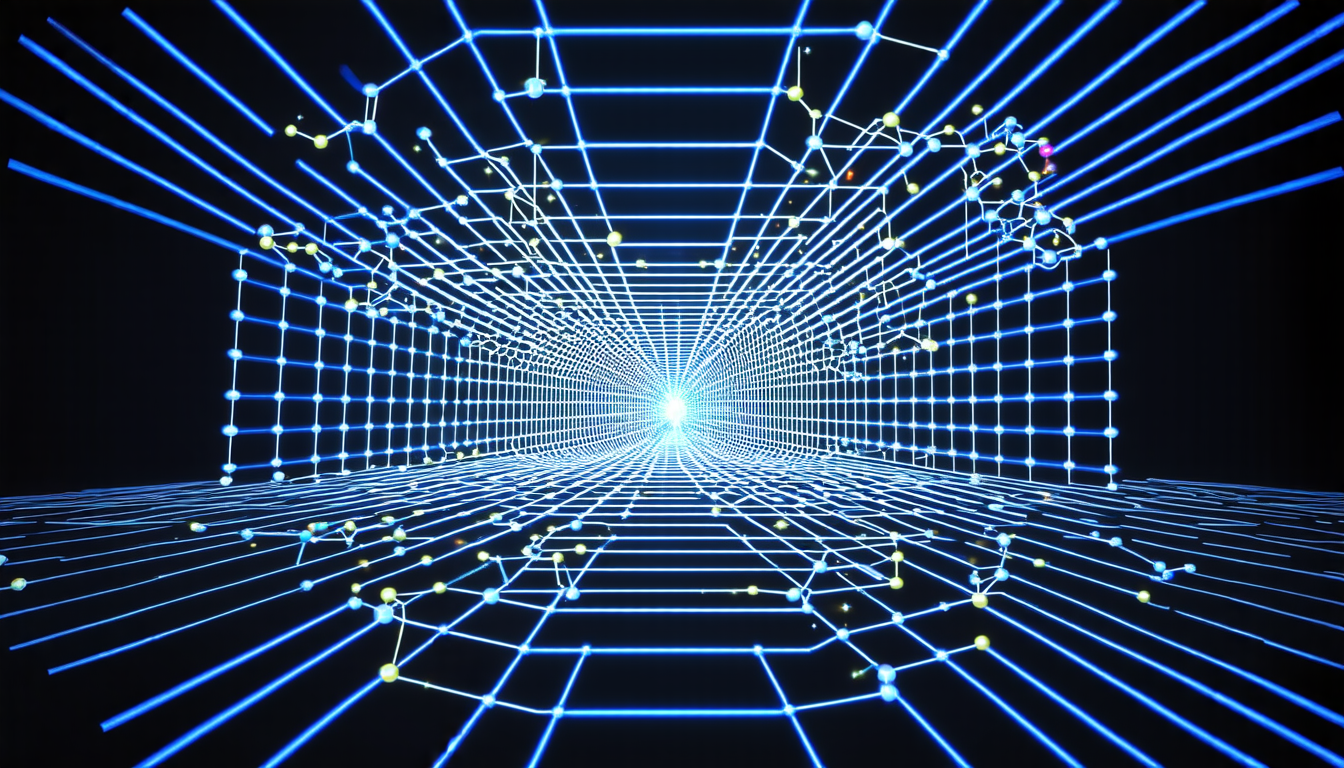
By studying the behavior of these atoms, researchers were able to observe the emergence of skin modes in the non-Hermitian system. These skin modes were found to be localized at the boundaries of the lattice structure, where the atoms interacted with their environment in unique ways.
The researchers also explored the properties of these skin modes, finding that they exhibited a range of interesting characteristics. For example, they were able to demonstrate that the skin modes could be manipulated by adjusting the strength and direction of the laser light used to control the atoms’ behavior.
These findings have significant implications for our understanding of non-Hermitian systems and their potential applications. They also highlight the importance of continued research in this area, as scientists seek to unlock the secrets of quantum mechanics and harness its power for practical use.
In addition to their theoretical implications, these results may also have practical applications in fields such as quantum computing and cryptography. By better understanding the behavior of non-Hermitian systems, researchers may be able to develop new methods for encoding and decoding information, potentially leading to more secure communication networks and faster data processing times.
Overall, this study represents an important advance in our understanding of non-Hermitian systems and their unique properties.
Cite this article: “Unlocking the Secrets of Non-Hermitian Systems: Researchers Discover New Skin Modes”, The Science Archive, 2025.
Quantum Mechanics, Non-Hermitian Systems, Skin Modes, Quantum Computing, Cryptography, Ultracold Atoms, Laser Manipulation, Synthetic Lattice Structure, Quantum Information Processing, Non-Linear Physics
Reference: Wen-Zheng Ling, Zhao-Fan Cai, Tao Liu, “Interaction-Induced Second-Order Skin Effect” (2025).





