

Thursday 06 March 2025
Researchers have been working on optimizing the performance of graph transposition, a fundamental algorithm used in various fields such as graph analytics and scientific computing. Graph transposition is responsible for rearranging edges between vertices in a graph, which can significantly impact the overall efficiency of many algorithms.
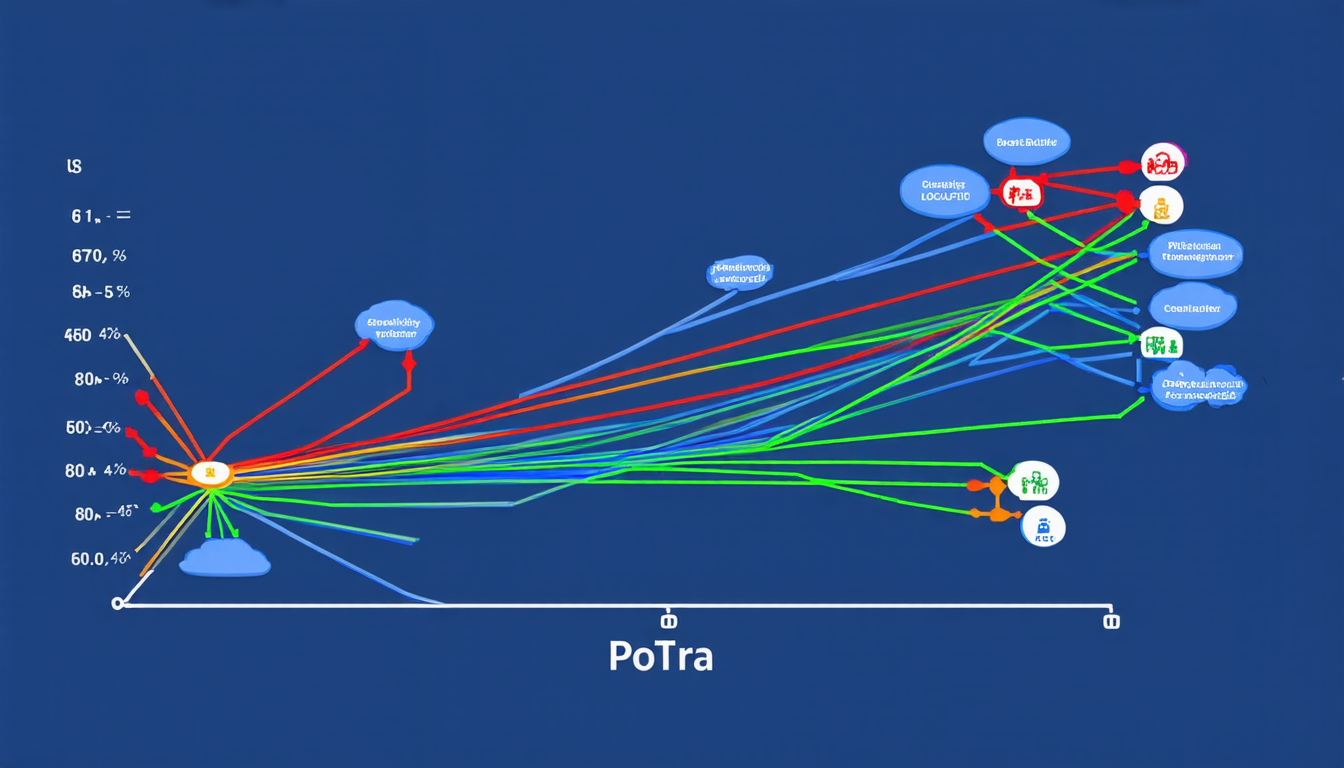
The researchers designed a new algorithm called PoTra, which leverages graph structure and processor architecture to optimize locality and performance. They modeled its performance and studied the dependency of PoTra on memory access rates. Their evaluation on 20 real-world graphs with up to 128 billion edges demonstrates that PoTra achieves up to 8.7 times speedup compared to previous works.
To understand why this is important, consider the vast amounts of data being generated in fields like social network analysis and web graph analysis. These datasets can be massive, making it challenging for algorithms to efficiently process them. The traditional approach to transposing graphs involves using shared arrays between threads, which leads to cache contention and poor performance.
PoTra addresses this issue by limiting the size of additional data structures to match CPU cache sizes and utilizing the skewed degree distribution of graph datasets to optimize locality and performance. This approach allows PoTra to achieve better load balance and reduce memory accesses.
The researchers also explored the energy efficiency of PoTra, finding a relative difference of 8.3 ± 8.1% between speedup and energy reduction. While this may not seem significant at first glance, it suggests that PoTra’s performance gains come without sacrificing power consumption.
To further improve PoTra’s performance, the researchers considered several factors, including graph structure, processor architecture, and memory access rates. They found that by taking these factors into account, they could design an algorithm that is both fast and energy-efficient.
The results of this research have significant implications for various fields that rely on graph transposition. By optimizing this fundamental algorithm, researchers can create more efficient algorithms for tasks like social network analysis and web graph analysis. This, in turn, can lead to faster processing times and reduced power consumption, making it possible to analyze larger datasets with ease.
Overall, the development of PoTra represents a significant step forward in the field of graph transposition. By leveraging graph structure and processor architecture, researchers have created an algorithm that is both fast and energy-efficient. As data continues to grow at an exponential rate, algorithms like PoTra will play a crucial role in unlocking its secrets.
Cite this article: “Optimizing Graph Transposition with PoTra: A New Algorithm for Efficient Data Processing”, The Science Archive, 2025.
Graph Transposition, Optimization, Locality, Performance, Processor Architecture, Memory Access Rates, Cache Contention, Energy Efficiency, Social Network Analysis, Web Graph Analysis





