

Thursday 06 March 2025
A team of researchers has made a significant breakthrough in understanding the behavior of excitons, tiny particles that are crucial for the functioning of semiconductors and other electronic devices. Excitons are formed when an electron is excited by light or other forms of energy, and they play a key role in the flow of electrical current.
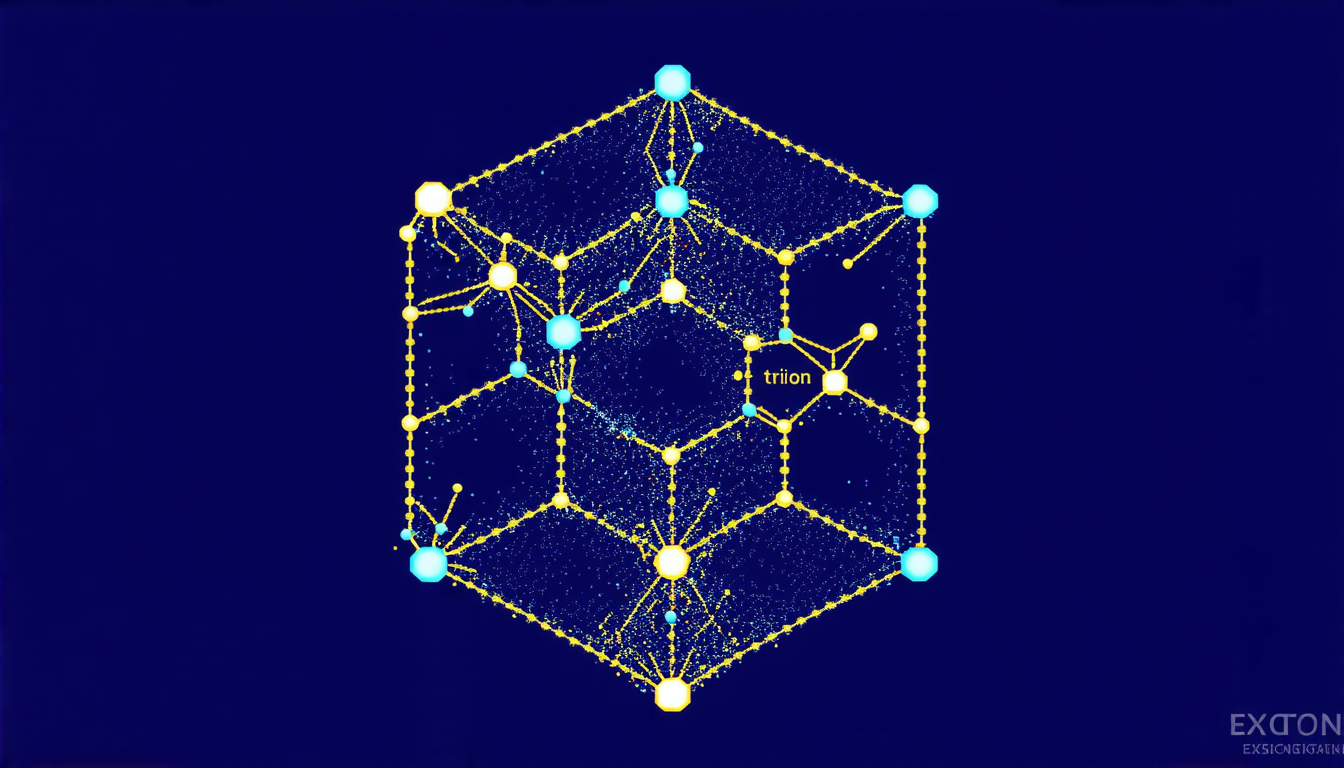
The research team used a combination of theoretical models and experimental techniques to study the behavior of excitons in two-dimensional (2D) materials such as transition metal dichalcogenides (TMDs). These 2D materials are made up of layers of atoms that are arranged in a hexagonal structure, and they have unique electronic properties.
The researchers found that excitons in 2D TMDs exhibit complex behavior, including the ability to form bound states with other particles such as phonons (quantized sound waves) or other excitons. These bound states can lead to the formation of new particles, known as trions, which are charged versions of excitons.
The team also discovered that the behavior of excitons in 2D TMDs is influenced by the material’s electronic structure, including its bandgap and Fermi level. The bandgap is the energy gap between the valence band and conduction band of the material, while the Fermi level is the energy level at which the material’s electrons are most likely to be found.
The researchers used a combination of theoretical models and experimental techniques to study the behavior of excitons in 2D TMDs. They developed a set of equations known as the semiconductor Bloch equations (SBEs), which describe the dynamics of excitons in terms of their wave functions, energies, and occupation numbers. The SBEs were used to simulate the behavior of excitons in different 2D TMDs, including tungsten diselenide (WSe2) and molybdenum disulfide (MoS2).
The team also performed experiments using a technique known as pump-probe spectroscopy, which involves shining a laser pulse on a sample of 2D material and then measuring the response of the material to the pulse. The researchers used this technique to study the behavior of excitons in WSe2 and MoS2, and they found that their results were consistent with the predictions made by the SBEs.
Cite this article: “Unlocking the Secrets of Excitons in 2D Materials”, The Science Archive, 2025.
Excitons, Semiconductors, 2D Materials, Transition Metal Dichalcogenides, Tmds, Phonons, Trions, Bandgap, Fermi Level, Semiconductor Bloch Equations





