

Thursday 06 March 2025
For years, music lovers have been fascinated by the intricate complexities of Indian classical music. With its rich history and diverse range of styles, this genre has captivated audiences worldwide. However, for music researchers, analyzing and understanding Indian classical music can be a daunting task due to the lack of standardized datasets.
A recent study has aimed to change this by creating a unique dataset specifically designed for research on Indian classical music. Dubbed Sanidha, this collection features high-quality, multi-track recordings of Carnatic music concerts from various artists.
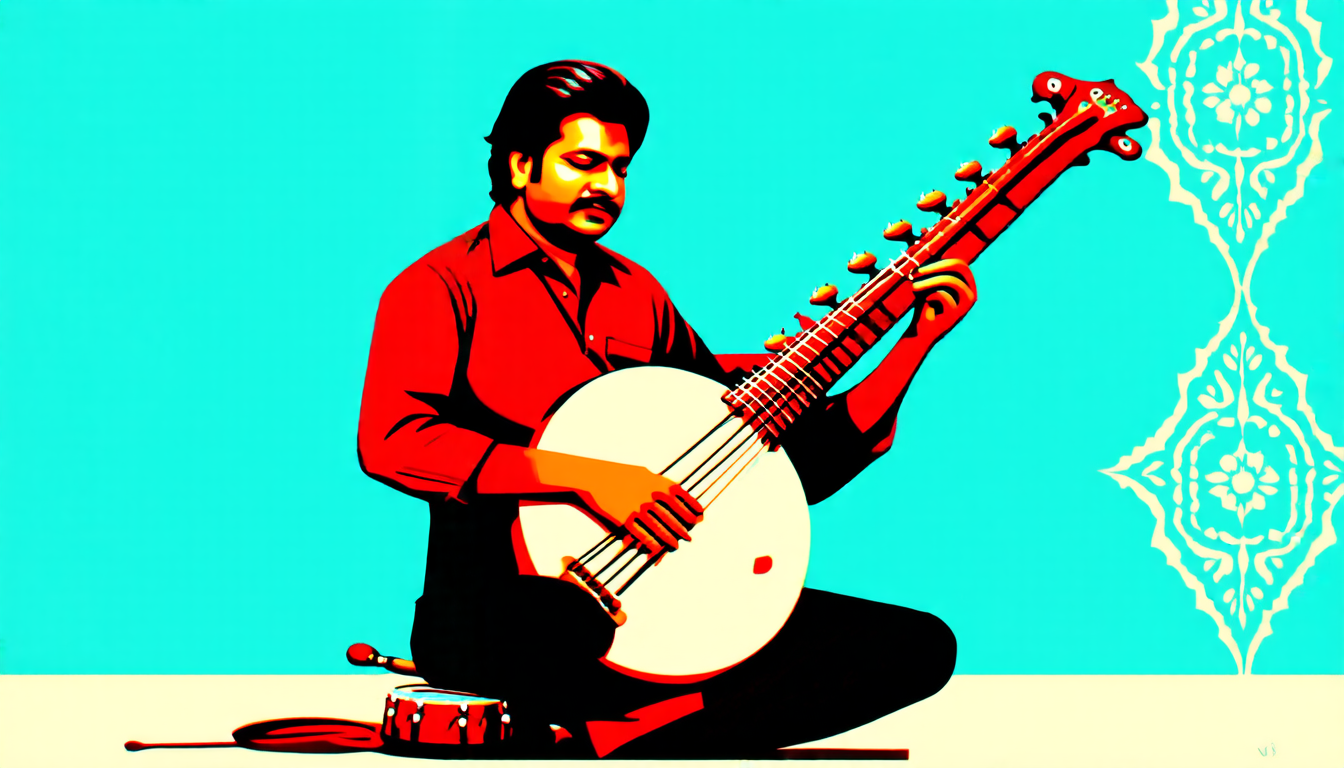
Carnatic music is a traditional art form that originated in southern India and is known for its complex rhythms and intricate melodic structures. The creation of Sanidha involves meticulous attention to detail, as the researchers have carefully selected and edited the audio tracks to ensure their quality and accuracy.
One of the primary goals of Sanidha is to provide a standardized platform for music information retrieval (MIR) research. MIR is an interdisciplinary field that combines computer science, signal processing, and music theory to analyze and extract relevant information from audio signals. With Sanidha, researchers can now develop algorithms and models tailored specifically to Indian classical music.
The dataset consists of five concerts featuring different artists, each with its unique blend of vocalists, instrumentalists, and percussionists. The recordings were made using high-quality equipment in isolated spaces, minimizing bleed and ensuring that the audio tracks are clean and free from distortion.
To further enhance the dataset’s utility, the researchers have also included metadata such as song titles, artist information, and genre labels. This metadata can be used to train machine learning models or develop applications for music recognition and classification.
Sanidha has already demonstrated its potential in a series of experiments conducted by the research team. By fine-tuning a popular source separation model on the Sanidha dataset, the researchers were able to achieve significant improvements in vocal isolation and quality.
The implications of Sanidha are far-reaching, as it opens up new avenues for music research and applications. For instance, the dataset can be used to develop music recognition systems that can identify specific Carnatic ragas or artists. It can also enable the creation of music therapy programs tailored to Indian classical music.
In addition to its academic significance, Sanidha has the potential to democratize access to Indian classical music research. By providing a standardized and accessible dataset, researchers from diverse backgrounds can now contribute to the field without having to invest significant resources in data collection.
Cite this article: “Sanidha: A Standardized Dataset for Indian Classical Music Research”, The Science Archive, 2025.
Indian Classical Music, Carnatic Music, Sanidha Dataset, Music Information Retrieval, Mir Research, Machine Learning Models, Audio Signals, Signal Processing, Music Theory, Music Recognition Systems, Music Therapy Programs





