
Friday 07 March 2025
In recent years, the field of wireless communication has witnessed significant advancements, with researchers working tirelessly to develop new technologies that can support the ever-growing demand for data transmission. One such area of focus is the development of a new type of channel model that can accurately predict how signals will propagate through complex environments.
The traditional approach to modeling wireless channels involved simplifying the environment by assuming a static and uniform distribution of scatterers. However, this approach has been shown to be inaccurate in real-world scenarios, where the environment is often dynamic and irregularly shaped. To address this issue, researchers have turned to machine learning techniques, which can learn complex patterns from large datasets.
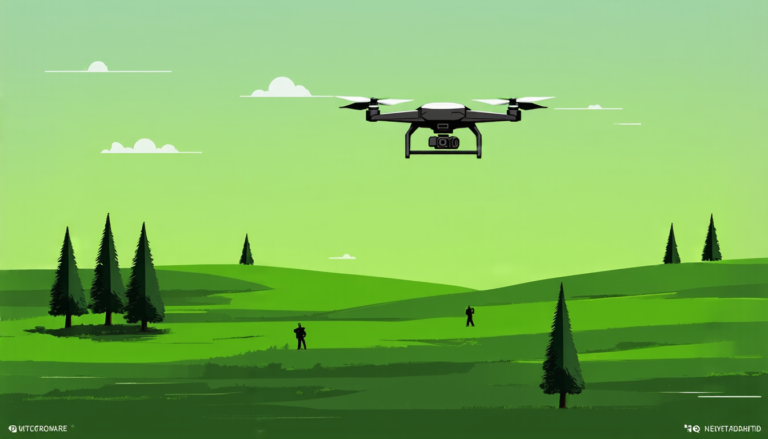
A team of scientists has recently proposed a novel approach to modeling wireless channels using LiDAR point clouds, which are three-dimensional representations of the environment created by lasers. By analyzing these point clouds, researchers can identify and classify different types of scatterers, such as buildings, trees, and vehicles, and use this information to predict how signals will propagate.
The proposed model is based on a concept called Synesthesia of Machines, which refers to the ability of machines to perceive and understand complex environments. The team used a combination of machine learning algorithms, including convolutional neural networks (CNNs) and recurrent neural networks (RNNs), to analyze the LiDAR point clouds and identify patterns that can be used to predict channel behavior.
The results of the study are promising, with the proposed model showing significant improvements in accuracy compared to traditional approaches. The team was able to achieve a classification accuracy of over 93% for scatterers, which is a critical component of accurate channel modeling.
One of the key advantages of this approach is its ability to capture complex non-stationary behavior in wireless channels. Traditional models assume that the environment remains static and uniform over time, whereas real-world environments are often dynamic and irregularly shaped. The proposed model can account for these complexities by analyzing LiDAR point clouds from multiple angles and times.
The implications of this research are far-reaching, with potential applications in areas such as autonomous vehicles, smart cities, and wireless communication networks. By developing more accurate models of wireless channels, researchers can design more efficient and reliable communication systems that can support the growing demand for data transmission.
In addition to its technical significance, this research also highlights the importance of collaboration between experts from different fields. The team consisted of researchers from computer science, electrical engineering, and physics, who worked together to develop a comprehensive model of wireless channels.
Cite this article: “Accurate Wireless Channel Modeling Using LiDAR Point Clouds”, The Science Archive, 2025.
Wireless Communication, Channel Modeling, Lidar Point Clouds, Machine Learning, Convolutional Neural Networks, Recurrent Neural Networks, Synesthesia Of Machines, Accuracy, Classification, Non-Stationary Behavior.