

Friday 07 March 2025
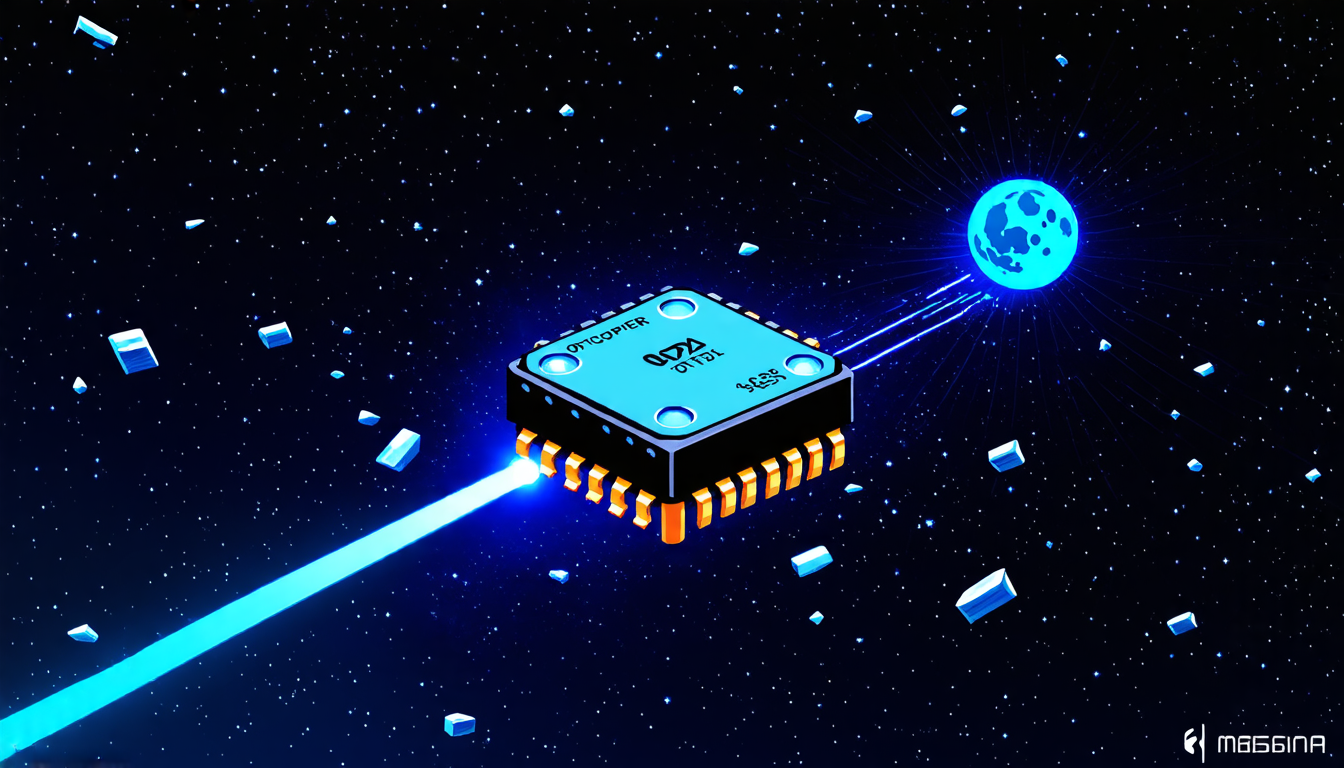
In a breakthrough that could have significant implications for the design of electronic components used in space exploration and other high-reliability applications, researchers at Indian Institute of Technology Bombay have successfully emulated Single Event Transients (SETs) in optocouplers using an ultrafast pulsed laser.
Optocouplers are electronic devices that use light to isolate high-voltage circuits from low-voltage ones. They’re commonly used in a wide range of applications, including consumer electronics, medical devices, and even space exploration missions. However, these devices can be susceptible to radiation-induced errors, which can cause them to malfunction or fail.
One of the biggest challenges in designing reliable optocouplers is testing their performance under conditions that mimic those found in space. Traditional methods involve using particle accelerators, which are expensive and require a significant amount of infrastructure. To overcome this challenge, researchers have been exploring the use of laser-based testing facilities to emulate SETs.
The team at Indian Institute of Technology Bombay has developed an ultrafast pulsed laser system that can generate pulses with durations as short as 10 picoseconds. This is significantly faster than traditional lasers used for testing, which typically operate on a nanosecond scale. By using a shorter pulse duration, the researchers were able to more accurately simulate the effects of radiation-induced errors.
The team tested their system by evaluating a commercially available optocoupler, the 4N35, under various conditions. They found that the device exhibited significant changes in its electrical behavior when subjected to high-intensity laser pulses. The results suggest that the ultrafast pulsed laser system can be used to effectively emulate SETs in optocouplers, providing a more efficient and cost-effective alternative to traditional testing methods.
The implications of this research are significant. By using an ultrafast pulsed laser system, researchers can now test optocouplers under conditions that mimic those found in space, without the need for expensive particle accelerators. This could lead to the development of more reliable and fault-tolerant electronic components, which is critical for ensuring the success of complex space missions.
The research also has potential applications beyond space exploration. Optocouplers are used in a wide range of devices, including medical equipment, consumer electronics, and industrial control systems. By developing a more effective testing method, manufacturers can ensure that their products are reliable and fault-tolerant, which could lead to improved performance and reduced downtime.
Cite this article: “Emulating Single Event Transients in Optocouplers Using Ultrafast Pulsed Laser System”, The Science Archive, 2025.
Optocouplers, Sets, Single Event Transients, Ultrafast Pulsed Laser, Radiation-Induced Errors, Space Exploration, Electronic Components, High-Reliability Applications, Laser-Based Testing Facilities, Particle Accelerators





