

Friday 07 March 2025
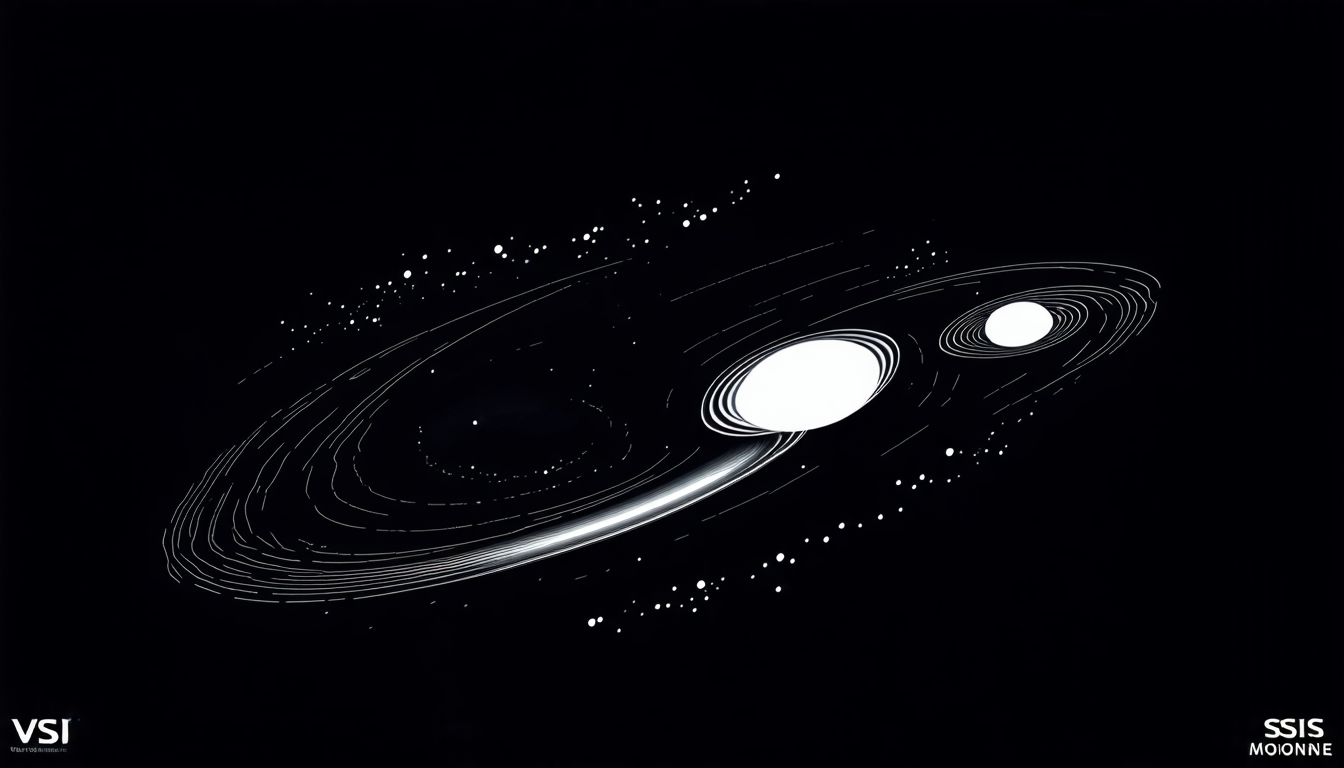
The swirling vortex of a young star’s protoplanetary disk is a turbulent place, full of hot gas and dust that can give rise to planets like our own Earth. But how exactly do these particles move around in this chaotic environment? Scientists have long been fascinated by the question of how dust diffuses through these disks, and now they’re getting closer to answering it.
Researchers have found that there are two main sources of turbulence in protoplanetary disks: the vertical shear instability (VSI) and the streaming instability (SI). The VSI is a phenomenon where the rotation of the disk creates a shear force between different layers of gas, causing them to move at different speeds. This leads to the creation of vortices that can grow and dissipate over time.
The SI, on the other hand, is caused by the way that particles in the disk interact with each other. As they move around, they create pressure waves that can disturb the motion of nearby particles. These waves can then create turbulence in the form of vortices similar to those created by the VSI.
In a new study, scientists used computer simulations to examine how these two instabilities affect the diffusion of dust through protoplanetary disks. They found that the VSI is responsible for creating large-scale structures in the disk, such as undulating layers of gas and dust. The SI, on the other hand, creates smaller-scale turbulence that can mix particles around.
The researchers also looked at how these instabilities interact with each other when they occur together. They found that the VSI tends to dominate the behavior of the disk on large scales, while the SI takes over on smaller scales.
One of the key findings of the study is that the VSI is much more effective at diffusing dust through the disk than the SI. This means that it’s likely to play a major role in shaping the final structure of planets like our own Earth.
The researchers also looked at how these instabilities might affect the formation of planets. They found that the VSI can create conditions that are favorable for the growth of large particles, which could eventually become planets. The SI, on the other hand, tends to create more chaotic environments that may be less conducive to planet formation.
Overall, this study sheds new light on the complex and turbulent world of protoplanetary disks. By understanding how dust diffuses through these disks, scientists can gain a better appreciation for the processes that shape the formation of planets like our own Earth.
Cite this article: “Unraveling Turbulence in Protoplanetary Disks: A Key to Understanding Planet Formation”, The Science Archive, 2025.
Protoplanetary Disks, Turbulence, Dust Diffusion, Vertical Shear Instability, Streaming Instability, Vortices, Planet Formation, Planetary Structure, Computer Simulations, Astronomy





