

Friday 07 March 2025
Researchers have developed a novel approach to improve the accuracy of question-answering systems, which rely on artificial intelligence (AI) to provide answers to user queries. The new system, dubbed RopMura, combines multiple AI agents and planning mechanisms to tackle complex questions that require multi-step reasoning.
Traditional QA systems typically employ a single AI model to generate responses. However, these models often struggle with nuanced or abstract queries, leading to inaccurate or incomplete answers. In contrast, RopMura’s multi-agent architecture allows it to tap into the strengths of multiple AI agents, each specializing in different domains and knowledge areas.
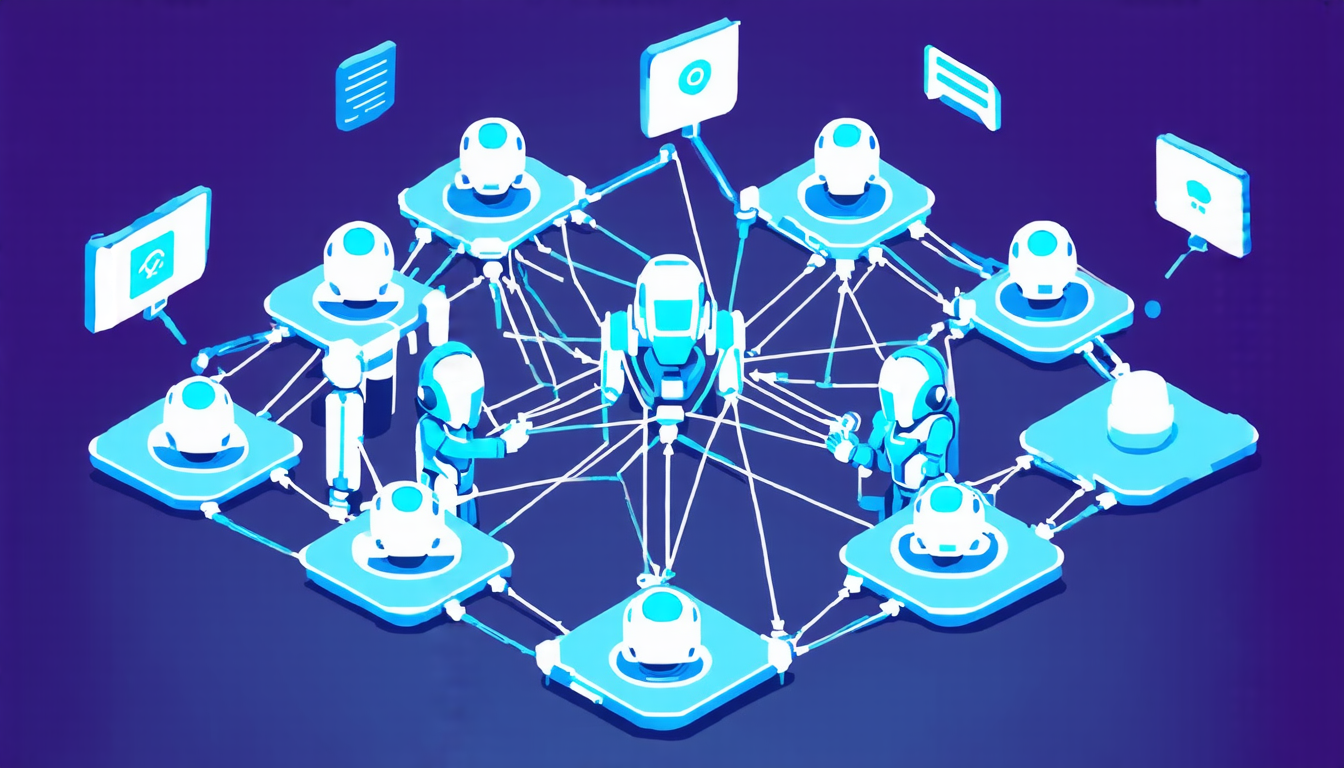
The system consists of three primary components: routers, agents, and a planner. Routers act as gatekeepers, selecting the most relevant agents to address user queries based on their expertise and the query’s complexity. Each agent is responsible for retrieving relevant knowledge pieces from its domain-specific database and generating responses. The planner, meanwhile, coordinates the agents’ efforts, ensuring that they work together efficiently to provide accurate answers.
One of RopMura’s key innovations lies in its ability to adapt to complex questions by breaking them down into smaller, more manageable subqueries. This process is facilitated by the planner, which splits the original query into multiple parts and assigns each part to an agent best suited for that task. The agents then collaborate to generate a response that addresses each subquery.
RopMura’s performance was evaluated through experiments on three benchmark datasets: Natural Questions, HotpotQA, and Multi- Hop RAG. Results showed significant improvements in accuracy compared to state-of-the-art single-agent models. For instance, the system achieved an average F1 score of 0.83 on the Natural Questions dataset, outperforming previous models by as much as 10 percentage points.
The researchers also conducted experiments to demonstrate RopMura’s ability to tackle complex, multi-hop questions. In these cases, the system was able to provide accurate answers by iteratively refining its understanding of the query and adapting its response accordingly.
While RopMura represents a significant step forward in QA technology, there are still challenges to be addressed. For instance, the system may struggle with queries that require domain-specific knowledge or nuanced reasoning. Additionally, the complexity of the planning mechanism can sometimes lead to inefficiencies or errors.
Despite these limitations, RopMura’s potential applications are vast.
Cite this article: “RopMura: A Novel Multi-Agent Approach to Improve Question Answering Systems”, The Science Archive, 2025.
Artificial Intelligence, Question Answering Systems, Multi-Agent Architecture, Planning Mechanisms, Complex Questions, Multi-Step Reasoning, Natural Language Processing, Knowledge Areas, Domain-Specific Databases, Accuracy Improvement





