

Friday 07 March 2025
Scientists have long been fascinated by the intricate patterns that emerge in complex networks, such as social media connections or transportation systems. A recent study has shed new light on these patterns, revealing a surprising connection between the properties of individual nodes and the behavior of the network as a whole.
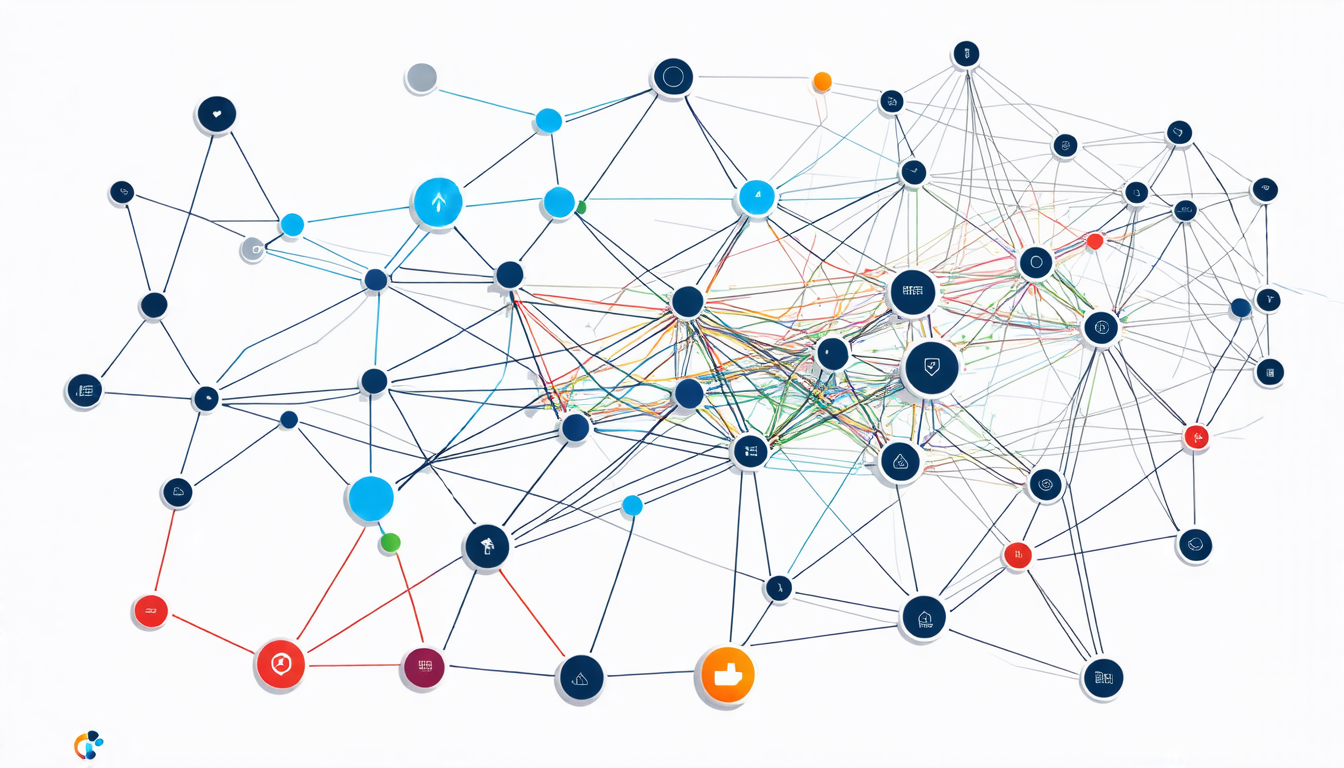
The research focuses on a type of network called a multiplex network, where multiple layers of relationships exist between individual nodes. For example, a social media platform might have separate networks for friends, followers, and likes. By analyzing these layered connections, researchers can better understand how information spreads through the network and how communities form.
One key finding is that the properties of individual nodes, such as their degree (the number of connections they have) or strength (the importance of those connections), can influence the behavior of the entire network. This is particularly true when it comes to the spread of information, where nodes with high degrees tend to be hubs for dissemination.
The study also explores how the properties of individual nodes interact with the overall structure of the network. For instance, researchers found that networks with a mix of highly connected and less connected nodes tend to be more resilient in the face of random failures or attacks. This means that a diverse range of node properties can help stabilize the network as a whole.
The research has important implications for our understanding of complex systems, from social media platforms to biological networks. By better understanding how individual components interact with one another, scientists can develop more effective strategies for managing and optimizing these systems.
One potential application is in the design of robust communication networks. By incorporating diverse node properties, network designers could create more resilient and efficient systems that can adapt to changing conditions.
The study also highlights the importance of considering multiple layers of relationships when analyzing complex networks. This approach can provide a richer understanding of how information spreads and communities form, as well as identifying potential vulnerabilities or bottlenecks in the system.
Overall, this research offers new insights into the intricate patterns that emerge in complex networks. By examining the properties of individual nodes and their interactions with one another, scientists can develop more effective strategies for managing and optimizing these systems.
Cite this article: “Unpacking the Secrets of Complex Networks: How Individual Nodes Shape Network Behavior”, The Science Archive, 2025.
Complex Networks, Multiplex Network, Node Properties, Degree, Strength, Information Spread, Community Formation, Resilience, Random Failures, Attack, Communication Networks.





