

Friday 07 March 2025
Scientists have long sought a way to more accurately measure the properties of underground oil reservoirs, which are crucial for determining how much oil is present and where it can be extracted. A new method, called electrical impedance logging, has been developed that uses the electrical properties of rocks to gain insights into these complex systems.
The traditional method of measuring oil reservoir properties involves drilling a well and collecting samples of rock and fluid. However, this process is time-consuming, expensive, and often destructive, as it requires extracting core samples from the earth. Electrical impedance logging offers a non-invasive alternative that can be performed in real-time while drilling a well.
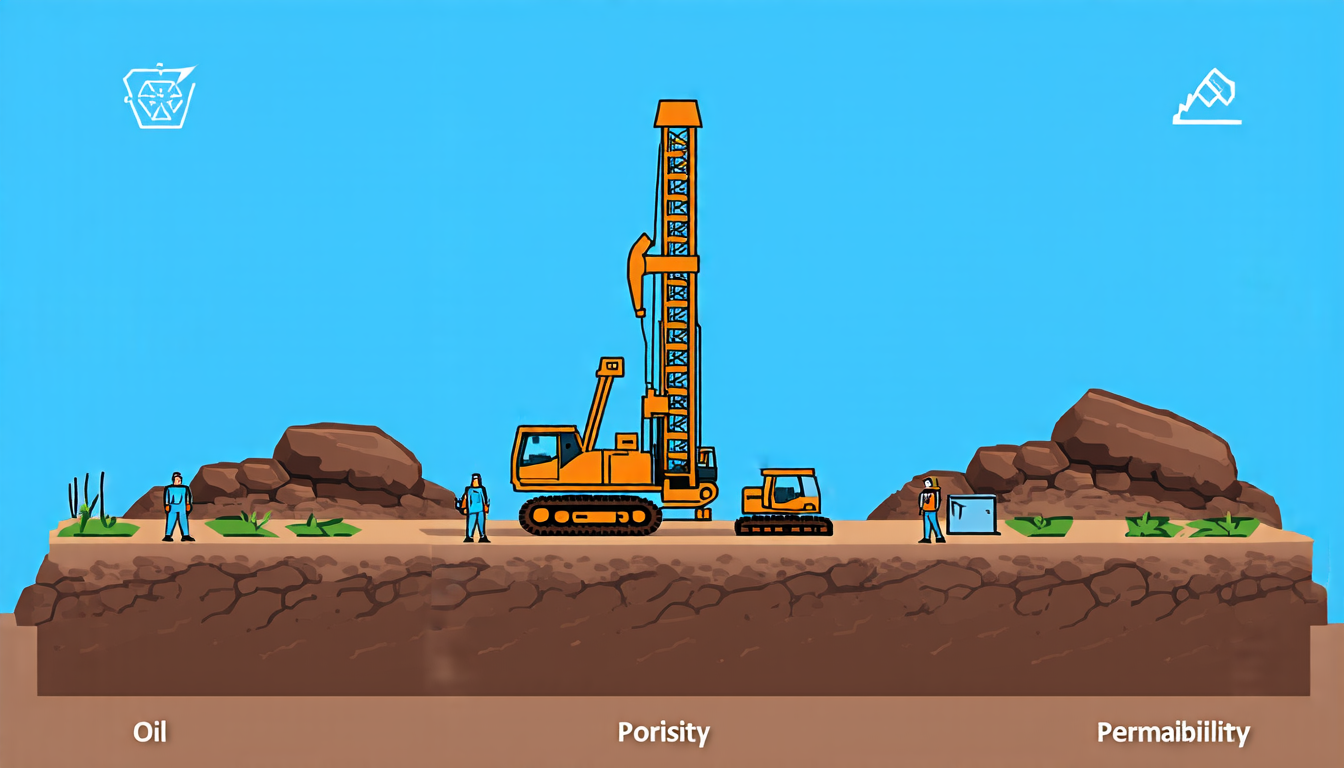
The technique works by measuring the electrical properties of the rocks surrounding the wellbore. By analyzing these properties, scientists can infer information about the rock’s porosity, permeability, and water saturation – all crucial factors in determining how much oil is present and where it can be extracted.
One of the key advantages of electrical impedance logging is its ability to distinguish between different types of rocks. For example, shaly sands are a type of rock that contains a high concentration of clay particles, which can affect the flow of oil through the reservoir. Traditional methods often struggle to accurately measure the properties of these complex rocks.
The new method uses a specialized electrode system to measure the electrical impedance of the rocks surrounding the wellbore. This information is then used to calculate the resistivity of the rock, which is a key indicator of its porosity and permeability.
In addition to its non-invasive nature, electrical impedance logging also offers a number of other advantages over traditional methods. For example, it can be performed at much lower costs than traditional drilling and sampling techniques. It also allows for real-time monitoring of the wellbore, which can help operators make more informed decisions about how to optimize oil production.
The potential applications of electrical impedance logging are vast. In addition to its use in oil reservoirs, the technique could also be used to study other types of porous media, such as aquifers and geological storage sites for carbon dioxide.
While this new method is still in its early stages, it has already shown promising results in laboratory tests and field trials. As the technology continues to evolve, it’s likely that we’ll see even more innovative applications of electrical impedance logging in the future.
Cite this article: “Unlocking Oil Reservoir Secrets with Electrical Impedance Logging”, The Science Archive, 2025.
Oil Reservoirs, Electrical Impedance Logging, Rock Properties, Porosity, Permeability, Water Saturation, Wellbore, Electrode System, Resistivity, Oil Production
Reference: Weinan Wang, “A new method of petroleum well logging” (2025).





